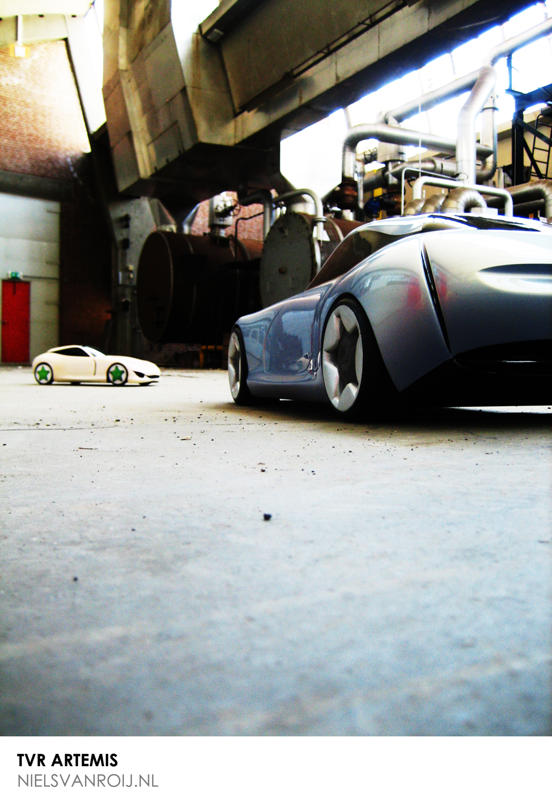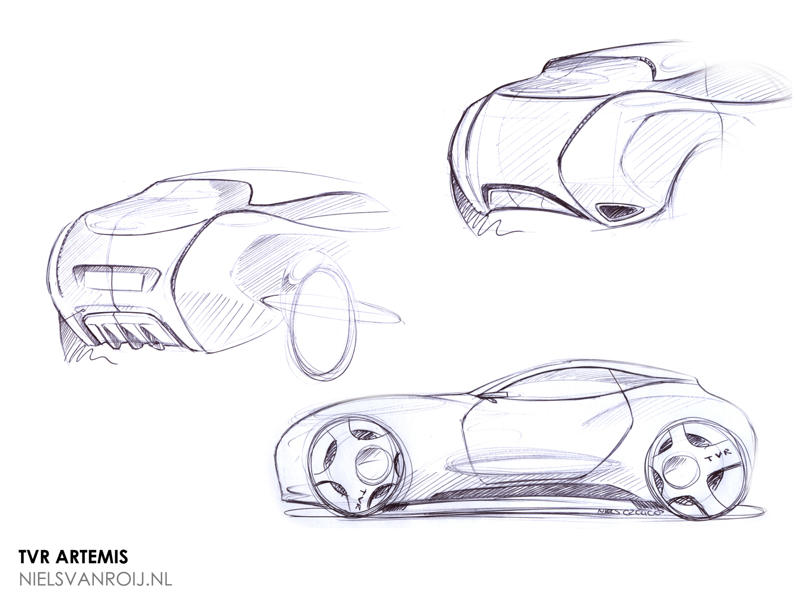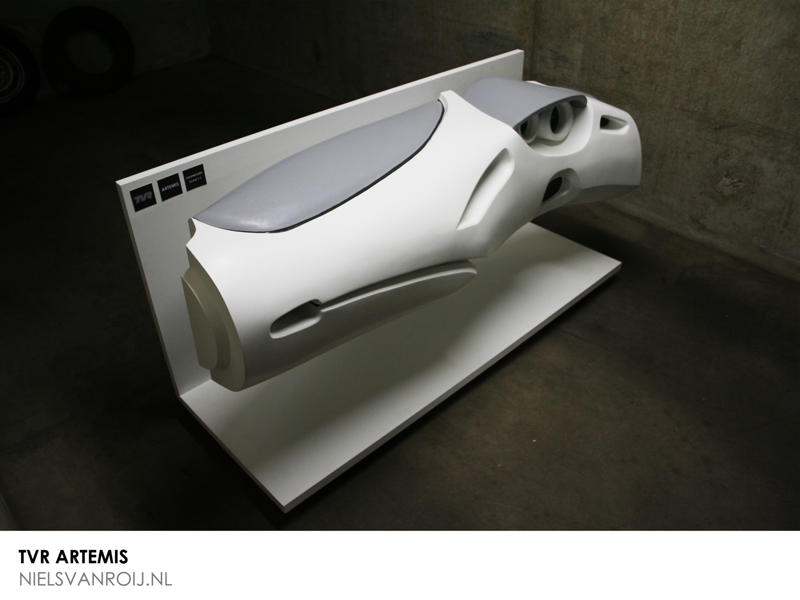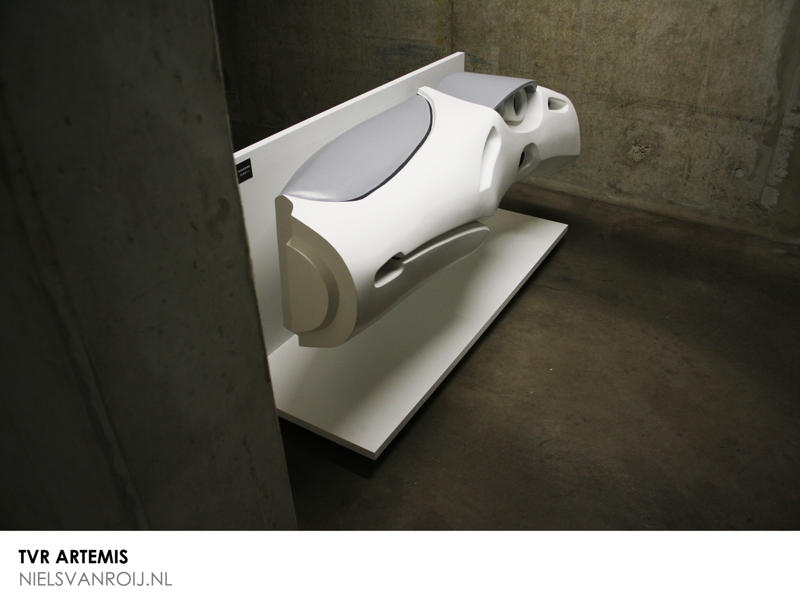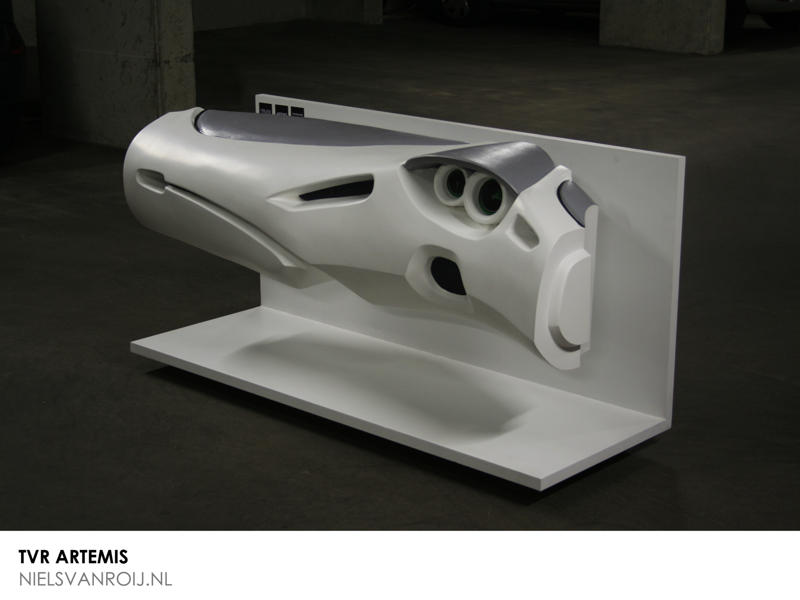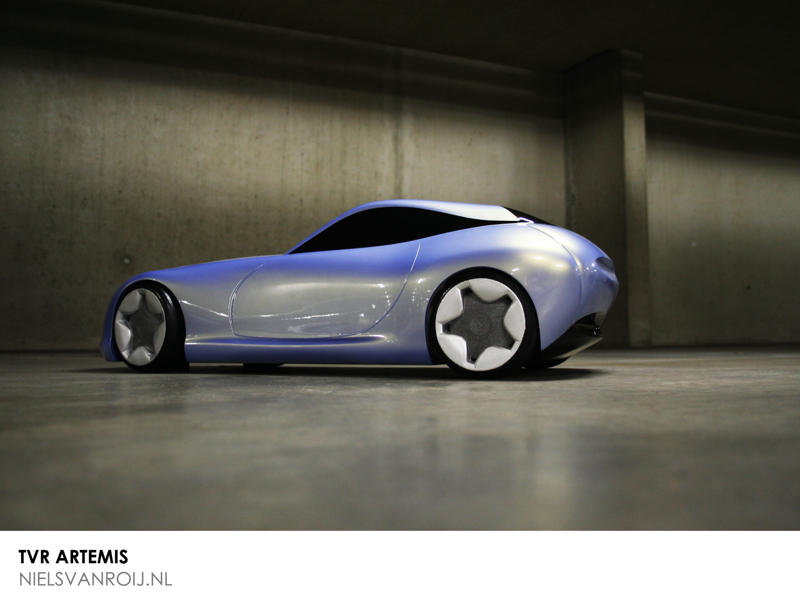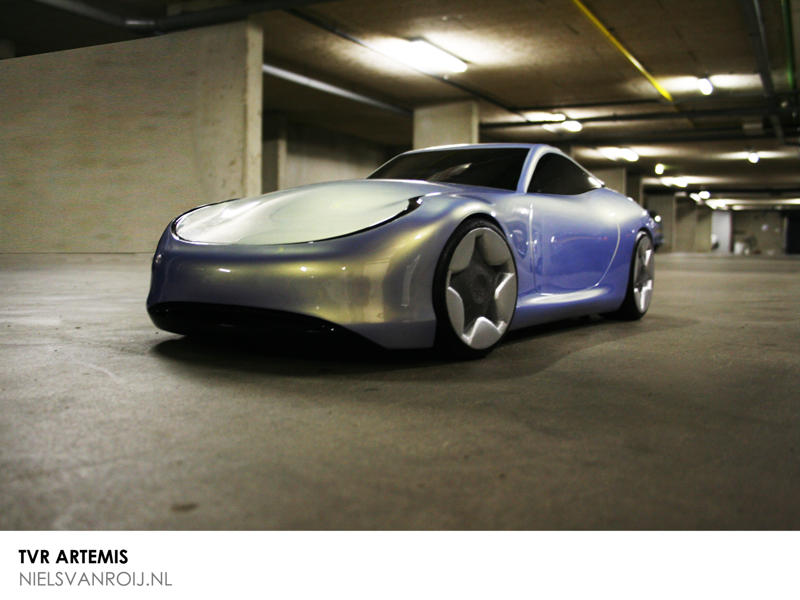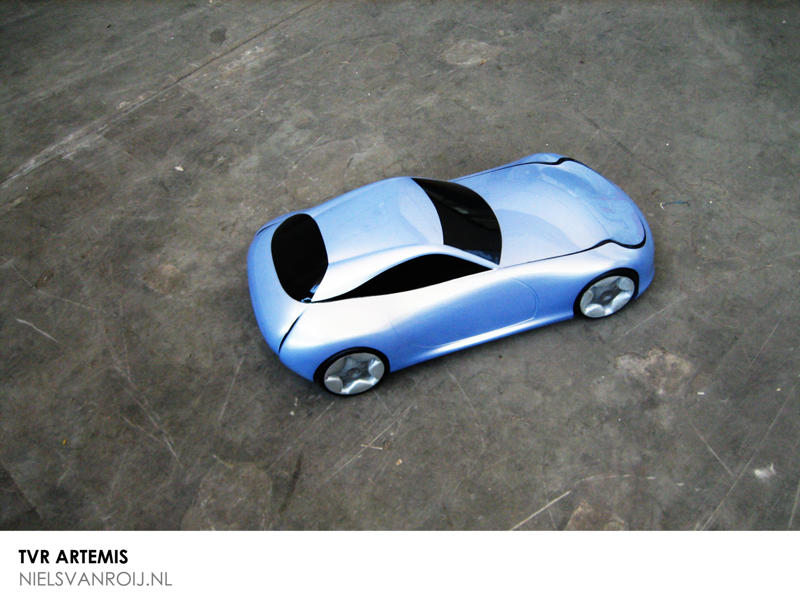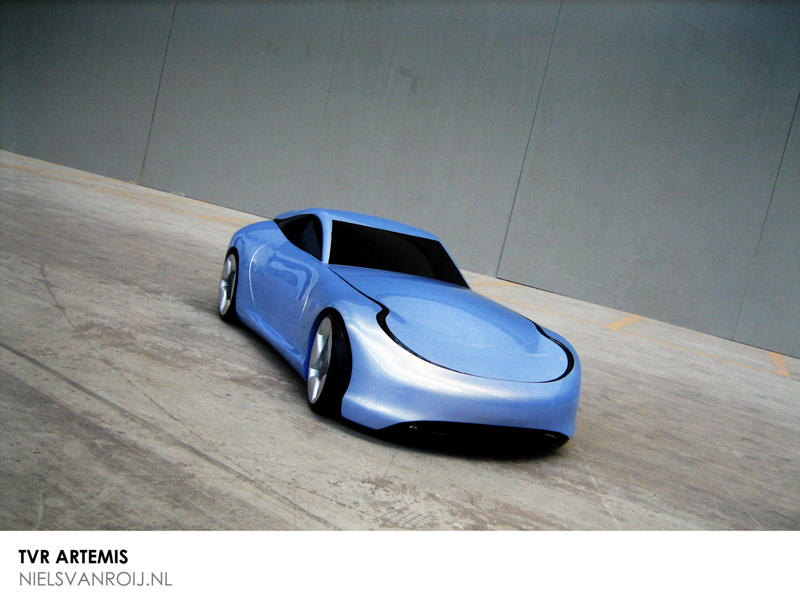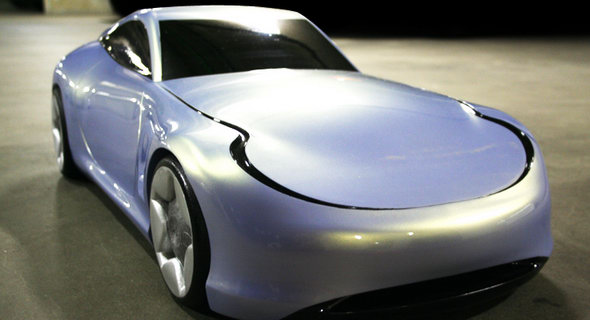
The current status of British sports car maker TVR may be murkier than the London docks, but that didn’t deter Dutch designer, Niels van Roij, from creating a futuristic TVR proposal as his final year project at the Design Academy Eindhoven in The Netherlands. Named after the Hellenic goddess of hunt, childbirth, virginity and fertility, the TVR Artemis is a sleek looking sports car that has been designed to incorporate (in theory of course) four in-wheel electric motors powered by fuel-cells that turn hydrogen into electricity.
Even though we believe that, judging by these photos, Niels’ 1:5 scale model needs some more work to show its full potential, we like his clean design approach that avoids any unnecessary or gaudy styling gimmicks yet at the same time is clearly recognizable as a TVR product.
Well, at least that’s our opinion. As always, we welcome yours in the comment section below.
 Here’s how Niels van Roij’s described the TVR Artemis project to Carscoop:
My graduation project consisted of both interior- and exterior design of an eco friendly TVR sports car, named Artemis.
The TVR history and brand identity inspired me, but it was mainly the absolutely unique design-DNA of their last models which triggered me to revitalise the TVR design language. This DNA is referred to as feminine curves. Unlike most sports car manufacturers which choose to style their cars rather muscular and aggressively, TVR was unique in their approach to automotive design in choosing for elegance and grace.
Despite the company’s bankruptcy in 2006, I decided to base my project on this brand.
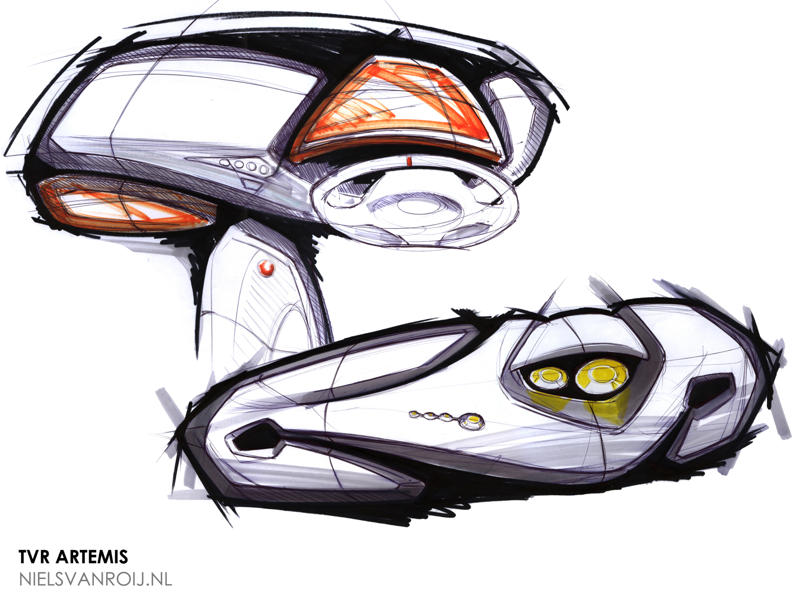
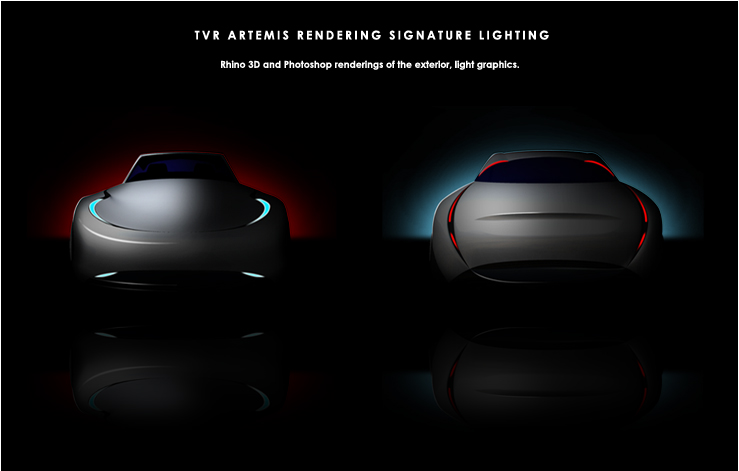
Feminine curves are found throughout the design of Artemis. For instance, the typical TVR slit at the door continues gracefully in the a-pillar. This three dimensional approach to shut lines can be found as well at the nose and rear end of the car. The slits hide the head- and taillights.
During the day you will see clean body work, at night unique LED signature lighting. The interior styling is executed likewise. The controls are hidden in openings in the dashboard, so the surfaces stay clean.
The power to weight ratio has always been important to TVR. The Artemis has been fitted with four electro in-hub motors, powered by hydrogen fuel cells. This solution offers low weight, because of the lack of heavy engine and fluids, and a quick acceleration because electro motors deliver instant power.
In the engine bay a spoiler system can be found, providing downforce. The air coming in at the front of the car is being directed over this spoiler. It also feeds the fuel cells and the in-hub motors for cooling.
All Photos Niels van Roij