










- SRT’s eBoost Air uses an electric compressor ahead of the Hurricane’s turbos.
- Setup promises quicker response without sacrificing high-rpm performance.
- SRT hasn’t shared output gains, testing data, voltage details, or production plans.
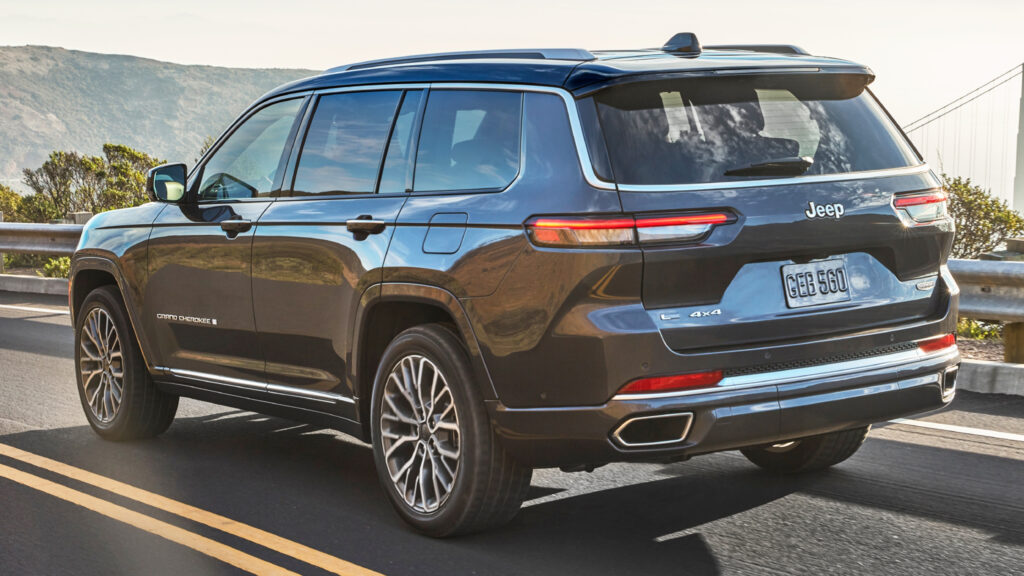
Stellantis’ twin-turbocharged Hurricane is already a very good engine. It makes serious power, has so far proven fairly reliable, and even achieves reasonable fuel economy if you keep your foot out of it. That isn’t stopping SRT from trying to eke out even more performance, though. And it’s hoping to do so to the extent that the TT six feels more like a supercharged V8. It showed the engine in a series of concepts, including a Jeep Grand Cherokee.
To accomplish that, it’s introducing something called eBoost Air, an electric-compressor concept designed to fill in the dead space before a pair of big turbos gets fully up to speed. That is the promise, anyway. The real question is whether this is a clever proof of concept or an early look at Dodge’s next serious performance move.
How eBoost Air Works



First, the important part out loud. This isn’t a production-ready design, but it sounds promising. SRT developed eBoost Air around a prototype version of the 3.0-liter Hurricane High Output inline-six. The system places an electrically powered compressor upstream of the conventional exhaust-driven turbochargers and uses an electronically controlled bypass to send air through it when the driver asks for torque before the turbos are fully working.
More: Leaked Video Appears To Show Two New Dodge Chargers, SRT And All
Think of it as a sort of electric supercharger or turbo that can produce usable boost from idle. As revs rise and exhaust energy can do the job on its own, airflow returns to the normal induction path. SRT says that gives the engine a broader and more linear powerband, one that more closely resembles the feel of a supercharged V8 without losing steam at high revs that comes with larger turbochargers.
Filling The Turbo Gap
That could make plenty of sense for Dodge. The current Charger Scat Pack’s Hurricane-based SIXPACK H.O. makes 550 hp (410 kW) and 531 lb-ft (720 Nm), but any turbo engine can feel a little less immediate than a big-displacement blower motor when you first crack the throttle. An e-compressor could make the six-cylinder’s response feel more muscular without having to downsize the turbos and sacrifice top-end power. Dodge’s current specifications list the H.O. engine’s peak boost at 30 psi.


Photos Michael Gauthier for Carscoops
Again, this is a concept, not a production announcement. SRT has released no horsepower or torque figures, system voltage, electric-motor output, durability information, or test data. SRT showed the engine in a concept Grand Cherokee, but it hasn’t confirmed which vehicle, if any, might get it first. That said, other brands like Mercedes, Audi, and Volvo already use this type of technology, so it’s not some pipe dream.
No doubt, Dodge will have some things to sort out. Stellantis executive Tim Kuniskis says there’s “no downside” to the system, and from a performance standpoint, that might be true. At the same time, the eBoost Air will still need energy, cooling, and room under the hood. All of that adds cost, complexity, and new demands for heat management. None of those things automatically make eBoost Air a bad idea, but they do mean Dodge will have more to prove than a few attractive buzzwords.
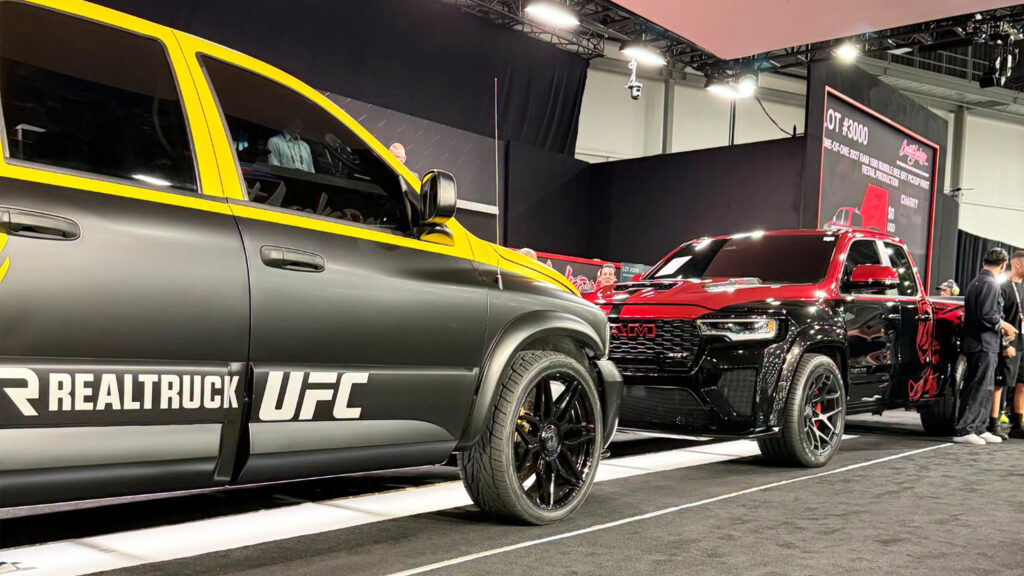
For now, the biggest headline here seems to be that in a little over a year, SRT has been cooking behind the scenes. The Rumble Bee, TRX, and now this seem to be good signs that horsepower is here to stay.