


There are faster cars. There are cheaper cars. There are better-handling cars, more luxurious cars, and certainly more efficient cars. Yet after living with the new Dodge Charger R/T, I kept coming back to the same slightly ridiculous conclusion: this might be my favorite new car on sale in America.
That’s not because Dodge has reinvented the muscle car formula. In fact, the company has committed what some fans consider sacrilege by putting a 3.0-liter twin-turbocharged straight-six where they think a Hemi V8 belongs. But spend some time actually using the new Charger rather than arguing about its cylinder count, and it becomes remarkably difficult to dismiss.
My four-door R/T carried a $51,995 base price and landed at $55,980 after options and a chunky $1,995 destination charge. That’s not cheap. But consider what you’re getting: 420 hp (313 kW), 468 lb-ft (635 Nm), all-wheel drive, the ability to switch to rear-wheel drive, enough room for four large adults, an enormous hatchback cargo area, and an EPA highway rating of 26 mpg. And that’s before you light up the rear tires.
Quick Facts
It Looks Like A Charger Without Living In The Past



Credit: Stephen Rivers
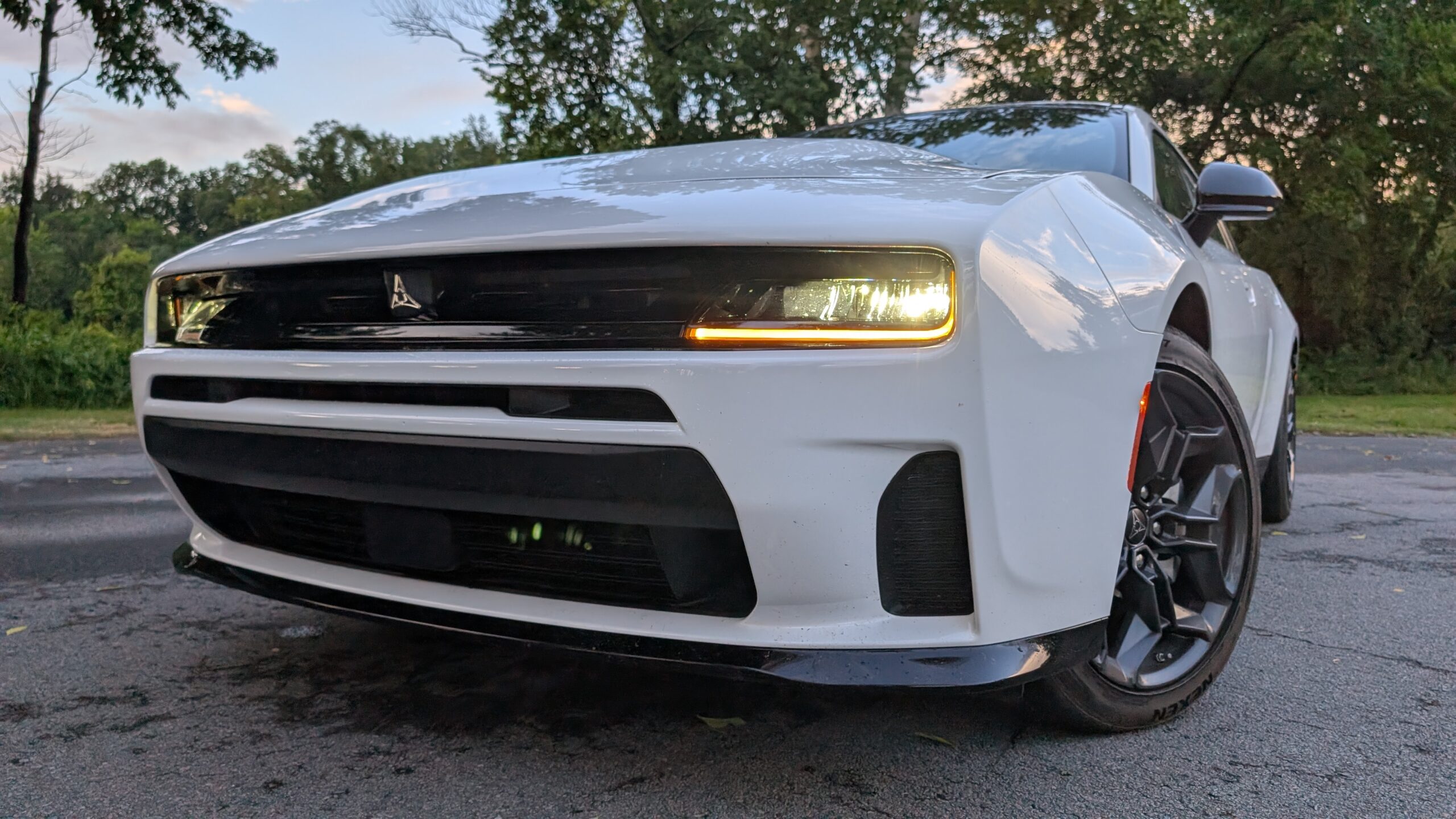
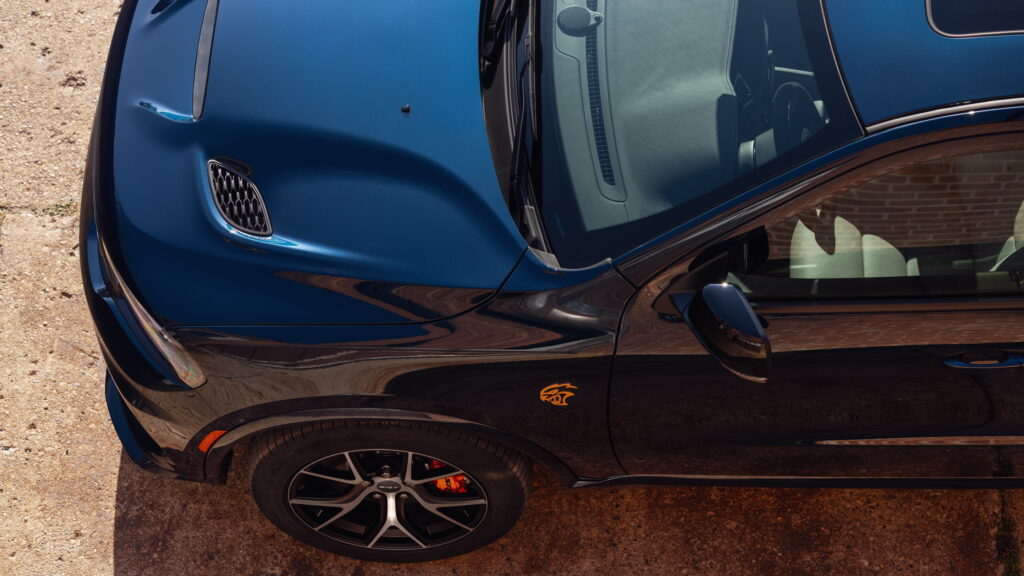
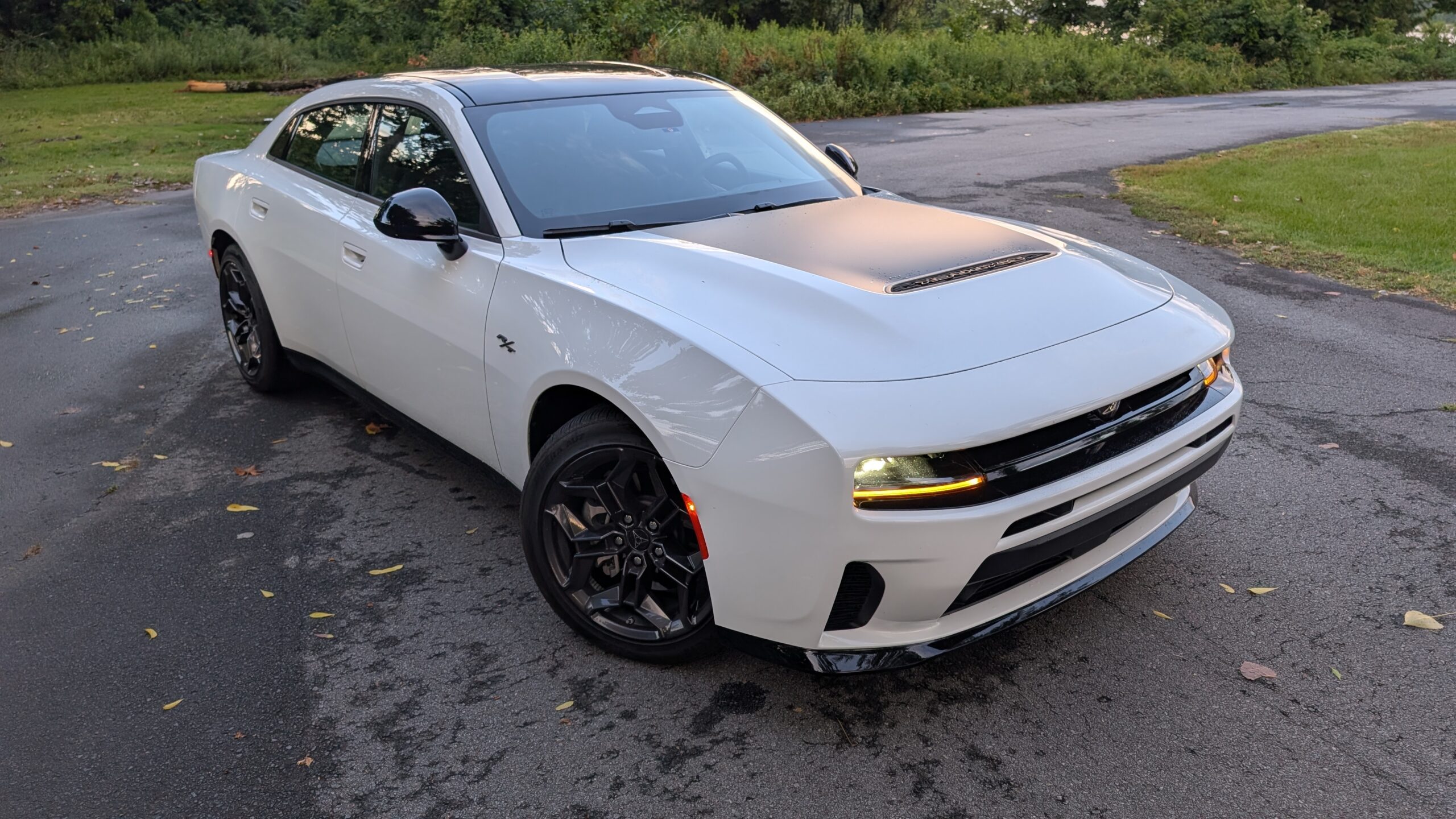
Dodge deserves credit for resisting the temptation to simply photocopy the previous Charger. There’s clearly old-school muscle-car influence here, but the new car isn’t cosplay. It’s wide, low, and imposing, with simple surfacing and a profile that looks especially good in person. My tester’s White Knuckle paint and Blacktop treatment didn’t hurt, either. More importantly, people noticed it.
Throughout my time with the Charger, strangers wanted to talk about it, look inside it, and ask questions. That’s particularly interesting considering how much internet discourse around this generation has centered on what it doesn’t have.
Whatever enthusiasts think about the missing V8, ordinary people on the road seemed to love the thing. That was the same story when I tested the Scat Pack months ago and on the first drive in Tennessee before that. There was one blemish. A couple of panel gaps on my tester weren’t particularly even. Nothing looked ready to fall off, and it didn’t affect the experience, but on a car approaching $56,000, I’d expect better consistency.
A Surprisingly Good Place To Spend Time

The interior follows the same philosophy as the exterior. This isn’t a luxury car pretending to be something else, but it doesn’t feel cheap. There are plastics, certainly, but Dodge has generally given the less expensive materials some texture or visual interest rather than covering the cabin in acres of featureless black plastic. Fit and finish inside my tester was otherwise solid, and the red contrast stitching provides a little visual theater.
The seats are excellent, too. I’d personally take more lateral bolstering, but I tend to say that about most modern performance cars. For everyday driving, they’re comfortable enough that spending hours behind the wheel isn’t a problem. I also appreciate Dodge’s restraint with the infotainment system.
Review: 2026 Dodge Charger Sixpack Sounds Off But Drives Better Than You Think
In an era when automakers seem determined to turn entire dashboards into televisions, the Charger’s central display is comparatively modest. That’s a compliment. This is supposed to be a driver’s car, and a gigantic screen would arguably detract from that. Uconnect worked smoothly throughout my testing, while Android Auto and Apple CarPlay connected without drama. Then there’s the space.


Credit: Stephen Rivers
I’m 6-foot-6 and can comfortably sit in the back seat behind my own driving position. That’s outstanding, and the same basic rear passenger space exists in the two-door Charger because both body styles share their roofline and fundamental packaging. Getting into the back is obviously easier with four doors, but choosing the coupe doesn’t sentence your passengers to some tiny upholstered dungeon.
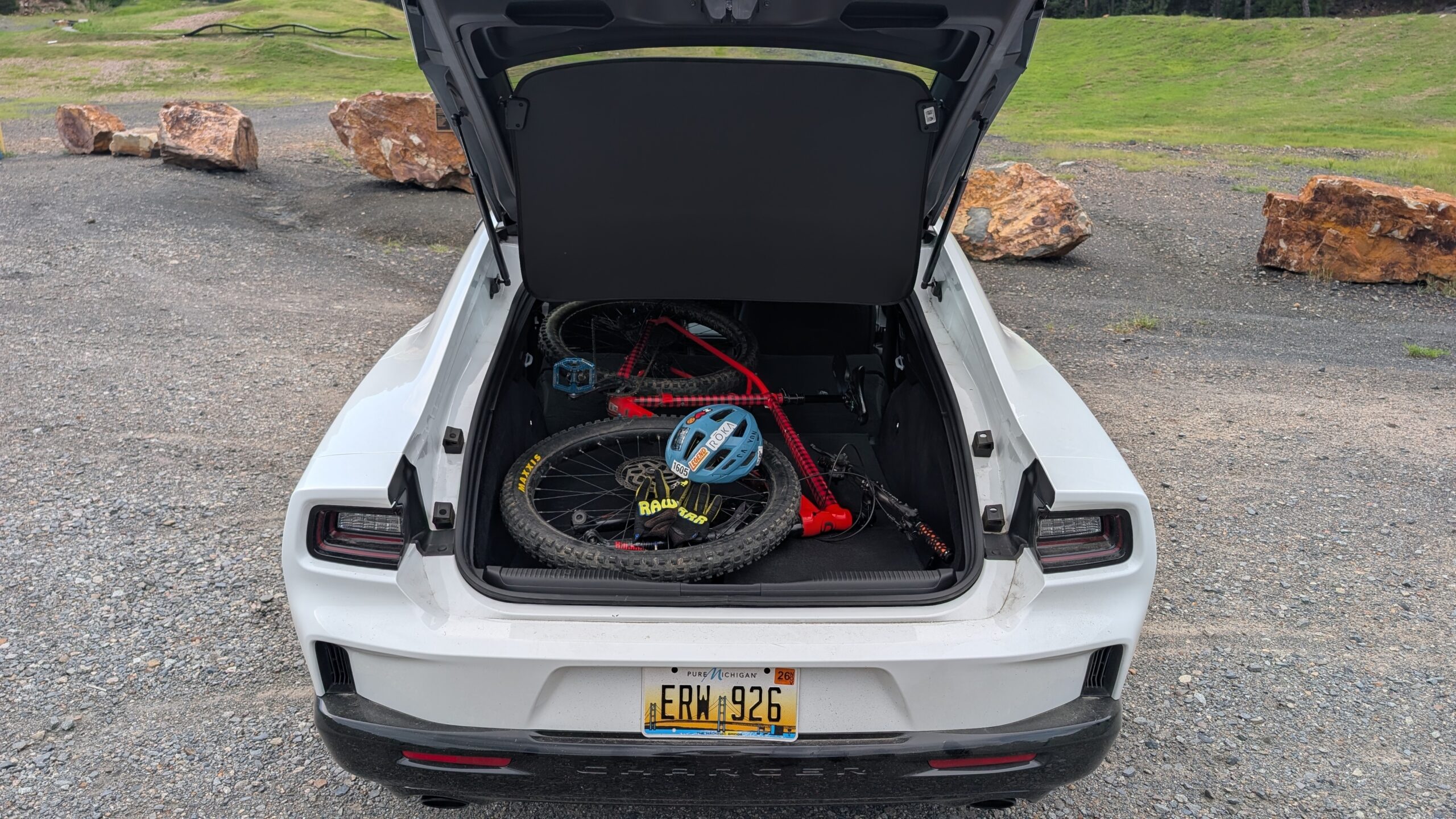
The hatchback makes things even sillier. With the rear seats folded and the front wheel removed, I managed to fit my XL Cannondale Cujo mountain bike inside. That’s the sort of practicality you normally expect from a crossover, not something capable of vaporizing its rear tires and doing donuts.
Driving Impressions: Six Cylinders, Zero Apologies
Under the hood is Stellantis’ 3.0-liter twin-turbo Hurricane straight-six in Standard Output specification. It sends 420 hp and 468 lb-ft through an eight-speed automatic transmission. No, it isn’t a V8. Get over that hurdle, and there’s a fantastic engine underneath.
Throttle response isn’t as razor-sharp as you’d get from a naturally aspirated V8. But the Hurricane is predictable, pulls hard from low revs, and continues making meaningful power toward the top of the tachometer. It doesn’t feel like an engine that’s done entertaining you after the initial turbocharged torque hit. The soundtrack isn’t terrible, either. It obviously doesn’t deliver the bass-heavy rumble people associate with a Hemi, but it becomes genuinely enjoyable as you push toward the upper reaches of the rev range. That’s where it sounds best.
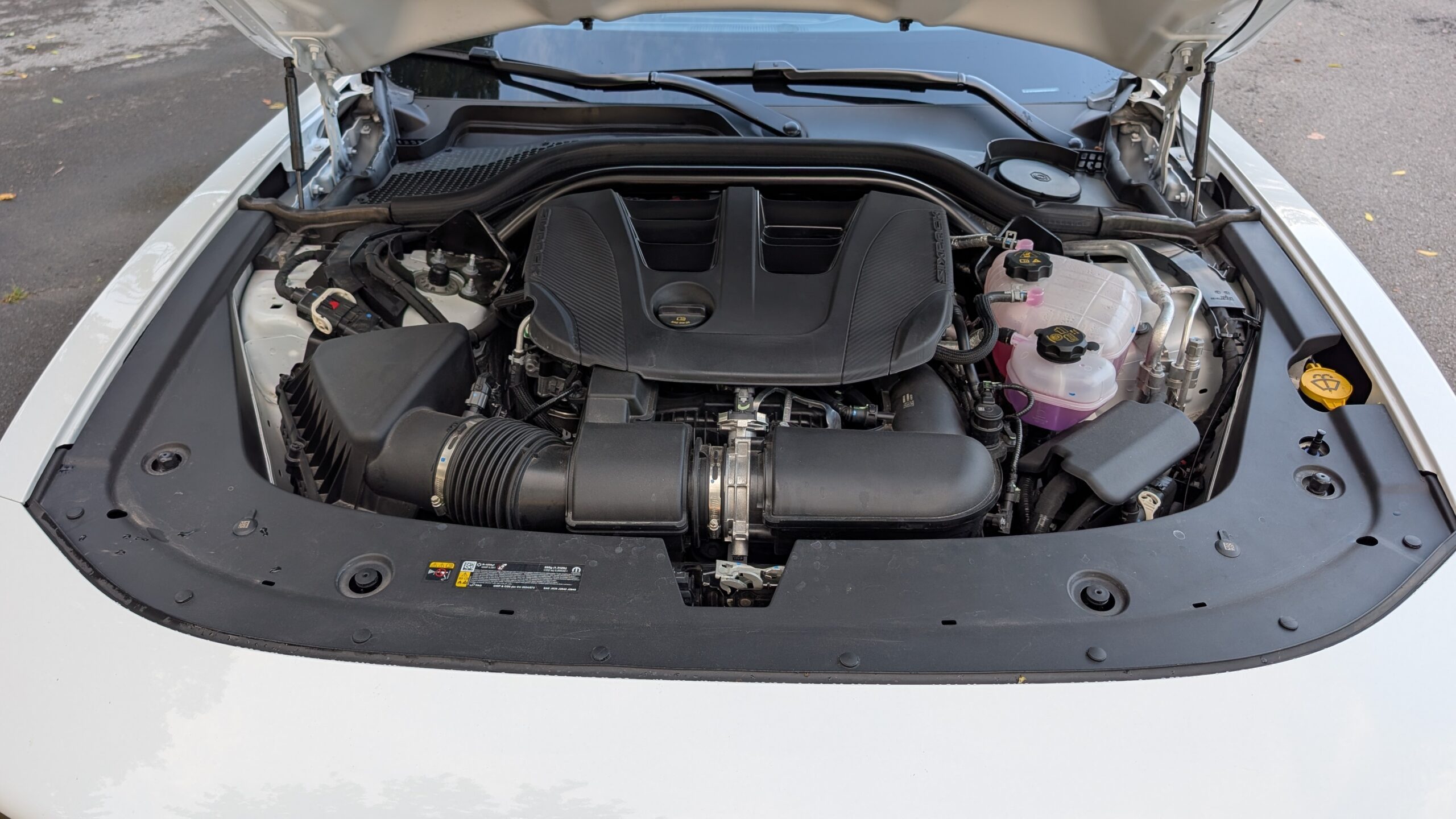
The eight-speed automatic is less convincing. In normal driving, it can take noticeably too long to downshift when you ask for power. Switching into Sport dramatically sharpens its responses, but that only makes the standard calibration feel more lethargic by comparison. Worse, my R/T didn’t have any obvious means of manually selecting gears. That’s a bizarre omission from a 420-hp performance car, particularly one that actively encourages owners to go have some fun.
The drivetrain makes up for some of that frustration. The Charger is predominantly an AWD machine, giving it immense usability in poor conditions and plenty of traction when you’re simply trying to get somewhere quickly. But Dodge also lets you disconnect the front axle and turn it into a rear-wheel-drive car. That isn’t a gimmick.
Switching to RWD noticeably changes how the Charger behaves during enthusiastic driving. It becomes more playful and more willing to rotate under power. Yes, it’ll do burnouts, but that’s almost underselling the feature. Then switch AWD back on, and there’s another personality waiting.
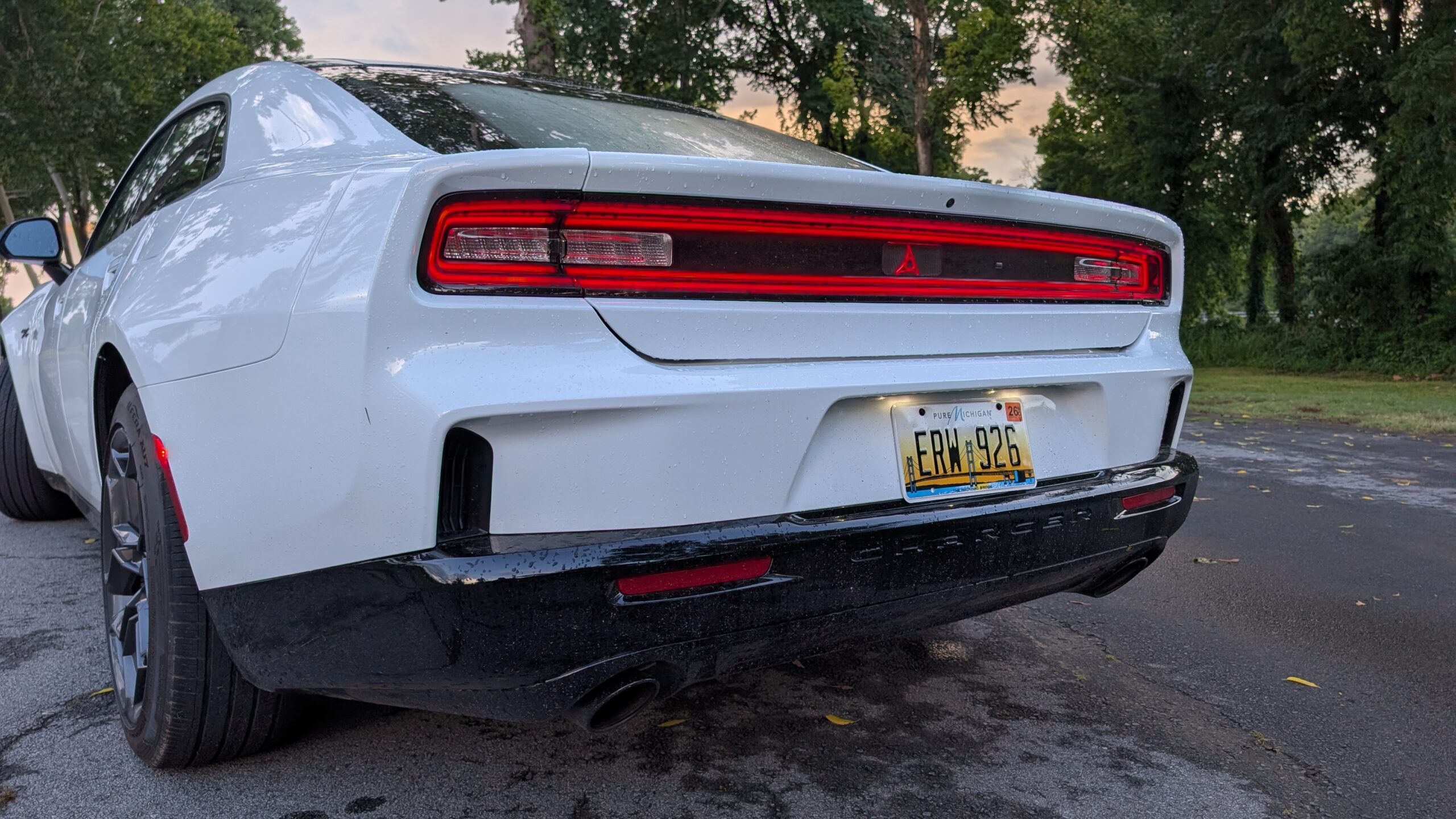
Put the right tires on it, and I’d love to take one around a gravel rallycross course. Ground clearance would obviously limit how adventurous you could get, but on a relatively smooth loose-surface course, 420 hp and AWD sounds like an excellent way to spend an afternoon. That flexibility is a huge part of the Charger’s appeal.
Of course, physics can’t be bent. The Charger is a big, heavy machine, and you never completely forget that. Push hard enough, and you’re reminded that something substantially lighter would change direction more eagerly. But this thing handles far better than its dimensions suggest. The steering has reassuring weight without becoming unnecessarily heavy, and its calibration changes depending on the selected drive mode. It feels consistent and appropriate for a performance car rather than artificially twitchy.
More: Dodge Charger Super Bee Looks Primed For A Buzzy Return
The brakes are similarly easy to trust. I didn’t subject them to sustained track-style abuse, but during normal driving and spirited road use, the pedal remained linear and predictable. The R/T isn’t as sharp as the more aggressive Charger Scat Pack, but it’s still genuinely enjoyable through corners. More importantly, it doesn’t make you pay for that capability everywhere else.
Ride quality is genuinely good. It’s quiet, smooth, and comfortable enough to use every day. Sport mode brings more vibration, noise, and theater into the experience when you’re looking for it. The downside is simply size. Tight parking lots, narrow roads, and particularly unfriendly drive-throughs require attention. You don’t forget you’re piloting a very substantial automobile.
Wait, 26 MPG?
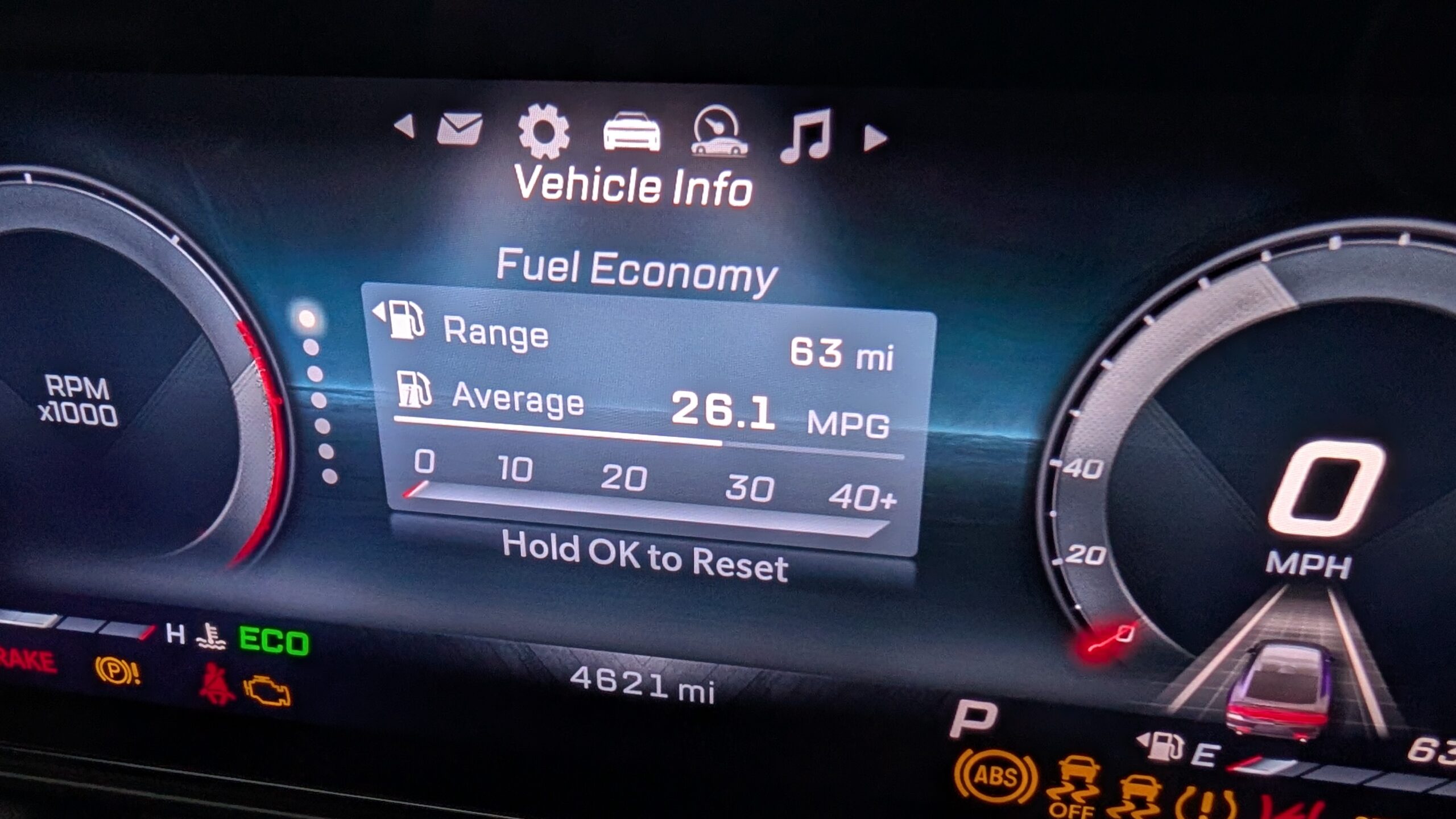
Then the Charger pulled another trick. The EPA rates the R/T at 17 mpg city, 26 highway, and 20 combined. Yet during one day of mixed city and highway driving, I saw 26.1 mpg. I wasn’t hypermiling. I wasn’t crawling around behind semis or treating the accelerator like it contained an explosive device. That’s frankly remarkable for a 420-hp AWD performance car this large.
Obviously, spend your afternoon exercising RWD mode and your results will differ considerably. But the fact that the Charger can return that sort of efficiency while remaining this entertaining adds another layer to its already impressive versatility.
The Biggest Problem Is Another Charger

The R/T’s awkward problem is that Dodge itself offers something considerably more powerful without moving dramatically further up the pricing ladder. The Charger Scat Pack’s High Output Hurricane produces 550 hp (410 kW), and its starting price lands uncomfortably close to my optioned R/T. That’s difficult to ignore.
If outright performance is the priority, spending more for the Scat Pack makes enormous sense. It’s quicker, sharper and considerably more powerful. Between the two, given the small difference in price, the Scat Pack is the one I’d pick. That said, a base Scat Pack won’t have as many interior features as this lightly optioned R/T. Either way, there’s really nothing else on the market that combines all the things that the Charger can do.
Verdict
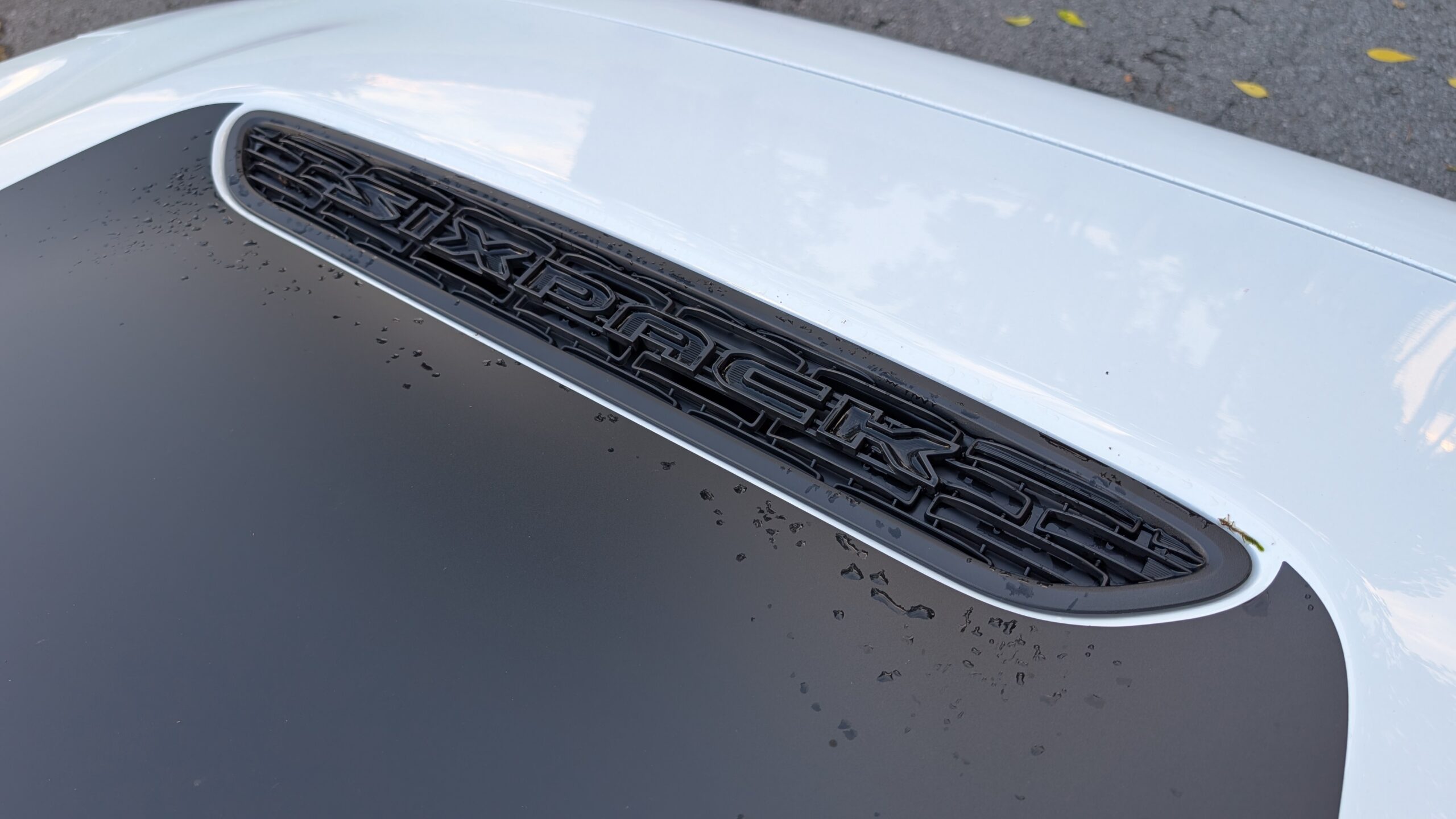
The new Charger was always going to have a difficult job. Dodge spent years building its identity around increasingly ridiculous V8s, then replaced its best-known muscle car with something that, initially, didn’t offer one. That’s practically engineered to start arguments. But judged on what the R/T actually does rather than what people think it should be, this is an outstanding automobile.
It’s fast without being exhausting. Comfortable without becoming boring. Huge without handling like a barge. Practical without pretending to be an SUV. Efficient enough to surprise you and immature enough to annihilate its rear tires when the mood strikes.
There are certainly more focused performance cars for roughly $56,000, and the nearby Scat Pack makes the R/T’s value proposition complicated. The missing paddle shifters are baffling, the transmission could be more responsive in its normal setting, and Dodge desperately needs to find a way to remove some weight from this platform.
But few cars combine this many seemingly contradictory talents so successfully. The Charger R/T isn’t a consolation prize for people who couldn’t get a V8. It’s a 420-hp AWD family car, grand tourer, hatchback and rear-drive hooligan machine rolled into one enormous package. And right now, I’m struggling to think of another new car I’d rather have the keys to than the Scat Pack.