

Why Lighter Weight Engine Oil Became So Common
Thinner oil used to ruin engines. Now, 0W-20 has replaced 10W-30. Discover the hidden tech and efficiency rules behind the shift to ultra-light oils.
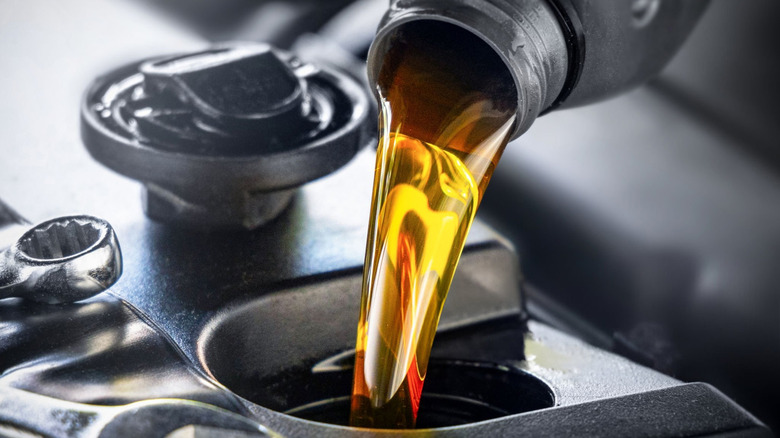
If you've popped the hood of a new car recently and looked at the oil cap, you may have been stunned by just how thin the recommended oil is. As engines have become more advanced, tolerances have been reduced, and emissions standards have tightened, car companies now recommend oil viscosities that may seem more like water than the thick engine oils of yesteryear.
Before discussing engine oils, and why lower-viscosity ones are being favored by car companies, it's worth defining what differentiates one oil from another. The first number and letter of an engine oil, for example 0W or 5W, refers to how the oil flows at low temperatures. The lower the number is, the thinner the oil is, and the easier it will flow on engine start-up. For example, a 0W oil will flow at -31 degrees Fahrenheit, while a much thicker 20W oil is rated to flow from about 5 degrees Fahrenheit, so it isn't appropriate for cold climates.
As for the second number, often 20, 30, or 40, it denotes the viscosity at an operating temperature of around 212 degrees Fahrenheit. Two decades ago, it was rare to find a car with a recommended oil viscosity of less than 10W-30 or 10W-40, but now, most modern cars use low-viscosity oils. In fact, it's reported that more than 70% of new cars in 2024 shipped with 0W-20 oils or thinner from the factory.
Why Are Oils So Thin?
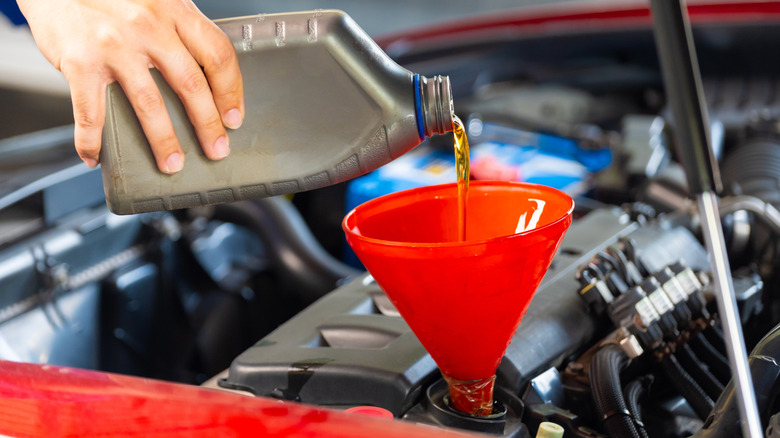
The biggest single reason why engine oils have become thinner is emissions. Although the Trump administration is relaxing Corporate Average Fuel Economy (CAFE) standards in the United States, car manufacturers are producing far more fuel-efficient vehicles now than in the past. Less force is required to pump low-viscosity oil through an engine than a thicker one, thus reducing fuel consumption. In addition, the vast majority of pollutants released by a car happen during the first few minutes from startup. Low-viscosity oil reduces these emissions by operating better at low temperatures, flowing more quickly and freely through the engine with less friction.
Of course, it's not just fuel consumption and emissions regulations that triggered the widespread adoption of low-viscosity fuels. The internal combustion engine dates back more than a century, but manufacturing advancements mean today's engines are inherently more efficient than those built throughout the 20th century. Clearances are much tighter than they used to be, and thick engine oil can cause oil pressure drops, whereas thin oils flow better through and around these tighter clearances. Modern engine oils also include much more than the oil itself.
For example, additive packages make up almost a third of modern engine oils. These additives deliver cooling and lubrication benefits, plus cleaning and corrosion protection. Additionally, they create protective films on an engine's metal surfaces, further reducing friction. Modern additives are so important that Liqui Moly itself says the "base oil, i.e. the actual oil, is [now] hardly more than just a carrier fluid for the additive packages."
Are There Any Disadvantages To Low-Viscosity Oils?

While low-viscosity engine oils offer many benefits, they have their downsides. The most obvious is premature engine wear. Conventional wisdom says thin oils may not perform as well as thicker alternatives under heavy loads or at high temperatures. For pickup trucks, car companies have historically favored thicker oils, but as emissions regulations have become stricter, they have also started using thinner oils.
A notable example is GM's L87 V8. The reliability of this engine has been called into question by numerous lawsuits across the United States, recalls, and an Engineering Analysis launched by the National Highway Traffic Safety Administration (NHTSA). Due to crankshaft and connecting rod defects, several Chevy Silverado 1500, GMC Sierra 1500, Chevy Tahoe, Suburban, Yukon, and Cadillac Escalade owners have reported catastrophic engine failures.
These vehicles leave the factory with a recommended engine oil rating of 0W-20. When reports of engine failures started to emerge, GM issued a recall in the United States, announcing it would refill impacted vehicles with thicker 0W-40 oil. Evidently, the car manufacturer believed a thicker oil would help to prevent engine failures. As it turns out, L87 engines with this new oil continue to experience issues.
Ultimately, it's best to use the oil your car's manufacturer recommends. If the oil cap or the owner's manual says your vehicle has been designed to run on 0W-20, 0W-16, or even the 0W-8 oil available in Japan, then that's what you should use. Switching to a thicker oil will increase fuel consumption, lower emissions, and, possibly, void your warranty.