

Mercedes EQE Flopped Hard, It's E-Class Electric Replacement Is Determined Not To
Mercedes is testing its electric E-Class sedan at the 'Ring
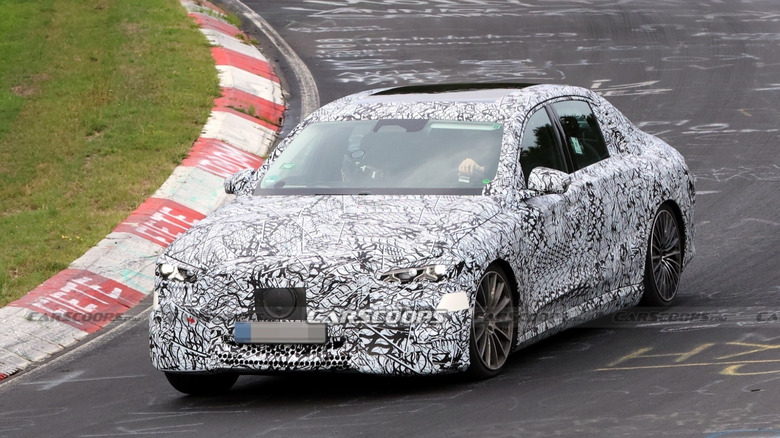
Mercedes got its fingers burned with its midsize EQE electric sedan. Buyers didn't take to a slippery design that sacrificed street presence for range, or the potentially confusing EQ badging, and this year the EQE was pulled from sale in the U.S.
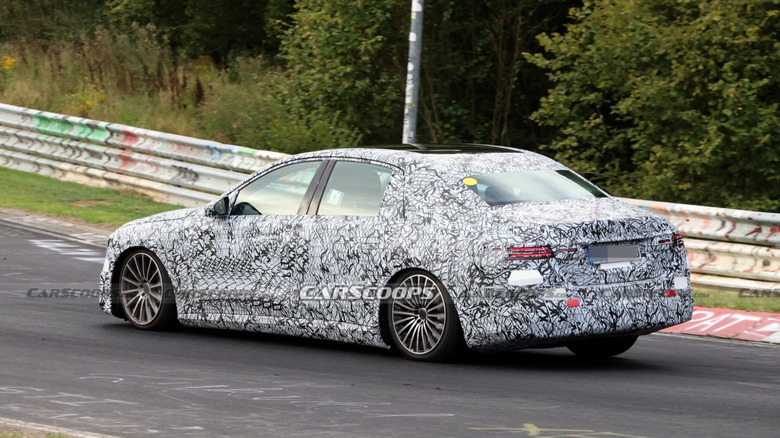
All the signs point to its replacement being a much bigger success. And the way the new E-Class Electric looks is a big part of that. Sure, we can't see every detail through the camouflage this prototype wears as it pounds around Germany's Nürburgring Nordschleife track in the hands of a test driver. But we can see enough of the shape to know that it looks like a real Mercedes.
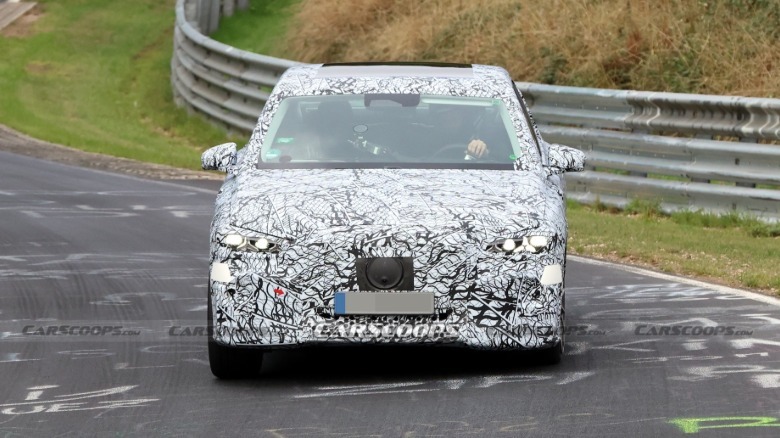
The front end is more upright this time around, and you can bet there's a big, imposing Mercedes grille behind that camo face mask, like the one on the new C-Class Electric and GLC. The EQE had neither of those tricks, and if it wasn't for the three-pointed star badge on the blanked grille, it might have passed for something out of Korea.
Don't call me C-Class XL
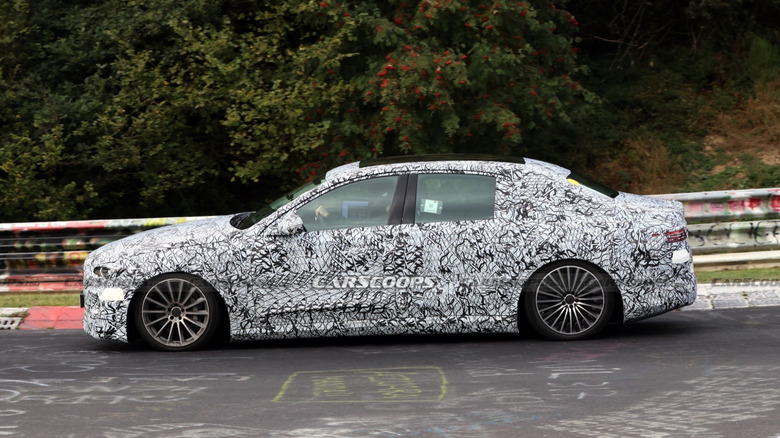
There's a hint of fastback to the angle of the rear window, just enough to give the car a sporty vibe. But it still displays a proper three-box layout with a squared off trunk, and that gives it the kind of confident look the EQE never had. It also prevents the E-Class of falling into the trap of being just a scaled-up C-Class Electric.
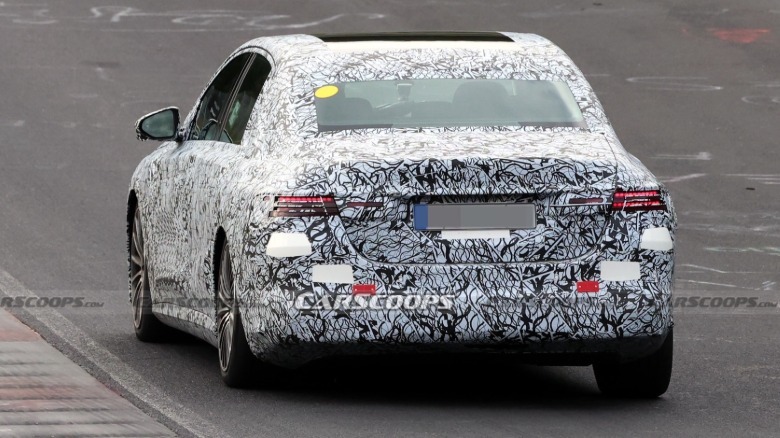
The grown up feel continues with the horizontal LED strips that make up the taillights and emphasize the new car's width. We can just make out through the disguise that they continue across the outer edges of the trunk lid, but are prevented from joining together by the license plate recess. Those lights represent another big departure from the C-Class Electric, which has star-motif rear LEDs.
Under the skin though, the C- and E-Class Electric sedans have plenty in common. Both are built around the same MB.EA architecture that's also shared with the GLC electric SUV. That means the EQE's successor features rapid 800-volt electrics and should charge at 330 kW. Some EVs charge faster, but neither of the Benz's key rivals, the BMW i5 and Audi A6 e-tron, do.
Dual motors first, single comes later
Mercedes launched the C-Class Electric in C400 4Matic form, with 482 hp (489 PS / 360 kW) coming via dual motors, one working on each axle. That exact same setup should find its way into an E400, though not clear yet is whether the E-Class will feature a bigger battery. The C400 has a 94 kWh pack under its floor that provides up to 473 miles (762 km) of claimed WLTP range, though a heavier E400 using the same battery wouldn't have quite such long legs.
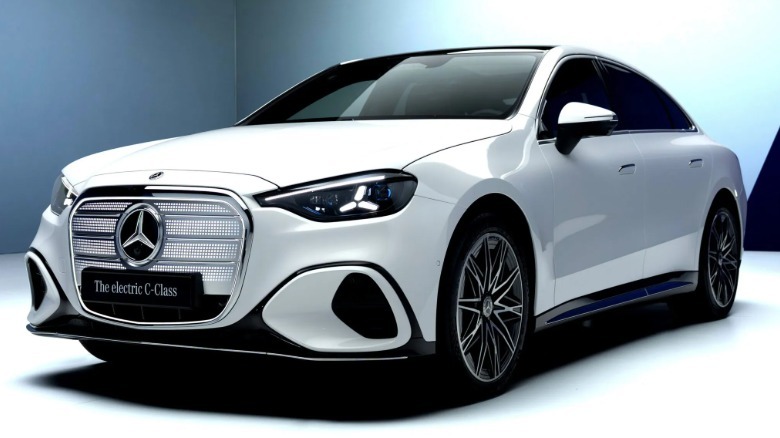
As of this summer, the C400 has a more affordable brother in the C300 (with the promise of even more accessible single-motor versions to come), and it would be logical to assume the E-Class could come in E300 form, too. The C300 still has two motors and all-wheel drive, but makes 416 hp (422 PS / 310 kW), and its range is limited to 429 miles (690 km) by a smaller 85 kWh battery.
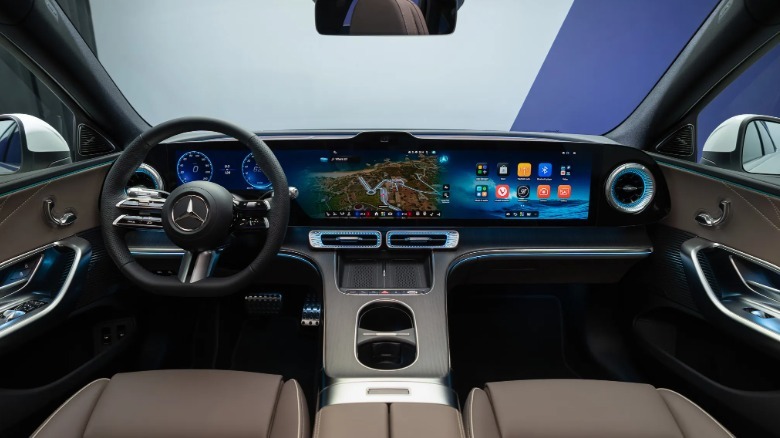
Finally, the E-Class Electric will likely inherit the smaller car's pillar-to-pillar digital dashboard. It certainly looks impressive in the marketing images, but Mercedes has a habit of making the passenger side display optional, so read the small print on the configurator carefully when the car debuts next year
The E-Class Electric should prove a bigger hit than the EQE in Europe, where EV sales are riding high, thanks to its more traditional Mercedes design and vastly superior electric tech. America's waning interest in electric cars will make it a tougher sell there, but dealers will happily sell the gas-powered Mercedes E-Class alongside it.