

Why 1950s Cars Had Wraparound Windshields (And Why They Vanished)
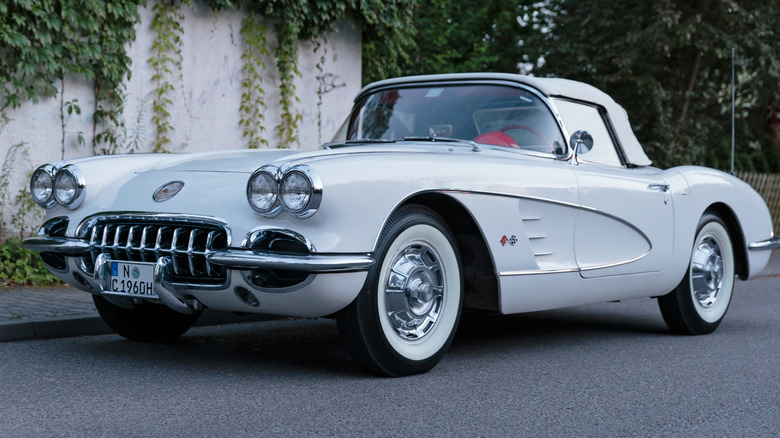
Automotive design is always changing and evolving. Today's cars look like spaceships compared to those built 50 years ago, and as designs have changed, brands have abandoned era-defining features, shapes, and silhouettes in favor of styling that's in vogue. In the 1950s, wraparound windshields were the hot thing, but it wasn't long before the auto industry abandoned them.
The General Motors Le Sabre from 1951 is widely credited as the first car with a wraparound windshield. It was designed by Harley Earl, GM's former head of design, and was a dramatic interpretation of what cars of the future could look like. GM didn't end up building a road-going version, but the wraparound windshield of the La Sabre did find its way into production. Most notably, the 1953 Chevrolet Corvette had a windshield just like Earl's concept, as did the Cadillac Eldorado and Oldsmobile Fiesta.
While the Le Sabre is considered by many as the first car with a wraparound windshield, another one-off concept premiered 13 years before it with a very similar windshield design. That car was the Hispano-Suiza H6B Dubonnet Xenia. It was carefully crafted to slip through the air with as little resistance as possible, and the wraparound windshield played a key role.
What went wrong?
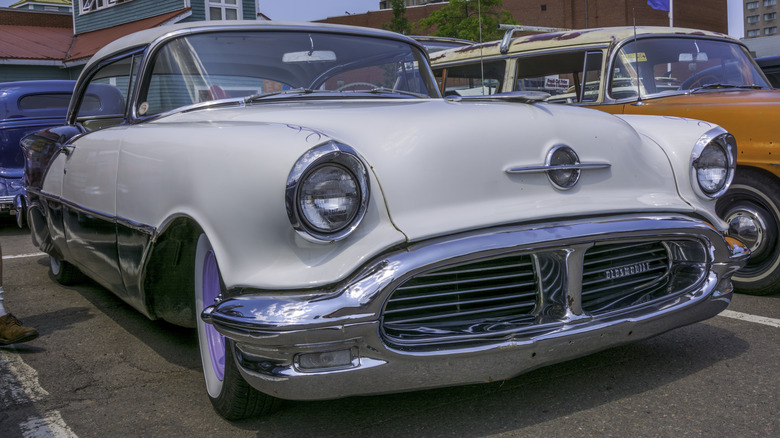
Throughout the 1950s, a slew of car companies followed GM's lead and launched models with wraparound windshields, including Ford, Chrysler, Hudson, and Packard. Coupled with impossibly thin A-pillars, these windshields were all the rage. However, just as quickly as they burst onto the scene, they disappeared.
Windshields like this may have looked nice from the outside, but the curved portions of the glass reduced visibility and created a strange distortion. While enthusiasts like ourselves view cars as much more than objects, most people view them as nothing more than a way of getting from point A to point B. If a car's window shape makes it hard to see out of, and therefore impacts drivability, buyers are bound to be put off.
Then there's the matter of heat. Wraparound windshields and thin pillars, like the dog-leg pillars GM adopted, allowed way too much heat into the car. At a time when air conditioning still wasn't standard equipment in many new cars, this was an issue. Then there's safety. Cars with this type of windshield had incredibly thin A-pillars. They look nice, but they're certainly not a safe design, especially in a crash.
The modern wraparound windshield
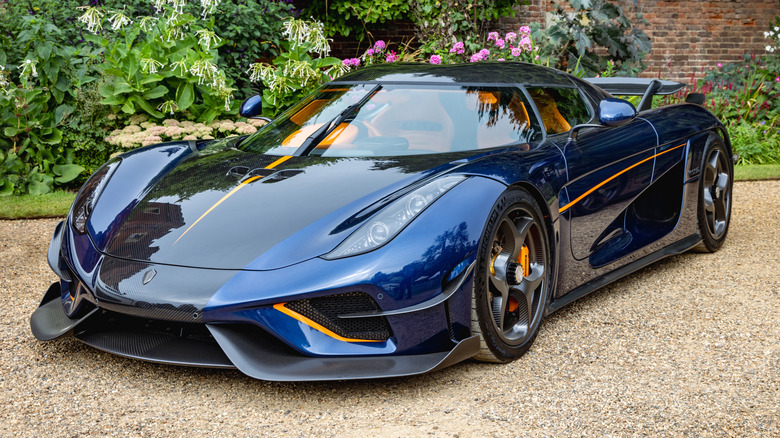
Although wraparound windshields like those from the 1950s aren't around anymore, that doesn't mean you won't find this unique design element on modern vehicles. Koenigsegg has been building supercars and hypercars with dramatic, wraparound windshields since it debuted the CC prototype in the 1990s. From there, all subsequent Koenigsegg production models have featured similar wraparound windshields from the CC8S to today's Jesko.
Helping the Swedish brand justify the use of panels like this is the fact that all of its cars sell for millions of dollars. That means owners are more willing to pay the thousands of dollars it would cost to replace one if it gets damaged. The advanced carbon fiber monocoques used by Koenigsegg also let it pair these windshields with narrow A-pillars without compromising the structural integrity of the car.