

Want To Drive America's Fastest Speed Limit? Here's Where To Go
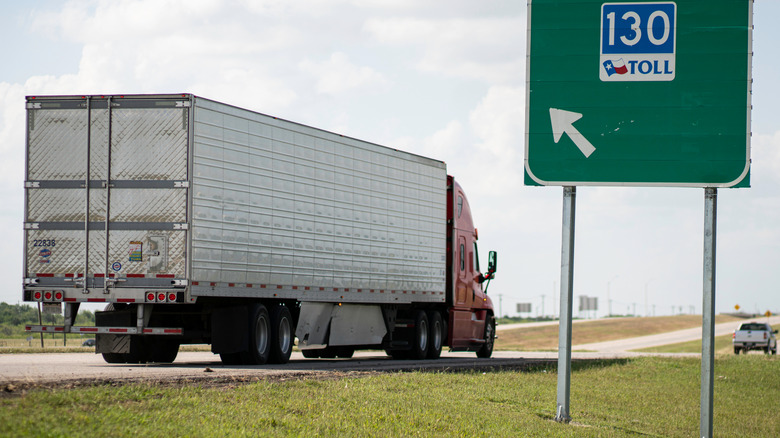
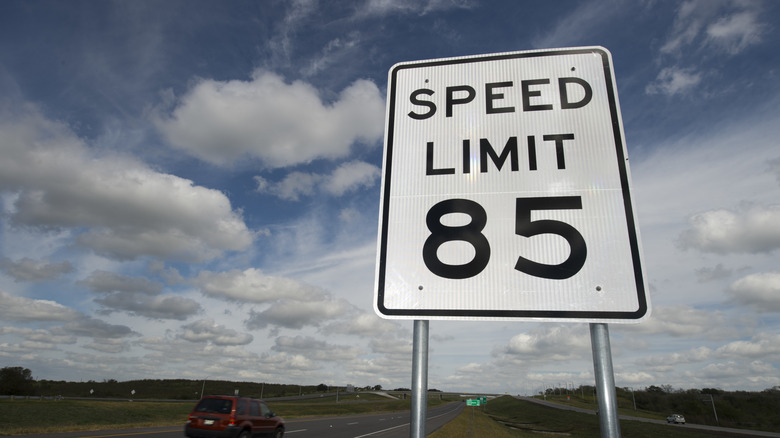
America's highest posted speed limit is 85 mph (137 kph), and you'll find it on the southern portion of State Highway 130 in Texas. Specifically, that means the 41-mile (66-km) toll-road stretch between SH 45 Southeast at Mustang Ridge, south of Austin, and Interstate 10 near Seguin. There's your destination. The useful part is knowing which stretch to take.
According to the Insurance Institute for Highway Safety, Texas stands alone at the top of America's speed-limit rankings. Several other states, including Montana, Nevada, and South Dakota, allow 80 mph (129 km/h) on certain highways. Texas goes one better, although most of its roads certainly don't carry that 85-mph limit.
That distinction matters because SH 130 extends beyond the section with the record-setting signs. Its southern portion, known as Segments 5 and 6, is privately operated by SH 130 Concession Company, while TxDOT operates the northern toll-road segments. Simply finding an SH 130 shield doesn't mean you've arrived in the 85-mph zone.
The road offers an alternative for traffic traveling between Austin and San Antonio. If your plan involves experiencing America's fastest posted limit, follow the signs on the southern stretch rather than assuming the entire route shares its claim to fame.
The fastest route comes with a toll
SH 130 South is a toll road, so enjoying its higher speed limit comes with a bill. Even a shortcut has some fine print. The operator's current rate table lists a full Segments 5 and 6 trip at $10.47 for a Class A vehicle with an electronic toll tag, or $13.93 when paying by mail. That class covers most passenger cars.
Toll collection is electronic, meaning there's no traditional booth where you stop and hand over cash. Drivers with an accepted tag are charged through their accounts; those without one receive a bill based on their license plate. If you're driving a rental, check the rental company's toll policy before heading out.
As for how much time the extra speed actually saves, traveling 41 miles at a constant 85 mph takes about 29 minutes. Covering that same distance at 80 mph takes roughly 31 minutes. The difference is less than two minutes, before accounting for traffic, ramps, or any stops.
Avoiding congestion on I-35 could make a much bigger difference to your trip than that final 5 mph (8 km/h). Check the operator's trip planner against your actual destination. A higher limit doesn't automatically make a route shorter.
Why Texas allows 85 mph

Texas didn't simply decide that a bigger speed-limit sign would look good beside SH 130. TxDOT explains that state law allows an 85-mph limit when a highway is designed to accommodate that speed and a traffic or engineering study determines it is safe and reasonable. The road itself has to support the number.
That fits into the argument we made in "Speed Limits Are Outdated, And We All Know It". Road design, traffic conditions, vehicle capability, and driver skill all deserve consideration when discussing speed. A limited-access highway and a neighborhood street present very different challenges, even if both discussions eventually get reduced to a number on a sign.
Of course, an 85-mph limit doesn't promise that 85 mph is appropriate every moment you're there. TxDOT tells drivers to slow down for rain, fog, heavy traffic, and construction. Higher speeds also leave less time to react and increase the consequences when something goes wrong. SH 130's appeal is straightforward. It's a specific stretch of Texas highway lets you legally travel faster than any other posted public-road limit in America. The sign answers how fast you may go. Conditions and judgment still determine how fast you should.