

Here's What The 'SRT' Badge On Dodges And Rams Actually Stands For
The badge is back, but it's certainly not new
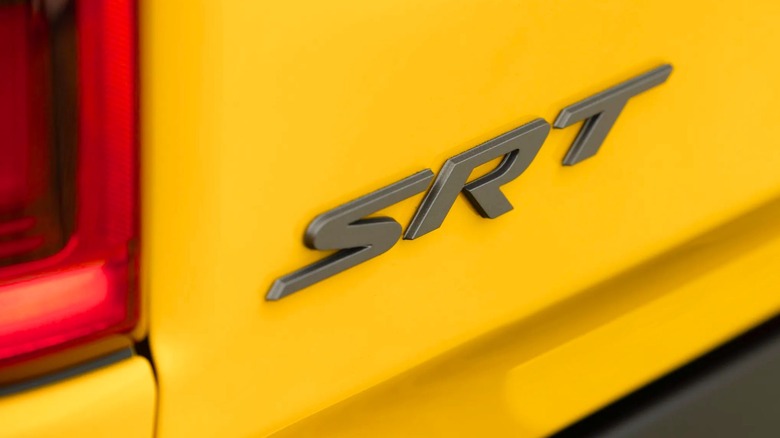
From Ford to Ferrari, every automotive brand serious about horsepower has a performance sub-brand, and Dodge, Ram, Chrysler, and Jeep are no exception. You've probably seen SRT badges on the back of dozens of cars, trucks, and SUVs from the Stellantis-owned automakers over the years, but did you ever wonder what those three letters mean, and where they came from?
SRT stands for Street and Racing Technology, and it's been used both for high-performance vehicles and the engineering skunkworks that created them over the last two decades. But SRT's history goes back to the 1980s, to the development of the original Dodge Viper, and long before the SRT badge ever appeared on a car.
Reptilian origins
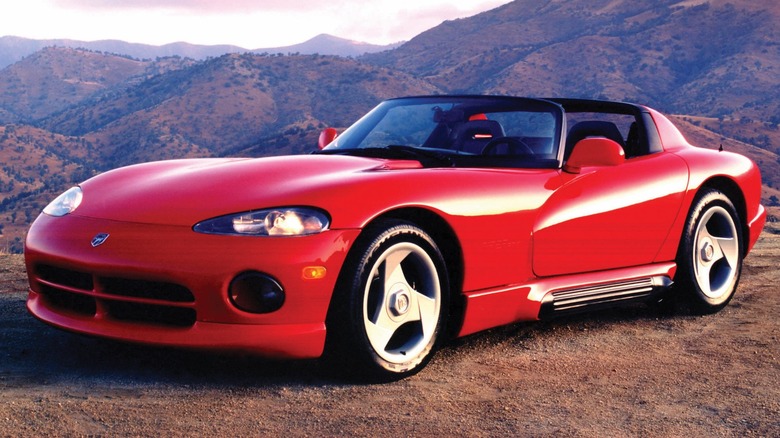
Team Viper, the crew behind the legendary Viper R/T10 sports car, first merged with Plymouth Prowler's Team Prowler to form Specialty Vehicle Engineering (SVE). In 2002, it was briefly rebranded as Performance Vehicle Operations (PVO) before settling on Street and Racing Technology (SRT) in 2004. Since then, we've seen all manner of SRT models, but the common thread is more power, better braking, and superior handling compared with the equivalent base model.
SRT goes sport compact
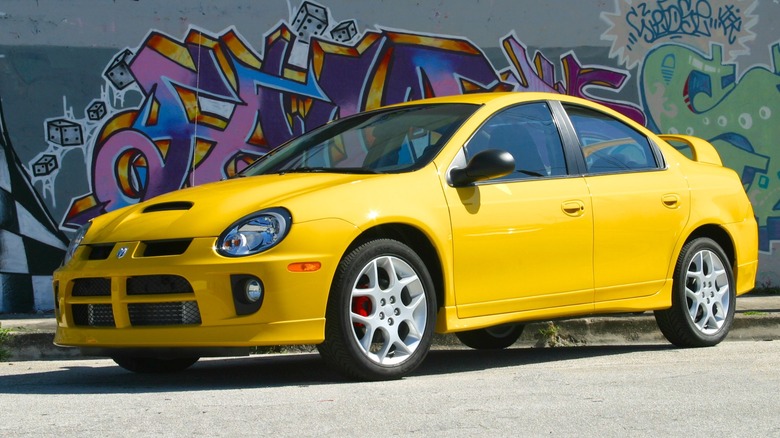
Which car first earned the SRT badge? The 2003 Viper SRT-10 earned that honor, debuting as a concept at the 2001 Detroit Auto Show. But hot on its heels, in every sense, came a very different SRT. The 2003 Dodge Neon SRT-4, was a front-wheel drive sport compact inspired by the tuner cars Chrysler design boss Tom Gale's saw at the 1998 SEMA show. It came with a 2.4-liter, turbocharged inline-4 that made 215 hp (218 PS) in its maiden year, and a face Hannibal Lecter might make after stubbing his toe.
World's Fastest Truck
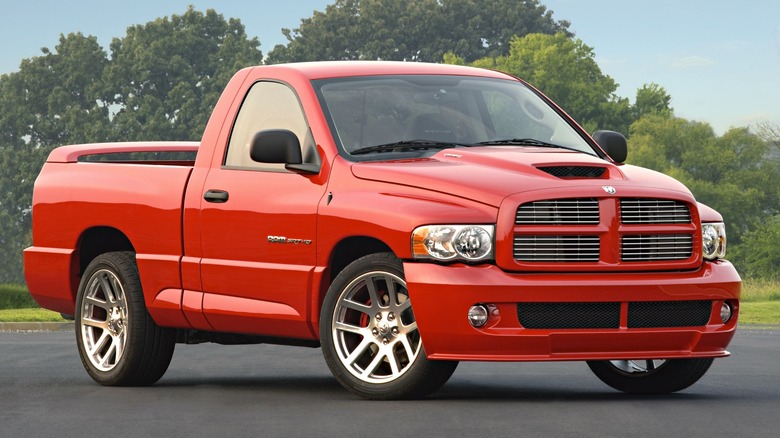
SRT took another tangent in 2004 with the Dodge Ram SRT-10. Dodge showed a concept truck with a Viper engine in 1996, but the SRT-10 made it real, turning a humble Ram 1500 into a monster. The 8.3-liter V10 produced 500 hp and pushed the SRT-10 to 155 mph, earning it a Guinness World Record for the fastest truck on the planet.
The V8 sweet spot
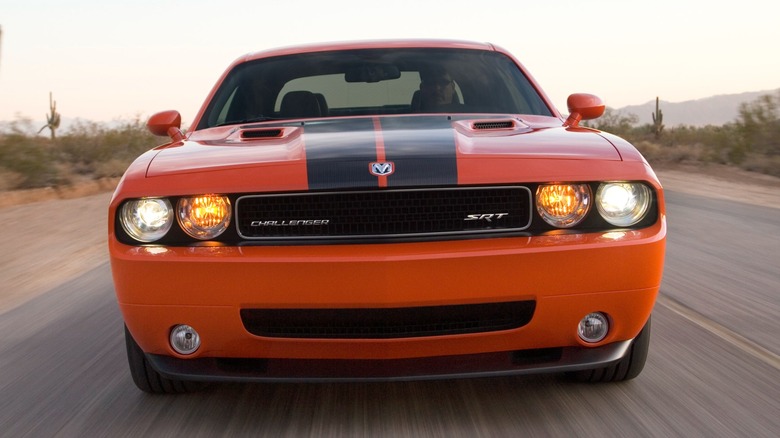
V8s, though, are an SRT badges's most familiar stomping ground. The 2005 Chrysler SRT8 was the first to fuse those two elements, with its 6.1-liter Hemi V8 sending 425 hp (431 PS) to the rear wheels and setting a template Chrysler repeated again and again with cars like the Dodge Magnum SRT8 and Challenger SRT8. Even Jeep's Grand Cherokee got the treatment.
Out with a bang
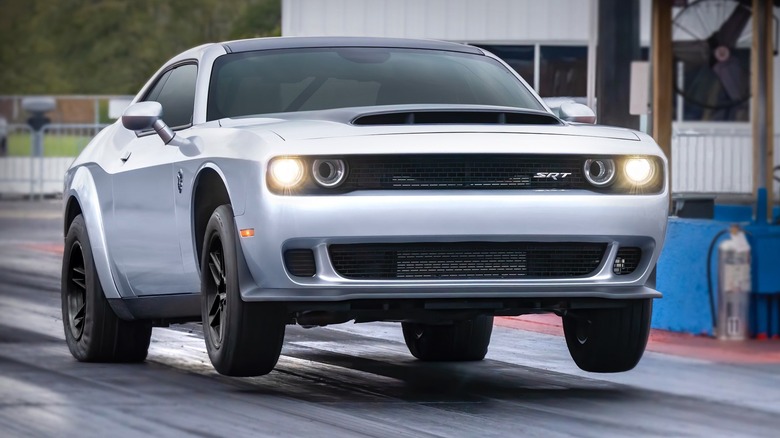
SRT was always serious about going fast, but it really stepped up a gear with the 2015 Challenger SRT Hellcat. The evil-sounding Hellcat name signified an even hotter, supercharged 6.2-liter Hemi V8 that started with 707 hp (717 PS) in its first year and hit 1,025 hp (1,039 PS) by the time the Challenger SRT Demon 170 landed for 2023.
By that point, parent company Stellantis had disbanded the SRT team, and for a while the Dodge Durango SRT was the only model available. But Dodge and Ram boss Tim Kuniskis got the band back together in 2025 with the promise of a new wave of SRT muscle machines.
The new SRT generation
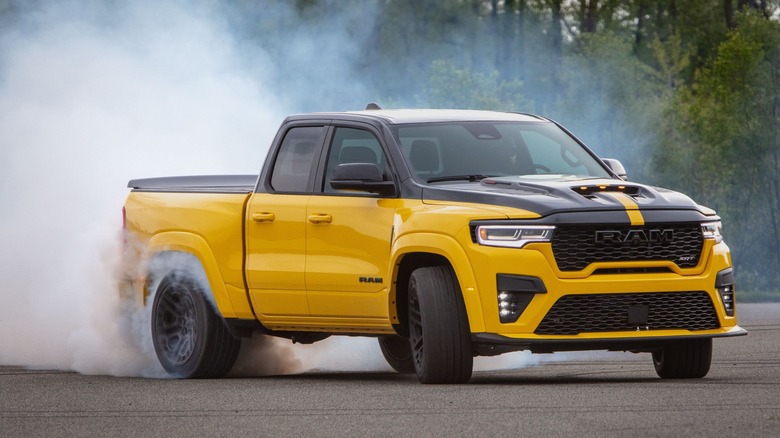
A year on from that promise, we've already seen a Ram 1500 Rumble Bee SRT powered by a 777 hp (787 PS) Hellcat V8, and weakened federal fuel economy demands mean the door is open for plenty more like it. Still to come are a Jeep Wrangler Scrambler SRT, a Dodge Charger Hellcat, a Dodge GLH SRT hatchback, and a Dodge Copperhead SRT coupe that will serve as SRT's halo car. Gearheads can rest easy, because SRT isn't going anywhere.