

Bentley May Be Owned By Volkswagen, But Its Cars Aren't Built In Germany
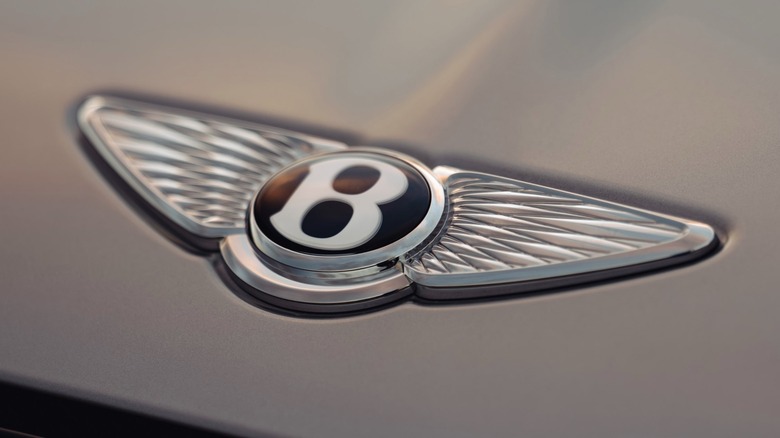
A Bentley's blend of effortless pace and traditional craftsmanship is central to its unmistakable British character and charm. But is Bentley still truly British today? That's a fact enthusiasts still argue over, and those that say it isn't, point to a crucial moment in Bentley's history that happened almost 30 years ago.
Bentley was founded in 1919, and made its name with a series of luxury, high-performance road cars, plus consecutive victories at races like Le Mans in the 1920s. But the Great Depression that followed the 1929 Wall Street Crash brought the brand to its knees, allowing rival Rolls-Royce to sweep in and take control. The Bentley name survived, but for the next six decades its cars would rely on Rolls-Royce chassis and engines. Some Rolls and Bentley cars were virtually identical during this period, although Bentley was still able to carve out its own identity with models like the 1952 R-Type Continental, the inspiration for today's Continental GT.
By 1998, Rolls-Royce and Bentley's then-owner Vickers decided to put the brands up for sale. BMW was already supplying V12 engines, and it offered £340 million ($450 million) to take full control of Rolls-Royce and Bentley. It looked like a done deal. But another German automaker had plans of its own for the two British luxury brands.
Made in Germany, though only rarely
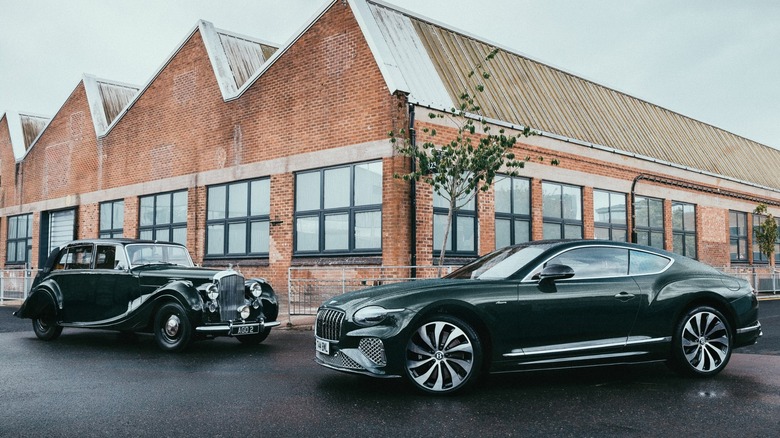
Volkswagen launched a £430 million offer, outbidding BMW for the Crewe factory in northwest England, the brands' cars and Rolls-Royce's Spirit of Ecstasy mascot and iconic Parthenon grille. But BMW had sneakily inked a deal with Rolls-Royce PLC, the aero engine business, to license the Rolls-Royce name for a pitiful £40 million ($53 million).
The two German giants eventually agreed to split the spoils: BMW would take Rolls-Royce and set up a brand-new factory at Goodwood, while Volkswagen would run Bentley from the old Rolls-Royce and Bentley base at Crewe. Retaining the Pyms Lane base, rather than relocating Bentley to Germany, helped maintain a connection between old and new Bentley eras. And every current Bentley from the Bentayga SUV to the Batur Convertible, rolls out of the English plant. But that wasn't always the case. Demand for the Flying Spur was so strong after its 2005 launch, and again in 2013, that Bentley was forced to build a small number at VW's Dresden factory in Germany to keep up with orders.
VW ingredients, but a very British recipe
You'll still find plenty of German DNA in today's Bentleys. The Bentayga shares its platform with VW Group cousins like the Porsche Cayenne, and the Continental GT and Flying Spur share their architecture with the Porsche Panamera. The band's legendary 6.75-liter V8, a lovable relic from the Rolls-Royce days, died in 2020, and the current 3.0-liter V6 and 4.0-liter V8 engines are lifted from the VW parts bin, and cast in mainland Europe. Body shells are also imported from Germany, some having previously been made in Slovakia.
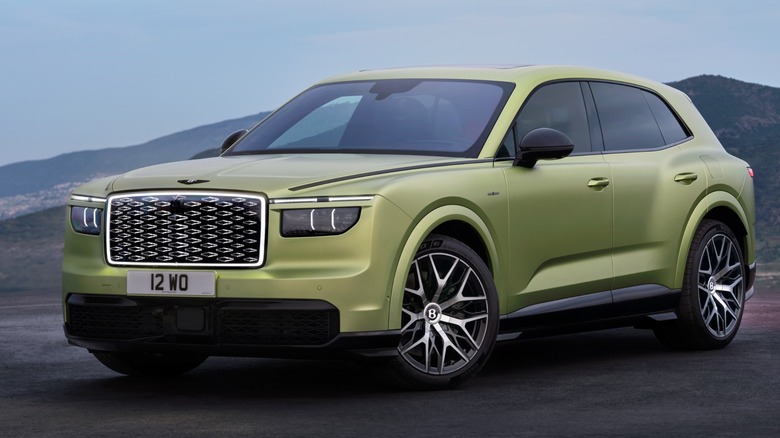
But as the old saying goes, a car is more than the sum of its parts. The paint finish, trimming, and Mulliner personalization touches applied to new Bentleys, is the stuff that makes a modern Bentley so recognizable. Thanks to a massive £350 million ($463 million) overhaul, Crewe gained a state-of-the-art paint shop, new engineering technical center and a brand-new production line for the Torcal (pictured above), the brand's first ever EV. Bentley has operated under Audi's control as part of VW's Progressive division since 2021, but it looks like it has no plans to relinquish its British roots any time soon.