The Bugatti Tourbillon Isn't A Track Car, But It Sure Performs Like One
Owners will probably own more track-focused cars, but that doesn't mean they can't take the Tourbillon
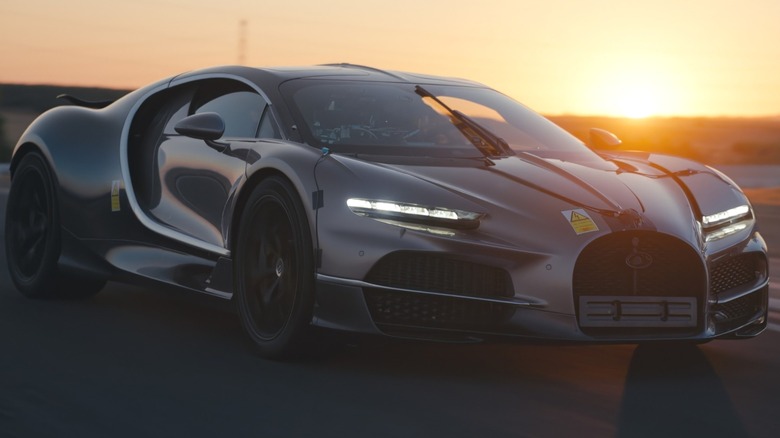
When Mate Rimac became the boss of Bugatti, the VW Group initially wanted him to help them build an electric Bugatti, using technologies from the Rimac Nevera. That didn't happen. Instead, Mate Rimac decided the future of Bugatti shouldn't be defined by batteries, and instead it should lean into mechanical perfection and gas-guzzling combustion power. With that, the Bugatti Tourbillon was born.
It's been more than two years since the Chiron's successor was first unveiled to the public, and as the French brand gears up to begin customer deliveries, it's offering a look into the Tourbillon's development. We've seen how Bugatti developed the thumping soundtrack of the car, and now, the car manufacturer is showing how the car was tested in the baking Spanish heat at a racetrack in Seville.
The average Bugatti Veyron or Chiron owner doesn't drive their car on the track, since they probably have lighter, more hardcore cars for that job. However, thanks in part to the Tourbillon's small footprint and advanced hybrid powertrain with complex torque vectoring and all-wheel drive, it actually looks right at home on a racetrack.
Bugatti pushes the Tourbillon to its limits so owners don't have to
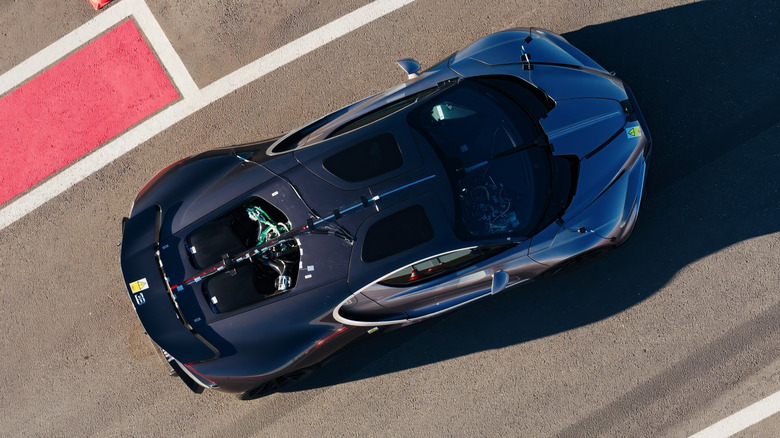
While testing in Spain, Bugatti was focused on validating the car's entire cooling architecture, including the climate control system. Engineers positioned more than 200 thermocouples across the Tourbillon to accurately measure its thermal state at all times. At a racetrack where temperatures can exceed 104 degrees Fahrenheit, monitoring the state of the car at every step is needed to ensure the Tourbillon can handle even the most brutal of conditions.
"The main task here was to be able to cool down these temperatures inside the cabin, but also the engine bay, while maintaining such an outstanding and sleek design on the car," Bugatti Rimac vehicle development engineer Daniel Rios Hidalgo said. "In order not to compromise the shape and the design, we have very clever cooling circuits and cooling systems inside the car to make sure that all the systems remain under controlled temperatures."
Of course, it's not just external temperatures that the Tourbillon has to deal with, but also the heat generated by its powertrain. The car features a massive naturally-aspirated 8.3-liter V16 from Cosworth that works alongside three electric motors, a battery pack, and an eight-speed dual-clutch transmission. All up, this powertrain delivers 1,775 horsepower and 1,696 pound-feet (2,300 Nm) of torque.