

The Reason New Tires Have Colored Stripes On The Tread
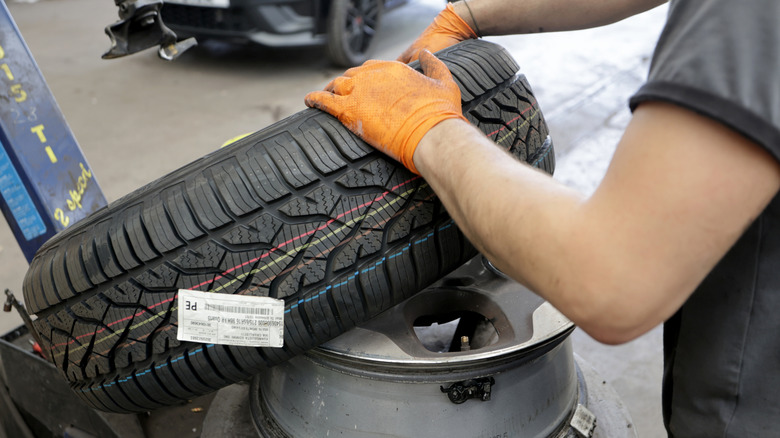
If you've ever purchased a new set of tires for your car, you may have noticed colored lines painted on the treads. They usually stand out as bright stripes that encircle the tire, and their function is to help identify products or rubber compounds as they move through production. Their purpose is for the people and equipment making the tires, rather than the person buying them.
German company REA, which supplies marking equipment to the tire industry, says automated color lines are used for material type identification. Its systems can mark rubber components and finished tires, giving factories a way to distinguish materials and products during production. Those markings are an important tool for workers or machines to distinguish one type of tire from another. By the time the tires arrive at a retailer and have been installed on your vehicle, the painted lines have served their purpose. They will eventually wear off as the tires accumulate mileage.
The colors have no universal meaning
This is where things get a little more interesting because the tire industry hasn't exactly unified its thinking here. Specifically, that means that a blue line on a tire from one brand won't necessarily mean the same thing as a blue line on a tire from a different brand. These markings belong to the manufacturer's identification system, so a color cannot reliably tell a shopper what kind of tire they are looking at without the relevant factory's code. Simply put, these lines are just internal tools designed to make the production process easier.
The combination matters, too. In the patented marking process, two colors work together to identify a tread compound. Reading just one stripe would miss part of that information. Treating every red stripe as a particular performance rating would therefore be a poor shortcut. Notably, the colors mean nothing to consumers when it comes to picking out a tire.
The markings that matter most
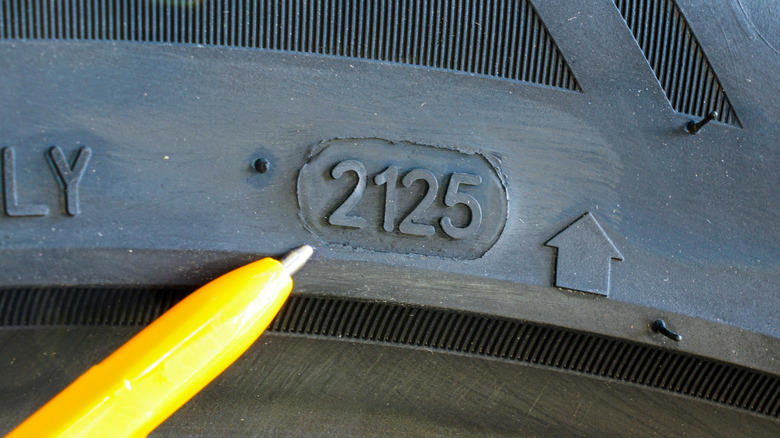
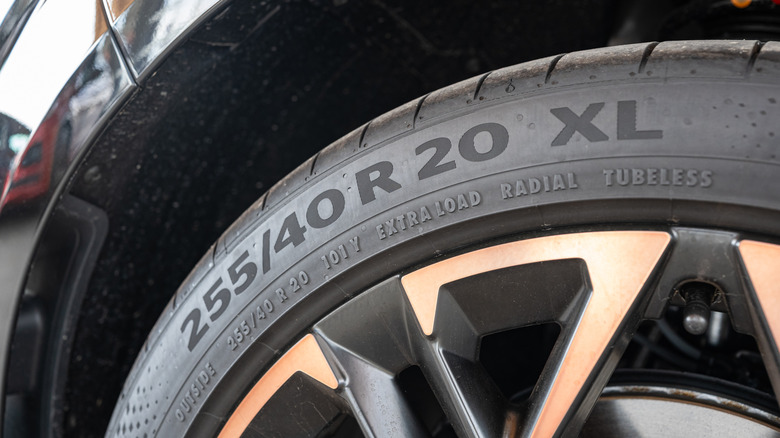
While you don't need to worry about the painted lines on a tire, there is plenty of information consumers should pay attention to. This includes checking a tire's size, model, load index, and speed rating. Those details are typically written in plain English on the sidewall, but other information is coded. For example, note the figures in our image above. "2125" is the date code on this particular tire. It means that it was produced in the 21st week of 2025.
That's key because most tire manufacturers recommend replacing tires every five or six years even if they have good tread left on them. With knowledge of the date code, you can also confirm that you're not buying tires that are a year or two older than brand new.
Mounting instructions matter as well. A directional tire uses a sidewall arrow to indicate its intended direction of rotation. That is an installation instruction a fitter needs to follow, rather than a colored stripe to interpret. In other words, tires already carry plenty of useful information for owners. The temporary-looking rainbow around the tread just happens to be the bit intended for someone else.