

Modern Cars Are Ditching The Dipstick: Here's Why
It's all dashboard lights and touchscreen warnings these days

For decades, the vast majority of cars had a very simple tool to help owners properly maintain their car. That tool was a dipstick, and it enabled a quick, objective look at whether or not an engine or transmission had enough fluid inside for safe operation. Today, many cars don't offer that same simple tool to their owners. Instead, they offer digital displays that are often hidden deep in touchscreen menus. That can feel like a real step backward for DIY drivers. There is, however, a reason behind the change.
In 2024, Automotive News got the word about this change straight from the automakers' mouths when it comes to why they're eliminating dipsticks. "Today's consumer does not prioritize manually checking the oil level. With a sensor, that info is presented to them every time they turn on the ignition. This is customer-focused engineering," said Stellantis spokesperson Dale Jewett. A Mercedes-Benz USA spokesperson echoed that sentiment.
"With digital oil level measurement, customers can easily monitor their vehicle's oil level in their vehicle's driver display and receive timely alerts if the oil level is outside normal limits. This proactive approach helps to avert potential engine damage," said Mercedes' Andrew Brudnicki. And an important part of this equation is that most folks aren't entirely sure how to read a dipstick.
Changing behavior
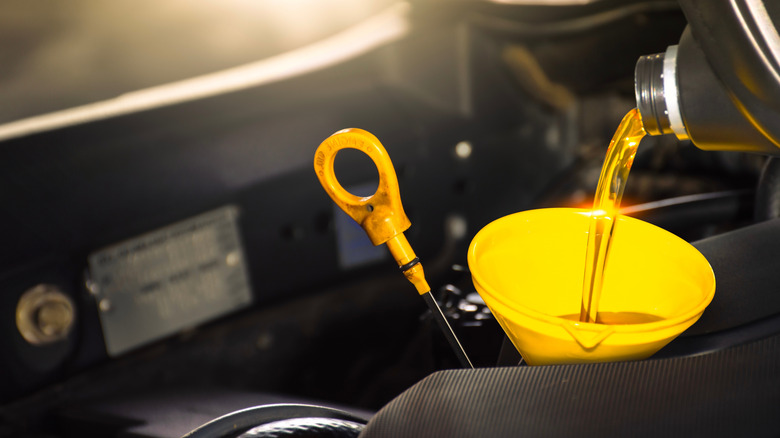
Imagine the average dipstick (if you even know what one looks like). Some have little hatch marks, others have build-in bends, others have the abbreviations like "Min" and "Max" on the dipstick in the world's smallest font, and some simply have a plastic tip with a range to aim for if you're filling your car up with extra oil. The average car owner in a situation where they need to add oil might have difficulty filling it to the proper level, especially if they're unfamiliar with the process — and both under-filling or overfilling can have serious consequences.
As that same Mercedes spokesperson put it, by using a digital reader to measure fluid fill, "the accuracy of the oil measurement is not reliant on a person's expertise. Digital measurement eliminates the risk of human error as external factors that can result in misinterpretation of the oil level. For example, if the vehicle is not on a level surface, differences in cold and warm measurement, the angle at which the dipstick is viewed."
Michael Crossen, a test project leader at Consumer Reports, takes that idea a step further. "You also have the scenario where the customer does check the oil with the dipstick, and maybe it is a little low," he said. "And they want to top it off. The customer could overfill it, which isn't great. And a lot of cars are requiring very specific oil. Manufacturers don't want someone just dumping in whatever they have lying around."
Automakers don't trust you
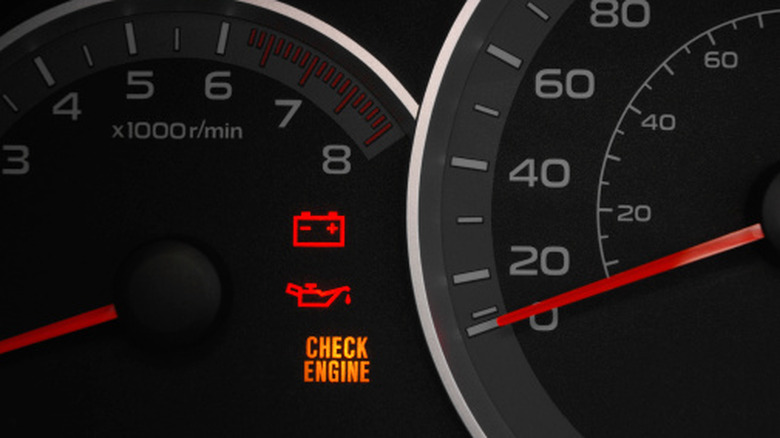
"Manufacturers don't really want the driver, their customers, under the hood anymore. A lot of cars now are hybrid and have high voltage, and there's a higher safety concern," said Crossen. And frankly, it's not hard to see why in some cases. As we've highlighted already, it's easy for the layman to fill a gearbox or engine with the wrong fluid or not fill it to the proper level. All of those situations are bad news for the owner and the health of the engine. With more complicated and high-strung modern engines, automakers probably want to avoid catastrophic failure, too.
What's more, automakers aren't in the business of offering redundancy in things like fluid level checks if they can save a buck or two on them. If there's already a digital screen with settings for engine checks, why not include oil there and eliminate the dipstick entirely?