

A 60-Year Prison Sentence Is Becoming A Test Of Warrantless License-Plate Tracking
The use of Flock cameras is once again generating controversy
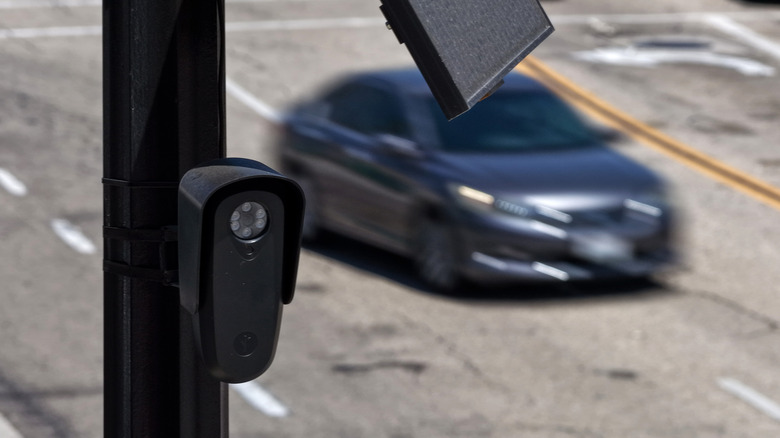
Anybody can see your license plate as you drive by. Whether police should be able to access a database that includes a searchable history of where that plate has been is a different question entirely. Now, whether or not police can do so without a warrant is about to go before a court in Texas. At the center of the fight is an armed robbery case that has sent a man to prison for 60 years. As The Texas Tribune reports, Charles Brownlee is challenging his conviction and 60-year sentence after investigators used records from fast-spreading Flock cameras to connect him with five armed robberies around Dallas-Fort Worth in 2024.
His lawyers argue that reconstructing those travels required a warrant. The trial judge disagreed. Now, the Fifth Circuit is considering the appeal. Flock's system gives investigators considerably more to work with than a simple license plate photograph. Its searchable database includes vehicle descriptions and identifying details, allowing police to work backward from a car's appearance before they know its registration. According to Courthouse News, investigators in Brownlee's case searched for vehicles matching eyewitness descriptions of the getaway car. They identified an SUV near multiple robbery scenes, then used the database to locate it.
Brownlee's attorney, Matthew Wright, argues that this ability to reconstruct someone's routines amounts to a search protected by the Fourth Amendment. The prosecution sees things differently. Justice Department attorney Michael Weisbuch argued that the cameras capture intermittent sightings, rather than continuously following someone. Chief Judge Jennifer Walker Elrod questioned how that reasoning would hold up as cameras become more widespread. She's not the only one. In February, a Virginia judge backed Flock cameras, but with a warning that expanding surveillance could shift rulings.
Other rulings have their limits

Importantly, the Fifth Circuit already upheld the use of a warrantless plate-reader in United States v. Porter in March 2026. In that case, an alert helped police find a vehicle associated with a man wanted for aggravated assault. The court emphasized the system's limitations. It provided periodic sightings from multiple cameras and couldn't follow a person's movements with the same level of detail available through phone records. That said, it acknowledged that plate-reader data lets investigators retrace earlier travels.
Brownlee's appeal asks the court to assess a broader use of that capability. Prosecutors also raise a separate obstacle. Namely, he was a passenger in his sister's car, and they argue he lacks standing to challenge the database search. On top of that, they say that additional data helped locate him. No ruling deadline is set for now. In case all of this didn't feel convoluted enough, don't forget that early this month, a U.S. District Court judge found an officer's warrantless search of a person's plate-reader history violated the Fourth Amendment.