

Toyota's Next Hybrids Will Sip 15% Less Gas, And They Can't Come Soon Enough
Hybrids aren't dead yet, and Toyota's gas-electric models are going to get more fuel efficient
High gas prices are one of the big talking points as Americans head to vote in this year's mid-term elections, and while EVs continue to rule the headlines, Toyota is proving that hybrids aren't dead yet. The Japanese automaker has dropped new details about its next generation hybrid vehicles, but the most important is the promise that they'll consume 15% less gas than today's equivalents.
The frugal engine at the heart of this claim is a 1.5L inline-4 that Toyota has been talking about since 2004, but this is the first time we've had any indication of its efficiency. The engine was designed with electrification in mind, and it will work in both straight hybrid and plug-in hybrid setups. Toyota confirmed that a naturally aspirated version will take over the work of today's 1.5L inline-3 and 1.8L inline-4 engines.
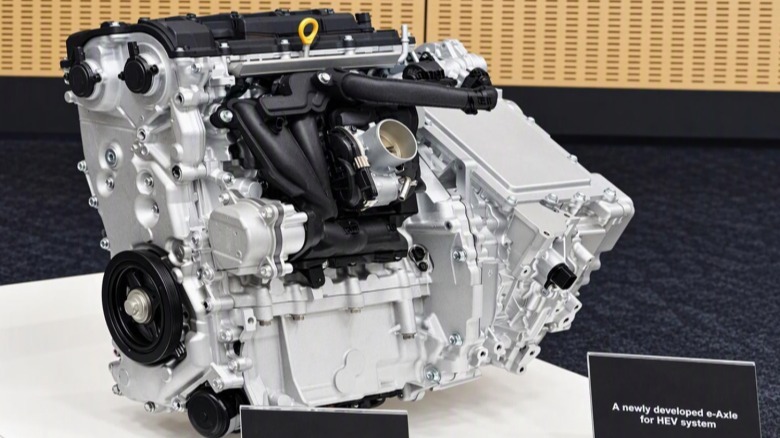
Lighter, more compact electric motors will help cut powertrain mass, which is bound to have a small effect on efficiency. But Toyota says most of the fuel savings come from lower mechanical friction, improved thermal management, reduced electrical losses, and lower aerodynamic drag from the car they're bolted to.
The new 1.5, and a punchier 2.0L inline-4 that was also revealed back in 2024, are expected to hit the market in 2027. And it won't only be Toyota customers reaping the benefits. Toyota expects to make $1.7 billion per year selling its next generation hybrid powertrains to other automakers, Auto News reports. The identity of those brands is unconfirmed, but could include Subaru and Mazda, which formed a powertrain alliance in 2024.
One platform for all
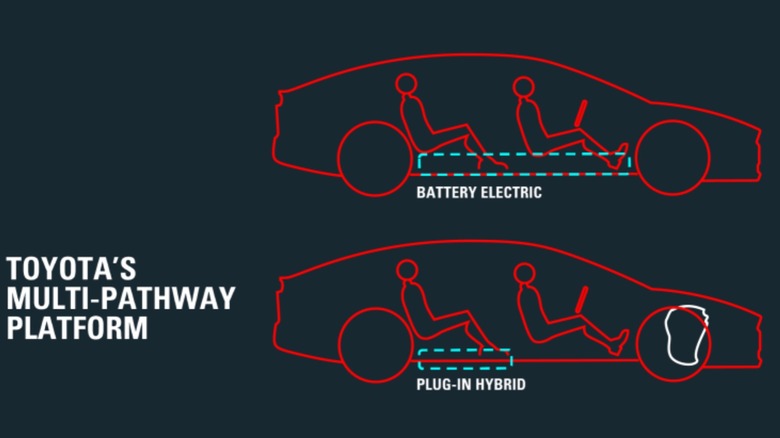
Toyota revealed the 1.5L engine's efficiency claim as it detailed its "multi-pathway" platform strategy for future cars. Instead of building its next generation EVs and hybrids on different platforms, as BMW does, Toyota plans to build them on a common platform, something Mercedes and Stellantis already do.
Sharing platforms leads to greater financial and engineering economies of scale, Toyota says, and allows plants to easily flex the powertrain mix to suit changes in customer demand. The traditional downside of sharing is that designers can end up compromising a car with one powertrain type to ensure another type hits all of its marks. But Toyota says neither the hybrid nor battery-electric versions of its next generation cars will be compromised.
The gasoline-electric versions will have the exact same interior space, and even the same silhouette, as their EV brothers. And the lower-profile engine and hybrid packages will allow lower hood heights and "more dynamic vehicle proportions," Toyota says, giving its designers more freedom. A single image shows three identical fastback sedans in silhouetted form, with the EV's battery occupying the full front-to-rear floor, the PHEV's the rear floor, and the hybrid, a small area under the rear seat.
Toyota was slow to embrace full electrification, despite pioneering hybrid technology almost 30 years ago, and it still thinks hybrids have an important role to play. It also says the new hybrids have been developed to run on renewable and carbon-neutral fuels to extend combustion power's timeline. With EVs booming in Europe but going backward in the U.S., betting on hybrids hanging around for a while seems like a smart move.