

Fridge Hacking In Europe Making Case For Slate In United States
AI-enabled hacking agents guarantee that a massive cyberattack is just a matter of when, not if
Supermarkets across Europe are being hit by cyberattacks on their fridges. These attacks are preventing refrigerators and coolers from cooling, causing food to spoil and costing stores large sums. One of the main questions being asked is: Why are fridges connected to the internet anyway?
While some speculate this is part of a hybrid warfare campaign by Russian hackers, the Kremlin has denied involvement. What is known, for sure, is that IT systems are often vulnerable to attack, and the proliferation of artificial intelligence and tools built around AI makes it easier than ever to hack and exploit systems. Do you remember when every piece of technology that ran PHP needed updating? That was an exploit found via AI tools.
Additionally, automakers are focusing even more on the connected car experience. A couple of weeks ago, General Motors highlighted plans to launch OnStar AI and use cloud services to store things like dash cam footage. Even though the footage will be end-to-end encrypted, it may still seem unnecessary. Just today, Ford announced its new privacy policy for connected vehicles, assuring us it'll protect our data and let us opt out of certain features if we choose.
Air gap your fridge, and your car

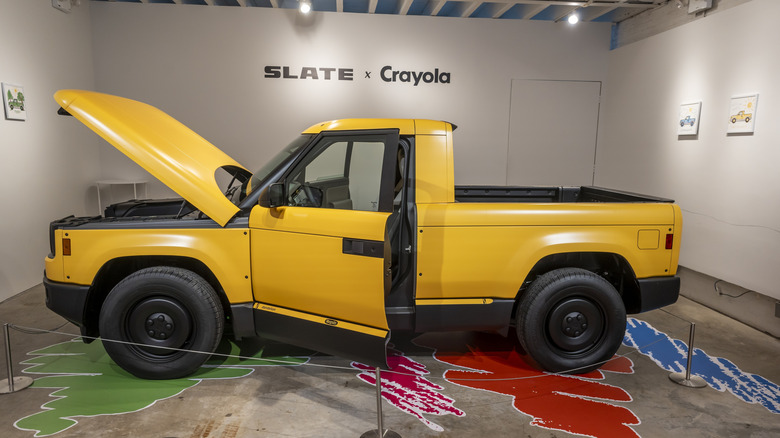
That brings me to Slate Auto. If this is the first time you've heard about Slate, congratulations on coming out from that rock you live under. Simply put, this back-to-basics pickup truck is the polar opposite of what other automakers are doing with their connected vehicles. The planned launch of this affordable, all-electric truck couldn't be timed any better as U.S. gas prices continue to set records for all the wrong reasons.
Despite being advanced EVs, Slate trucks feature that old-school simplicity. There is no infotainment standard, and even remote climate control requires a telematics module that costs extra. If you leave your home without your phone, your truck can't connect to anything while you're out and about. Presumably, some data is stored that a service department can recover, but that requires hooking your truck up to a service computer, which not everyone has.
Now, do people actually want a truck with two doors, crank windows, and bare-bones creature comforts? That's yet to be seen. With the increase in AI-enabled hacking, a massive automotive data breach isn't a matter of if, but when. And we're not hearing enough from automakers about how they are working to protect us from that — or something even worse — when they talk about the brave new world these connected vehicles will usher in. I, for one, want to know more about that before I embrace an even more connected future.