

Here's Why Fuel Economy Drops So Much At 75 MPH
It has to do with aerodynamics

It is a well known fact that combustion vehicles have greater fuel economy ratings on the highway rather than in urban driving scenarios. However, this reality can be easily reversed if you exceed a certain speed threshold. Setting the cruise control to 75 mph may seem to be a good compromise between travel time, safety, and fuel consumption. However, data proves you could be saving more money by easing off the throttle.
Generally speaking, engines burn more fuel when they get pushed. But it's not only acceleration that forces an engine to work hard. Weight and aerodynamic resistance perform an important role in efficiency. So where does speed come into play? The math comes down to fluid dynamics. Aerodynamic drag force is directly proportional to air density, the object's frontal area, its streamlined shape, and the square of its speed. The "square" part is what makes speed more important than the other factors.
Driving slower saves on fuel costs
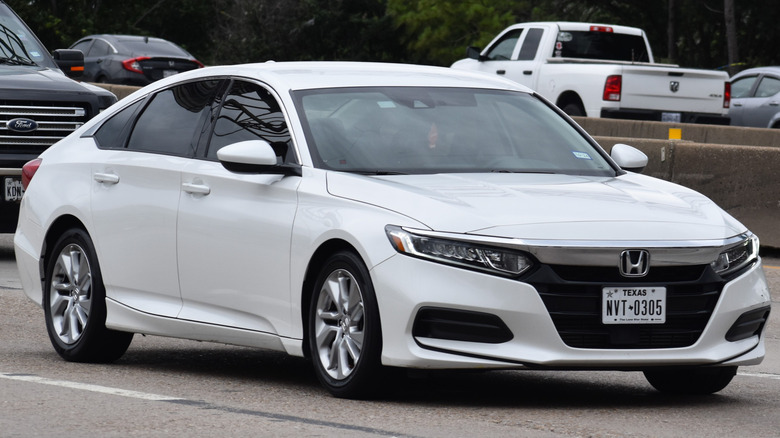
According to government data from the Oak Ridge National Laboratory, the fuel efficiency of a conventional midsize sedan travelling at 55 mph is 45 mpg. This figure drops to 38 mpg if you accelerate to 65 mph and takes a further dip to 32 mpg at 75 mph. The effect of these numbers is even more profound at a time when fuel prices have skyrocketed. Based on the current U.S. average price of $4.25 per gallon of regular gas, someone who covers 15,000 highway miles per year can save as much as $576 annually if they drive at 55 mph instead of 75 mph.
As for vehicles with other kinds of powertrains, the fuel efficiency of a diesel car drops from 55 mpg at 55 mph to 37 mpg at 75 mph. At the time of writing, diesel costs $6.35 per gallon in the U.S., meaning that the annual savings for 15,000 highway miles are over $800 per you if you stick to 55 mph instead of 75 mph.
Do hybrids suffer the same fate?
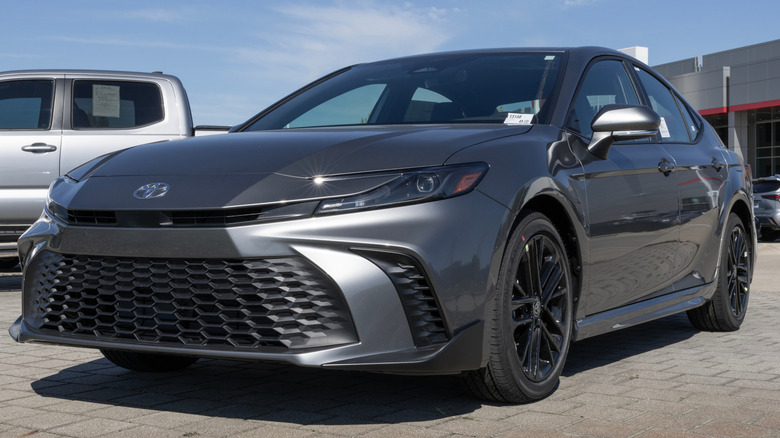
Electrified models are not immune to the issue as they are also greatly affected by drag. According to the same study, a hybrid midsize sedan drops from 46 mpg at 55 mph to 33 mpg at 75 mph. Notably, hybrids reach their efficiency peak at 45 mph, where they return up to 55 mpg, meaning fast highway cruising negates much of the hybrid powertrain advantage. Bear in mind that these estimates are for sedans, meaning that boxier trucks and SUVs with a larger frontal area will have a greater penalty at higher speeds.
Finally, while we don't have access to equivalent data for EVs, range drops when you go faster, forcing you to spend more time charging. Still, EVs typically have favorable drag coefficient by design, and electricity costs are lower than gasoline and diesel. To conclude, drivers who are patient enough not to exceed 55 mph on the highway are going to have some spare cash at the end of the year. If you want you lower your fuel spending even further, be sure not to carry unnecessary weight or equipment that might increase drag.