

Why Condensation Builds Up In Your Car's Headlights (And How To Get Rid Of It)
A little fog is normal, but the wrong kind could cost you thousands.
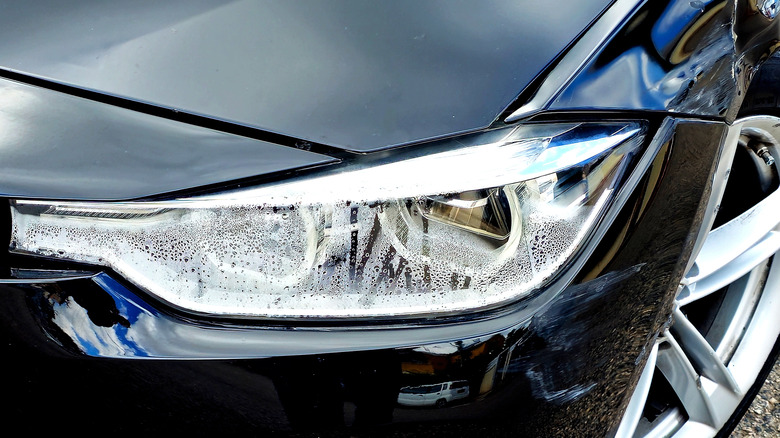
Headlights help you see where your car is going, but they're also fundamental to the way it looks. And both of those strengths can be negatively affected by a buildup of condensation behind the headlight lens, which is one reason some companies are now designing headlights that operate without a lens altogether.
Having anything impeding the light beam, even slightly, means the lights aren't operating as intended, or giving you the safe levels of night vision they would in optimum condition. Seeing beads of moisture on the inside of the lamp lens can make a relatively new car look old. It's not quite as ugly as that nasty yellowy cataract effect that really old lights get after years of sun exposure, but it comes a close second in our book.
The condensation is caused by moisture trapped inside the headlight assembly. And what some people don't realize is that a little misting can be completely normal. Headlight bulbs generate a lot of heat, and hot air expands, so vents are fitted allowing the hot air to escape before it causes any serious damage. That warm air inside the housing can turn into water droplets when it comes into contact with a lens that's been cooled by a car wash jet or night air.
The misting should disappear when you turn on your lights if the headlight is functioning properly. But if it still looks like the door to a gym steam room 20 minutes into your journey, you know you have a problem.
How much does it cost to fix headlight condensation?
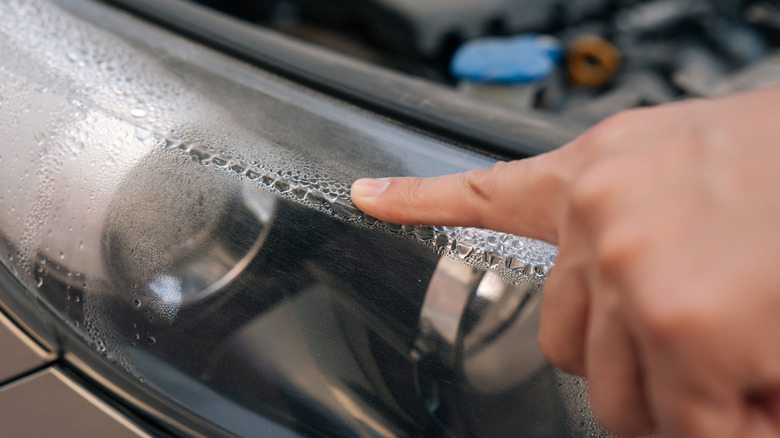
Fixing your headlight condensation might cost you nothing except a few minutes of your time. Or it could cost you hundreds or even thousands of dollars for some modern headlights, depending on which route you take. With that in mind, you'll want to start with the simple remedies. For a quick fix, try running your high beams for a few minutes, gently warming the lens with a hairdryer on a low setting, or leaving a silica gel pack behind the bulb access cover (just remember to remove it). If the fog returns within a day or two, moisture is still getting in from somewhere. Locate the vent on the headlight body and check to see if it's clear of debris. If it's not, you can try wiping it clean. You might hear some people suggest blasting the vent with some compressed air, but that risks blowing muck into the headlight assembly.
One other controversial tip we do not recommend is to drill some additional vent holes into the headlight. It can provide some temporary relief from condensation, but it's not getting to the root cause of the problem.
Next, check the seals. If the foam or rubber seal on the bulb access cover is worn, you can usually replace it cheaply. Fixing the seal joining the front lens to the headlight body can be trickier. Many headlights are not designed to be taken apart, but if you do manage to separate yours, you can try using silicone to stick the two parts back together.
If none of that works, or you'd rather start fresh than patch up an old light, you'll have to dig deep for a brand-new headlight. A basic pattern-part halogen unit for an older car might only cost you about $50 at AutoZone, but one owner of a 2023 BMW M4 Competition explained on Reddit how his dealer billed him $8,510 including fitting to replace a single laser headlight assembly.