

The Olds Calais Was An Indy 500 Pace Car Edition With No Pace
This one is currently up for auction
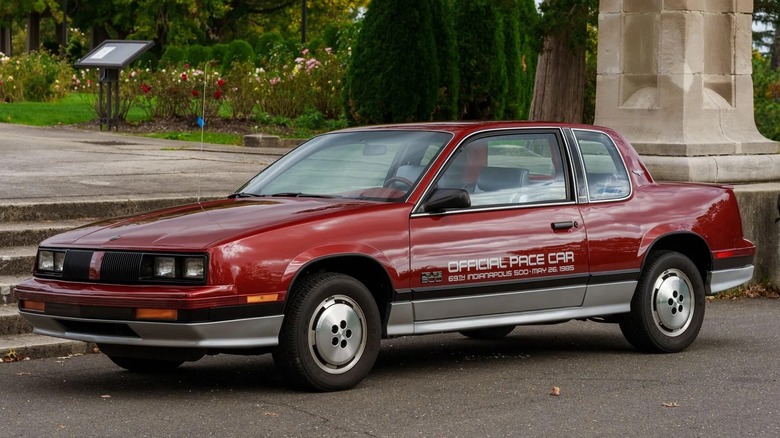
For as long as there's been an Indianapolis 500, there's been an Indianapolis 500 pace car. But it took until 1953 — 42 years after the inaugural race — for automakers to realize they could make bank by peddling replicas of the sedans, coupes and convertibles that led the field. Some of these lookalikes, cars like the orange and white 1969 Chevy Camaro SS/RS, and the the black and silver 1978 Corvette pace car replica, are blue-chip collector classics. Others, like this Oldsmobile Calais 500, which is up for auction through Bring a Trailer, are rarely remembered.
Oldsmobile reportedly built 2,998 Calais 500 commemorative pace car editions (confusingly, some sources say just 242), though none of them looked anything like the real version. The genuine Indy Calais driven by Rockford Files star James Garner, (there were actually two cars) was a special convertible version that Olds never offered to the public.
Also not available via your Oldsmobile dealer, was the real pace car's specially tuned 2.7-liter version of GM's 2.5-liter Tech-4 inline-4 that whipped up 215 horsepower to ensure it could stay ahead of the open-wheel Indy racers.
The 92 hp pace car
The Calais was new for 1985, and shared its front-wheel drive N-body platform with the Pontiac Grand Am and Buick Somerset Regal. It came with either two or four doors, both with a vertical back window style lifted from Olds' bigger cars, a hangover from the 1970s that looked about as modern as cycle fenders and wooden spoked wheels.
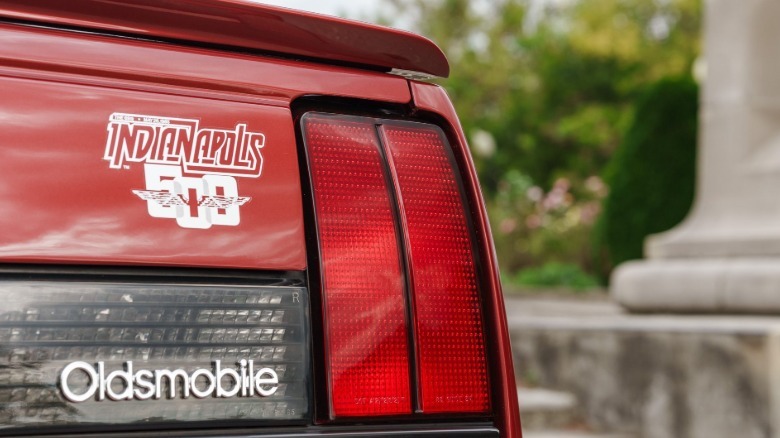
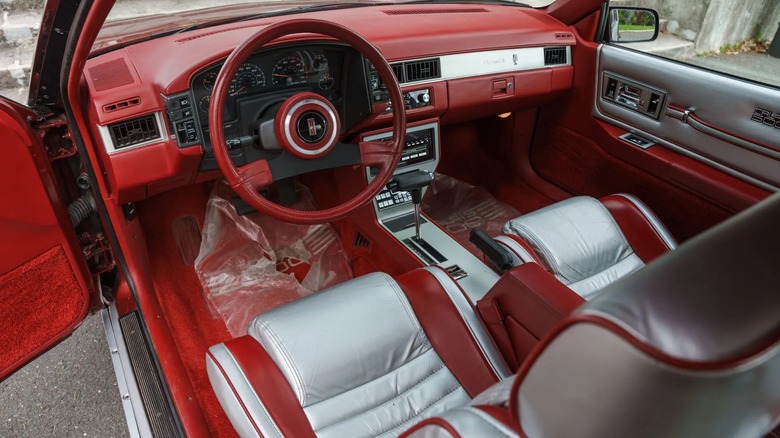
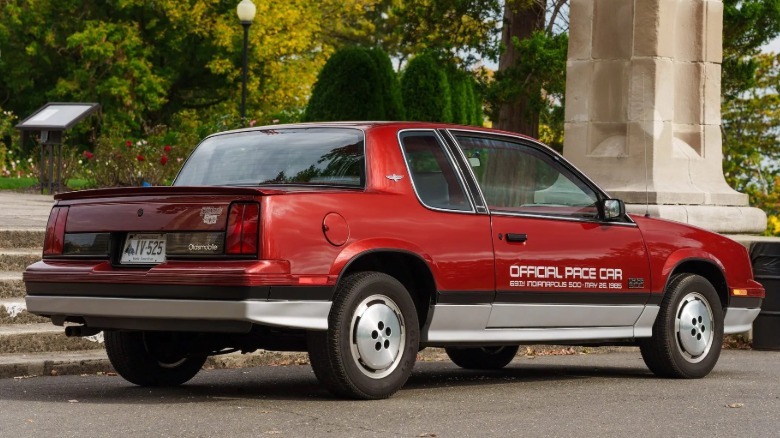
All pace car editions got the two-door body, and came dressed in red metallic paint with a silver lower body, silver pace car graphics plastered across the doors, plus another sticker on the tail, and a couple of badges. They also got a silver and red bucket seat interior that made the car look like it was built to celebrate a NASA launch, not an automobile race. And, after that, Oldsmobile seems to have run out of ideas.
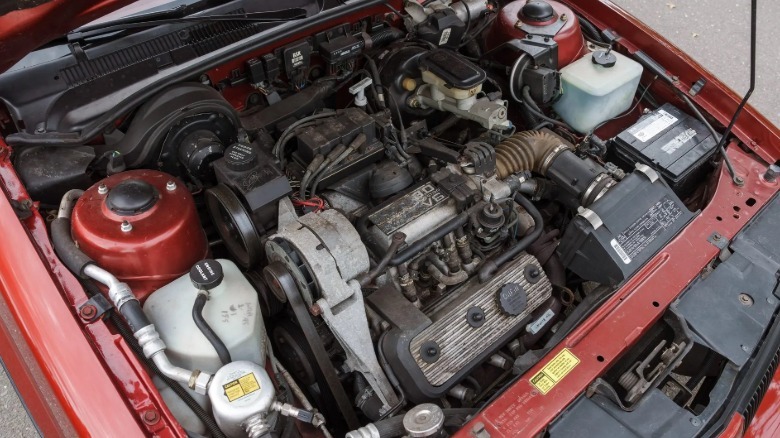
There were no mechanical upgrades, and you could even order your Calais 500 pace car edition with that year's standard Calais engine, the 92-horsepower 2.5-liter inline-4. Maybe the 500 referred to its 0-60 mph time. Salvation of sorts came in the form of an optional 3.0-liter V6, which pushed out 125 hp, though that meant forgoing a five-speed manual option, and putting up with a three-speed automatic.
Motorweek took a Calais V6 from zero to 60 mph in 11.4 seconds, performance it described as "commendable." Which just shows how easily pleased reviewers were back then, after having endured a decade of cars with smog-choked motors.
Too early for the Quad-4
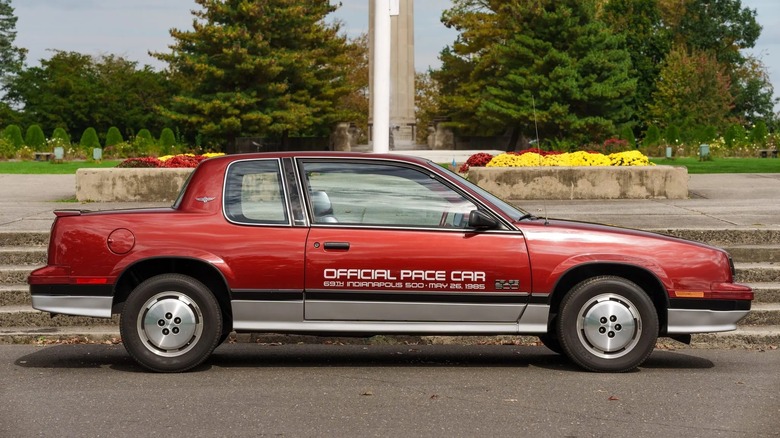
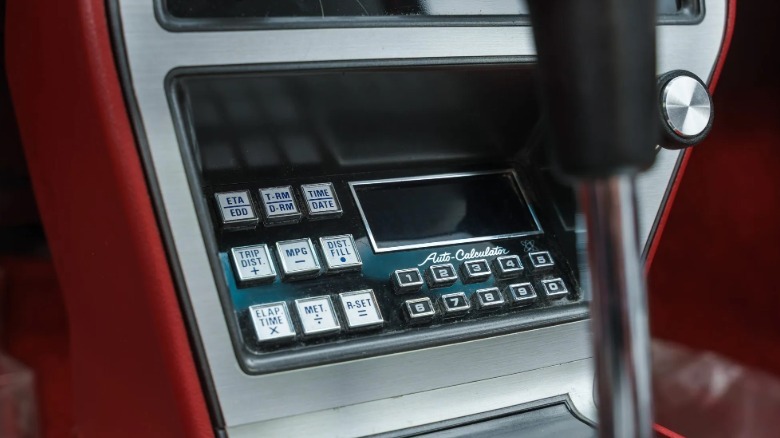
This auction Calais 500 is one of what the owner claims were 600 cars ordered with the 3.0-liter V6, and shows just 13,000 miles. Its silver interior looks virtually untouched, and the exterior is pretty peachy, too. Only the grubby engine and deteriorated hood insulation lets the the look down. Our favorite detail besides that upholstery has to be the Auto-Calculator trip computer, which must have seemed incredibly trick back in 1985.
The shame here is that the Calais did get more trick a couple of years down the line, and a whole lot faster. The pace car edition was too early for Oldsmobile's 2.3L DOHC Quad-4 engine, which while about as smooth as a sheet of P80 grit sandpaper, did crank out at least 150 hp when it debuted in 1988. Olds changed the name to Cutlass Calais at the same time.
The Quad-4's arrival even prompted Olds to apply its fabled 442 muscle car badge in 1990, and by the time the limited edition W41 442 dropped in 1991, the Calais was making a solid 190 hp. That was 20 hp more than a 5.0L V8 Chevy Camaro RS made the same year. And you could get it with a five-speed manual transmission.
Car and Driver hit 60 mph in 7.1 seconds in a W41, which sounds more like the kind of pace we'd expect from a pace car edition. But if you value door decals over horsepower, and fancy putting an obscure piece of Indy 500 history in your garage, this Olds is worth a look.