

Porsche Panamera Facelift Spied, But Can It Stop The Sales Slide?
Panamera sales dropped 38 percent this year, but Porsche hopes a MY28 update can get it back on track
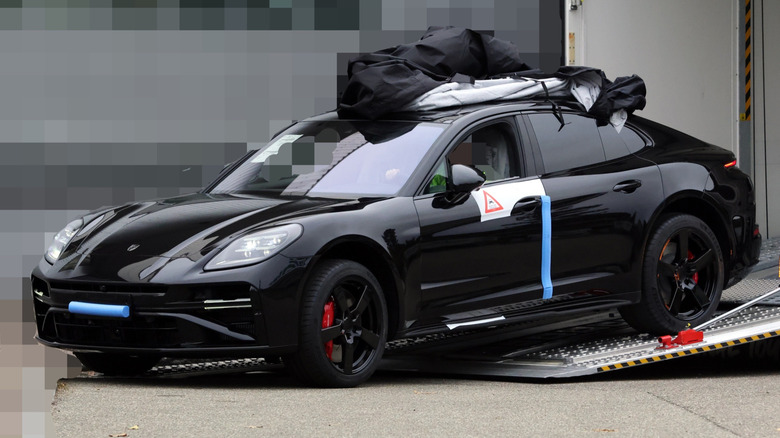
Some brands lurch from one styling trend to another, all smooth curves one minute, and boxy shapes and angles the next. Porsche isn't one of those brands. Its design philosophy evolves so slowly it makes the glaciers that formed the mountains of the Alps look fast moving. It's why the profile of today's 911 is almost exactly the same as the first one's 63 years ago, and why the changes to this Panamera prototype spotted testing at the Nürburgring are incredibly hard to spot.
The Panamera is Porsche's gasoline- and hybrid-powered sedan, an ICE companion to the electric Taycan, and was heavily overhauled for 2024. But it's been back on the surgeon's table for some more tweaking. Spy photographers snapped the sporty GTS version last month, and now we're getting a look at two of the lower trims levels, one straight gas, one hybrid, in a set of really clear images that show the sedans wearing zero disguise. That lack of camo suggests a debut is imminent for MY28.
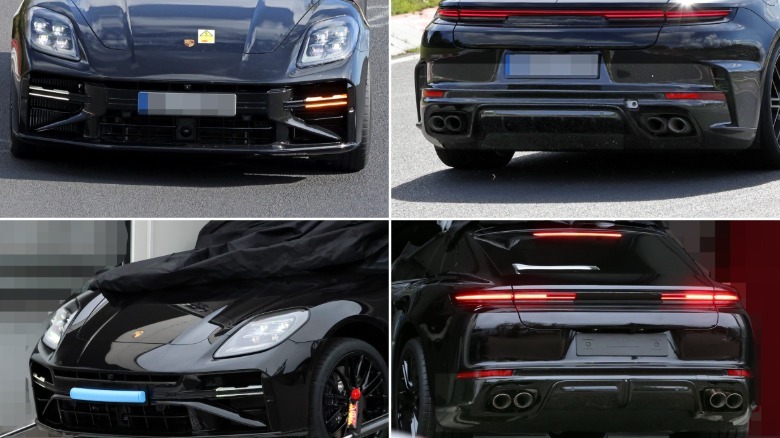 SH Proshots
You really have to look closely to tell the two apart though, from the front, at least, even without disguise. The headlights and daytime running lights (DRLs) are identical, and even the basic bumper shape is only slightly different. The most notable change between the two is that the diagonal element becomes a horizontal bar on the base car, rather then a fatter, vertical one, as seen on the GTS. We've included a picture above so you can see what we're talking about, but be prepared to zoom in.
Four pipes and a charging flap
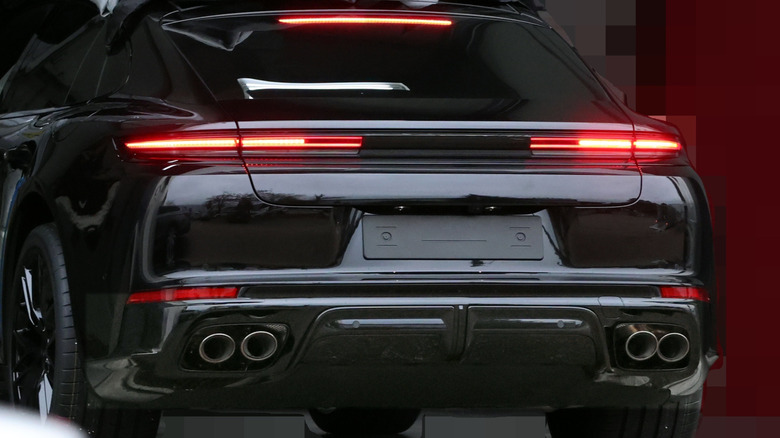
Porsche has made our job a little easier at the back. The GTS has an aggressive rear bumper with a large vent on each side, but the more affordable Panamera hybrid in these new shots (you can just make out the charging flap on the left fender) goes for a narrower, more minimalist look.
Both the hybrid and GTS prototypes have two pairs of round tailpipes, though we think the base car must be fitted with an optional sports exhaust, otherwise it'd have two pipes. But there are subtle differences in the way the rear undertray merges into the bumper. The hybrid's lower bumper is mostly smooth, while the GTS makes a vague attempt to look more like a diffuser. Both look sportier than before. Just don't bank on those new parts producing much meaningful downforce.
Elsewhere on the rear end, a long, narrow strip of LED taillights runs across the tail as on the current car, and Porsche's R&D team has taped over the illuminated "PORSCHE" lettering introduced for 2024. Overall, there's not much to tell the new car from the old.
And it's likely that the engine lineup won't be radically different either. Today's entry-level Panamera comes with a 3.0-turbocharged V6 that makes 348 hp (350 PS), the 4 E-Hybrid also gets a 3.0-turbocharged V6, but it pumps out 463 hp (469 PS), and the 4S E-Hybrid makes 536 hp (543 PS).
Porsche's sales tanked recently, and the Panamera contributed to the pain. Panamera sales fell 38 percent to just 9,308 cars in the first six months of 2026, so this facelift has got a big challenge ahead of it.