

Tesla's Cybertruck Has Only Months To Live
Elon Musk confirmed that Cybertruck production in Texas will end in 2027 to make way for the Cybercab
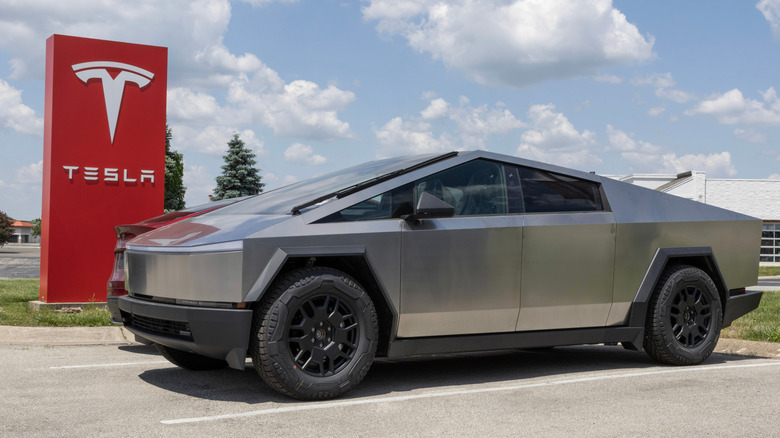
Tesla's CEO famously declared the Cybertruck could brush off an assault from a 9mm handgun at its 2019 launch, but now he's fired one bullet the angular pickup can't dodge. "Tesla will be winding down production of the Cybertruck at Gigafactory Texas around the middle of next year to make room for increased Cybercab production," Musk wrote on X,the social media platform he bought in the long gap between the Cybertruck's 2019 debut, and the first production trucks being delivered to customers in December 2023.
Cybercab is Tesla's fully autonomous taxi, a two-seater pod with supercar-like scissor doors and no steering wheel. It made its initial debut in 2024, was shown in production form this September, and began offering limited paid public rides in Austin, Texas, the same month. Musk is betting big on the driverless machines, as well as robotics, and that leaves less room and resources for the vehicles that made the brand's name. He has already axed the Model S sedan and Model X SUV, and a long rumored small Tesla never materialized.
The Cybertruck is only built in Texas, and while Musk didn't explicitly say the pickup would die completely, rather than shift production to one of Tesla's other US sites, the implication is that it's the end of the road for one of the world's most controversial utilities. That implication is backed up by another social media post, this one from Wes Morrill, who was lead engineer on the Cybertruck project. "Cybertruck was an incredible technology platform and lives on through Cybercab," Morrill said on X. "Thanks to everyone who contributed to making the future looking like the future."
The hype and the fall
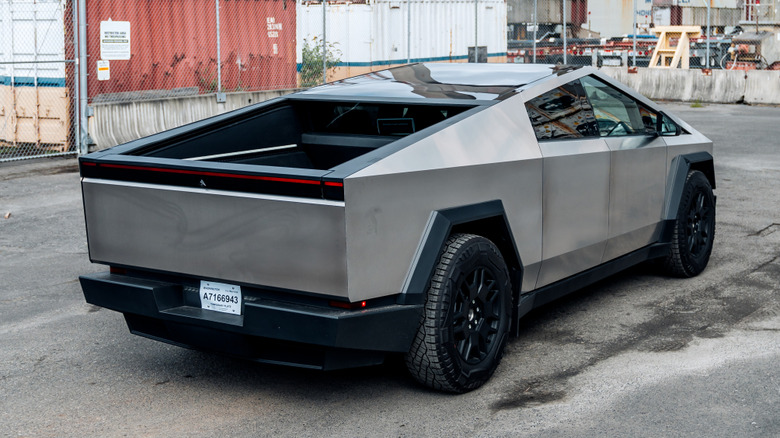
And it's not hard to see why Musk felt compelled to pull the plug. He once suggested Tesla might sell 250,000 Cybertrucks annually, potentially rising to 500,000 units. The reality was rather different.
Just 11,586 Cybertrucks were sold in the US in the first nine months of 2026, according to Cox Automotive estimates, that number down 28 percent from the same period in 2025. And 2025's production figures were themselves down 48.1 percent from the previous year's sales. Total sales are believed to be around 71,000 in almost three years, and a good chunk of them – almost 20 percent of Q4 2025's output – went to businesses owned by Elon Musk.
The Cybertruck's brutal, angular stainless steel design was polarizing from the start, though some truck buyers loved how different it looked from traditional American pickups. Others were disappointed that the production truck landed wearing a sticker price 50 percent higher than the $39,900 Musk had initially promised for a base, single-motor, rear-wheel drive truck.
The exclusively all-wheel drive launch lineup started at $62,380 (including $1,390 destination), and topped out at $101,290 for the 845 hp (857 PS / 630 kW), triple-motor Cyberbeast. Tesla did eventually add a more affordable single-motor Cybertruck costing $71,985 in April 2025, but sales were weak, and it was pulled only months later.
Cybertruck owners have also endured multiple quality problems that have led to several recalls, including campaigns to fix exterior trim detaching at speed, accelerator pedals getting stuck down (extra scary in the Cyberbeast), and windshield wiper failure.
Answering a tweet from a concerned owner about factory and dealer backup in the wake of the revelation, Wes Morrill confirmed that "Tesla will maintain spare parts and service will continue [to] support."