

U.S. Automakers Still Pushing For Complete Ban Of Chinese Cars
They don't want the competition from cheaper autos.
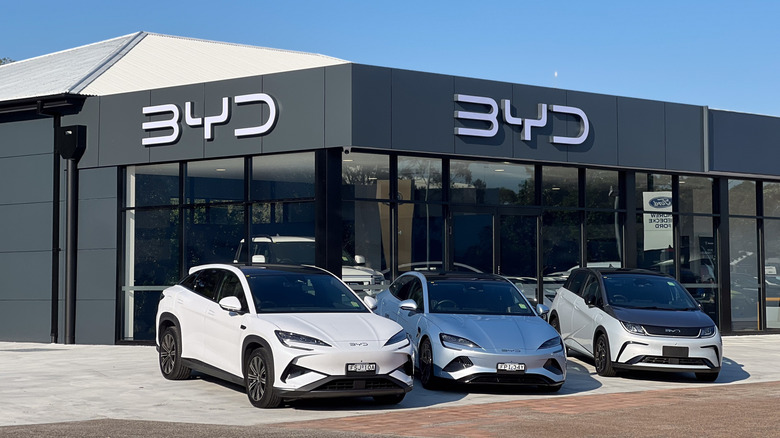
The potential for Chinese automakers to sell cars in America is something we've talked about all year long. Just a year or so ago, it seemed like an impossibility. Today, everything is flipped on its head and domestic automakers are so afraid of having to compete that they're begging lawmakers to make sure the market is anything but free to Chinese companies.
According to Reuters, the Alliance for Automotive Innovation renewed that call on Monday. Its membership includes Ford and GM alongside Toyota, Volkswagen, Hyundai, and other foreign brands with a stake in the American market. The group's president, John Bozzella, urged Congress to "stop Chinese automakers from doing here what they've gotten away with in Europe."
He pointed to EU imports of more than 1.1 million Chinese-built vehicles during the first eight months of 2026, exceeding the total for all of 2025. The argument basically breaks into two major categories. First, concerns over privacy and vehicle surveillance. Secondly, a desire to insulate domestic automakers from having to compete with a product that is vastly cheaper and, in many ways, more sophisticated.
Restrictions already exist

In case anyone forgot. Chinese automakers already don't sell cars in America. There are tariffs that keep those automakers and plenty of others out of the country. In January 2025, the Biden administration finalized connected-vehicle restrictions targeting certain Chinese and Russian technology, as well as manufacturers with sufficient ties to either country.
Software restrictions and the prohibition on covered manufacturers selling new connected vehicles take effect for the 2027 model year. Restrictions covering vehicle-connectivity hardware follow for the 2030 model year, with a separate January 2029 deadline for hardware without an associated model year. Importantly, these restrictions apply even when a vehicle is built in the USA. It's what has basically kicked Polestar out of the country. And Congress could make barriers like that more durable.
The Connected Vehicle Security Act of 2026, sponsored by Republican Bernie Moreno and Democrat Elissa Slotkin, would put restrictions into federal law. It advanced unanimously from the Senate Commerce Committee in July, so it's already got some support. It covers connected vehicles, specified software, and connectivity hardware associated with countries of concern. It also targets attempts to bypass the restrictions by renaming, rebranding, or restructuring covered products.
Of course, President Donald Trump could nix the entire thing via a veto if he wants to. He said in September that he'd be open to Chinese cars in America so long as they're built stateside. Automakers wouldn't love that. Lawmakers might not either. But the folks paying over $50,000 on average for a new car might not be too dismayed.