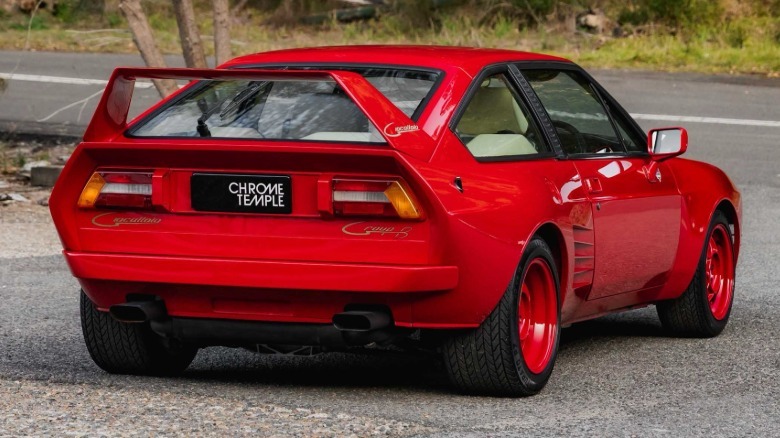
Australia Built A 1980s Supercar Out Of A Front-Drive Alfa Romeo
Just 15 of these Group B supercars were built to hunt Porsches with Holden V8 muscle.
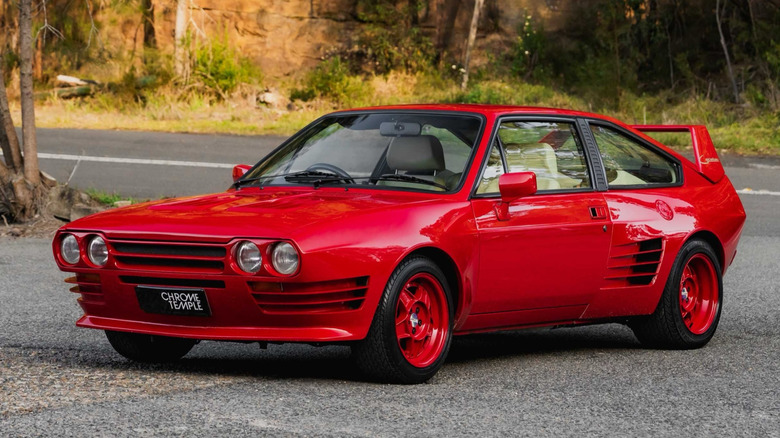
In the 1980s, the World Rally Championship (WRC) threw common sense, and a bunch of rules, out of the window. This was the Group B era, when automakers had virtually carte blanche to build the fastest, craziest machines they could think of. That freedom resulted in some spectacular motorsport, some tragic accidents, and, indirectly, the creation of a little-known Australian supercar built from the unlikely starting point of a front-wheel-drive Alfa Romeo coupe.
Alfa Romeo was one of the brands intrigued by Group B's opportunities, and in 1982 it showed the Alfasud Sprint 6C, a rally prototype created by dropping a 2.5-liter V6 into the back of the Sprint coupe version of its Alfasud subcompact. But Alfa was in dire financial trouble — it would ultimately be sold to Fiat in 1986 – and the 6C project was scrapped in 1983, and mostly forgotten.
But not forgotten by Australian IT entrepreneur and exotic car dealer Paul Halstead. Because when it came to building his own supercar, Halstead started with a regular Alfa Sprint, turning it into the Giocattolo Group B.
Forget the V6, let's go for a V8
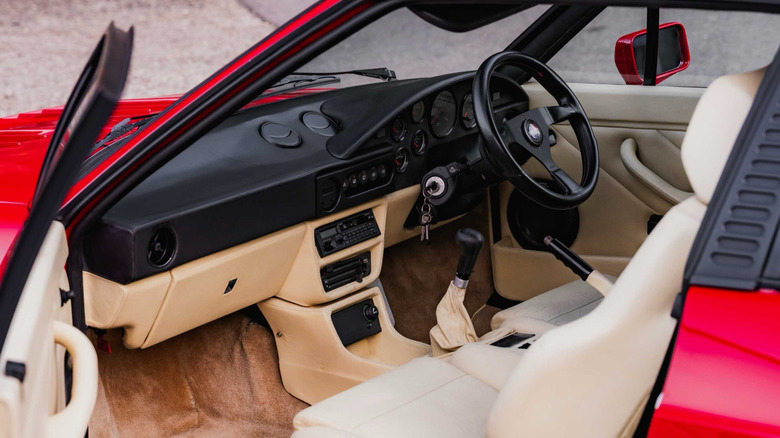
Alfa wouldn't supply bare Sprint shells for the project, so Halstead imported complete cars from New Zealand, selling off the bits he didn't need. Getting hold of 2.5-liter V6 Busso engines also proved tricky, after a deal with the Italian automaker fell through, and the solution changed the entire character of the car. Australia didn't have an abundance of alternative V6 engines, but it did have plenty of V8s, and that's exactly what replaced the rear seats.
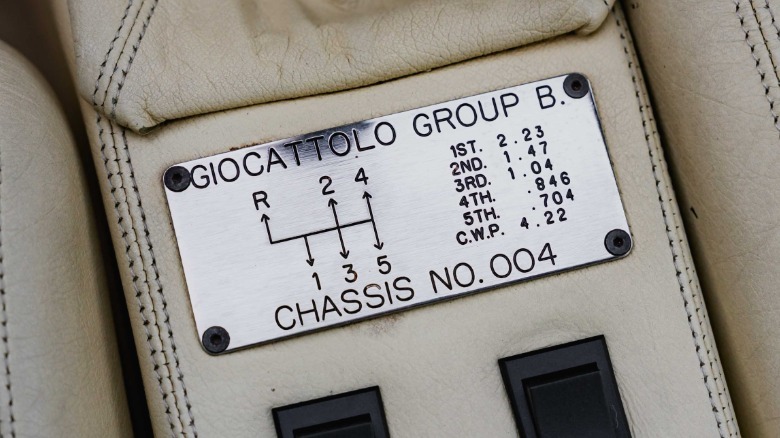
A 5.0-liter (304-cubic-inch) V8 from GM's Holden brand, to be specific, one based on the mill in the VL Commodore SS Group A SV Walkinshaw, a hot sedan built by Holden Special Vehicles (HSV). It made 295 horsepower and 369 lb-ft with some tweaks, which it sent to the rear wheels through a ZF five-speed manual transaxle with a dogleg first gear position. A console plate shows the gear ratios next to the shift legend. That's some top-level geekery.
Just getting that powertrain inside the Sprint shell required a ton of metal to be cut away, and the entire rear suspension was custom built. But composite panels helped prevent the curb weight ballooning, and the finished car debuted in 1988 weighing only 1,085 kg (2,392 lbs), even with that big cast-iron V8 behind the seats.
A light car is a fast car. A trip down the quarter mile flashed by in 13.2 seconds, Halstead told Street Machine in a 2009 interview, which put it in the same ballpark as a Porsche 911 Turbo. No wonder the trunk-mounted tool kit contained a bottle of rum.
One of only 15 cars
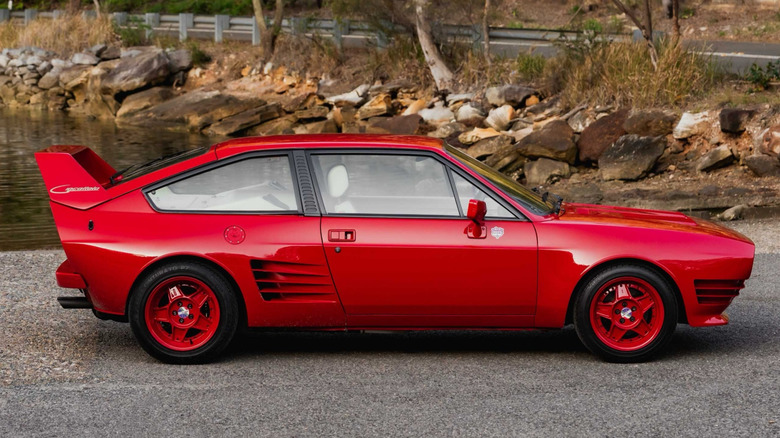
Halstead's dream quickly turned into a nightmare, and he later admitted he "lost a lot of bucks in the process." By 1989, just a year on from the launch, money woes forced the project to shut down. Only three prototypes and 12 production cars were completed before the doors closed, and they're highly prized by collectors today. One of those cars, build #4, is now being sold via Chrome Temple in Australia.
Ordered in November 1988 with Rosso Chiaro red paint and the AU$2,500 optional leather interior package, it's got that same kind of OTT vibe you see in 1980s German tuner cars from the likes of Gemballa and Koenig. There are strakes everywhere, and color-coding is the order of the day. It looks sharp, but the listing says the condition is the result of careful ownership, and not some big-ticket restoration that scrubbed all evidence of patina away for the sake of a concours win. But despite having covered just under 38,000 miles (60,664 km) in its 38 years, this Australian supercar mongrel has had a full mechanical overhaul that included a rebuild of its Holden V8 heart.
You'll need something approaching a supercar budget to take it home. It's up for AU$550,000 ($384,000), which would buy over 20 nice stock Alfa Romeo Sprints. If you could actually find that many.