

Why You Should Clean Brake Dust Off Your Rims (And How To Do It Effectively)
Brake dust can permanently stain alloys, but the fix takes minutes.
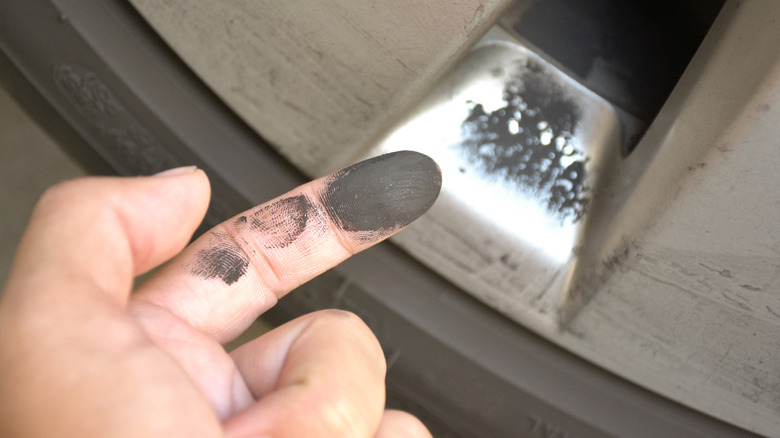
Clumsy parking can quickly make a set of handsome alloy wheels look ugly, but so can brake dust. Car brakes rely on friction between the pads and rotor to provide a deceleration force, so every time you press the brake pedal, both shed tiny fragments. Some are carried away by the air and are more harmful to our lungs than diesel emissions, one study found. But others settle on your shiny wheels, creating a dull coating that can make even the tidiest low-mileage car look like a haggard workhorse. And it's not just track-day cars that suffer from a buildup of dust. Yes, hitting the brakes hard will release more dust, and spoil wheels faster, but even the kind of gentle braking used in daily driving can quickly coat your rims.
Washing your car and wheels regularly is the best way to keep the brake dust away, though it's easy for that routine to slip when you're busy. But there's a good reason why you ought to make the effort. Because the longer you leave it on the wheels, the harder it is to get rid of with simple cleaning materials. And dust can even cause permanent staining if really neglected. If that happens, you could be looking at a bill of around $150 per wheel to have them professionally repaired.
How to remove brake dust
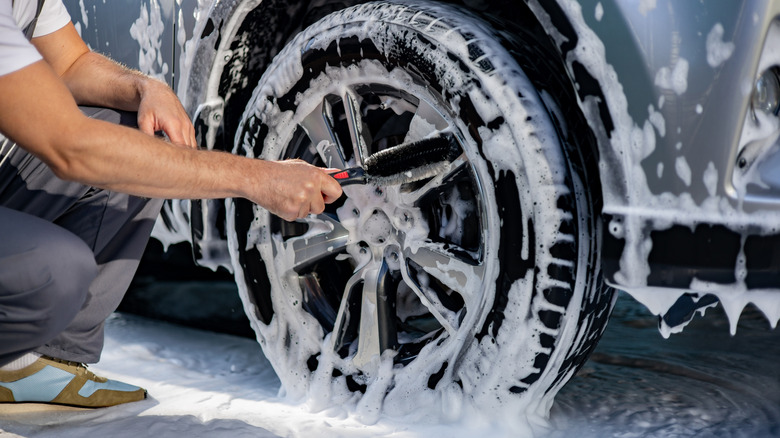
If your wheels aren't showing any obvious sign of brake dust buildup, and you religiously wash your car every Sunday, then cleaning them with the same kind of shampoo you use for the rest of the bodywork is fine. But if that pesky black powder has already taken hold, you're going to need a dedicated wheel cleaner. Spray-on wheel cleaners have special ingredients designed to loosen brake dust particles without damaging the finish of the wheel itself.
Before you pull that trigger, though, hose down the wheels with clean water to loosen any dirt. This will get rid of any grit and minimize the chance of you scratching the wheel's surface. Next, spray your wheel cleaner liberally across the entire rim, making sure to hit both sides of every spoke and all of those nooks and crannies that intricate wheel designs have. Then do nothing. Let the cleaner sit for a couple of minutes, a bit like you'd leave a casserole dish to soak in the kitchen sink.
Using a brush designed for wheel cleaning — the bristles are soft enough not to cause damage — scrub the rim to clean off the loosened dust. You might need a second, smaller brush to get into tighter spots, like the lug nut holes. Now rinse off the dirty foam to check the results.
If there's still some dust clinging to those hard-to-reach areas, you might need to repeat the process. But if it worked and your wheels now look showroom fresh, dry them with a clean microfiber towel and add some protective wax or sealant to make it harder for dust to stick between now and your next Sunday wash.