

Never Spray WD-40 On Squeaking Engine Belts: Here's Why
Turns out the popular spray won't help in this particular scenario
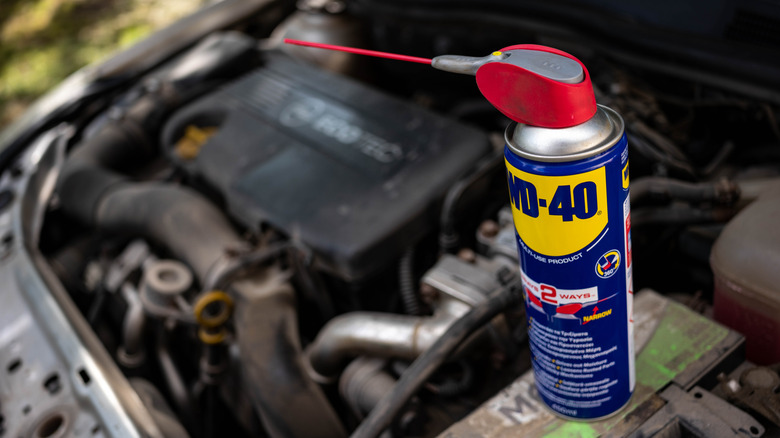
Few things are worse than starting up your car's engine and hearing a squeaky belt. While your first instinct may be to try and quell squeaks or squeals with a trusty can of WD-40, this can do more harm than good. There are some products that may help with this, but they're usually just an engine band-aid and don't actually fix the issue.
Depending on your vehicle, it will likely have at least one kind of engine drive belt, typically a large serpentine belt. These drive several different components using a single belt, including the air conditioning compressor, power steering pump, and alternator. Serpentine belts can last up to 100,000 miles, so will eventually need to be changed. If your vehicle doesn't have a serpentine belt, it likely relies on multiple smaller belts. They also need periodic replacement. Timing belts are one to watch for, especially on Ford's 1.0L EcoBoost engine, though they are almost always hidden beneath a cover and not easily accessible.
Given the wide array of uses for WD-40, you might assume it's the perfect product for spraying on a squeaking belt. However, WD-40 can end up leaving a slick film, causing the belt to slip. If this happens, the alternator may stop charging, and the operation of the power steering pump and water pump can be affected. WD-40 can also act as a magnet for dirt and grime that may build up on the belt.
What you should do instead
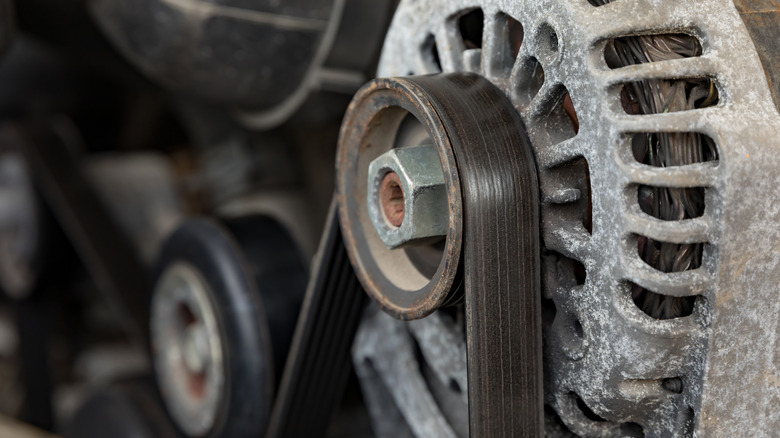
There are safer ways to deal with a squeaking engine belt. Several companies, including WD-40, sell specialized belt dressing sprays. These are essentially a conditioner for rubber drive belts as opposed to a lubricant. They are designed to soften the surface and restore some of the belt's grip, which can reduce the squeal. However, opinions on belt dressings are mixed, with some noting they can damage the synthetic rubber used by many modern serpentine belts.
Regardless of effectiveness, they fail to address the root cause of the problem, so should only be used as a temporary solution. Squealing from an engine belt is one of the first signs that it's starting to fail. If you notice your car's engine making odd sounds like a squealing belt, it's a good idea to get it inspected by a mechanic, even if it's not at the dealership. Similarly, if you notice cracks or fraying in a drive belt, there's a strong chance the belt is on the way out and needs to be replaced. Alternatively, it's possible the sounds are emanating from the tensioner or idler pulley, which may be due for a replacement as well.