

Nissan Made A Hood From Pineapple Leaves
Pineapple leaves usually go to waste, but Nissan says they’re tough enough for racecars.
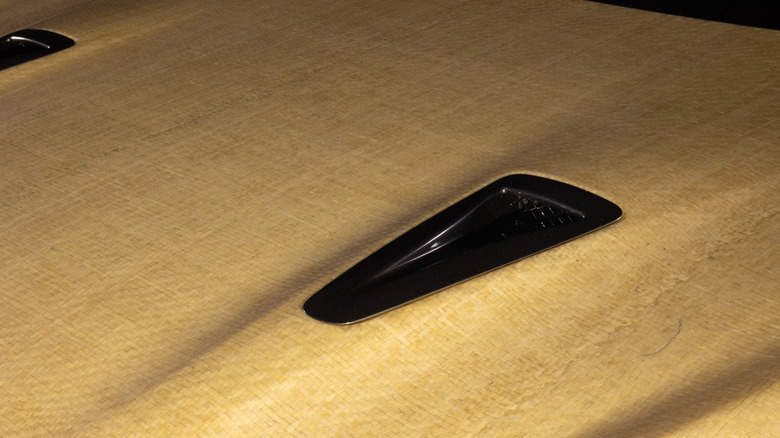
Nobody wants to waste resources, but avoiding waste starts with understanding how to make the most of something. That's what Nissan and a company called Food Reborn are working on. Their joint project is something wildly unique: automotive body panels, like a hood, made with plant fiber.
Tatsuzo Tomita, corporate executive responsible for Technology Development at Nissan, says, "We have developed a new fiber-reinforced composite material that utilizes pineapple leaves, a byproduct usually unutilized and discarded. This sustainable and composite material also delivers the high level of performance required for demanding environments such as motorsports.
"This exemplifies Nissan's strength as an automaker, especially in the ability to go beyond simply developing technologies and materials. We have the ability to bring them to life in our vehicles and ultimately deliver value to customers. We will continue to contribute to creating new values and realizing a sustainable society through technological innovation."
Etsuko Uda, Representative Director and CEO of Food Reborn Co., Ltd., went a little further, saying, "Transforming agricultural byproducts like pineapple leaves into high-performance materials for automotive and sporting goods is highly significant. Driven by deep conviction, we remain dedicated to unlocking new possibilities." Sure, that's a lot of corporate jargon, but let's break down what these two companies are actually pulling off, because it's not nothing.
How pineapple leaves become body panels
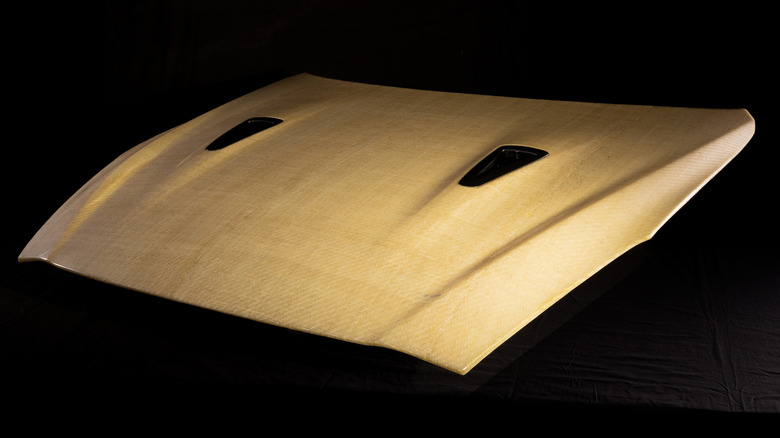
The panels in question do leverage everyday plant matter as part of their structure. How they get there is a bit complex. First, the production process sees fibers extracted from pineapple leaves. Those fibers are turned into a flat yarn, which is then woven into fabric. Then the fabric becomes part of a composite material with the use of resin. This isn't all that different from the way that carbon fiber is produced. The big benefit here is that pineapple leaves are easy to obtain and, ultimately, workable into these forms.
Nissan says the result is a material with lower environmental impact. The Japanese automaker is also licensing its manufacturing expertise to Food Reborn so that it can handle some of the production. There's no word on whether or not these panels will end up in a production vehicle, but some could very well go racing. As is often the case, the race track ends up being a safe place for testing things before they end up a production car.
Cars have worn stranger skins
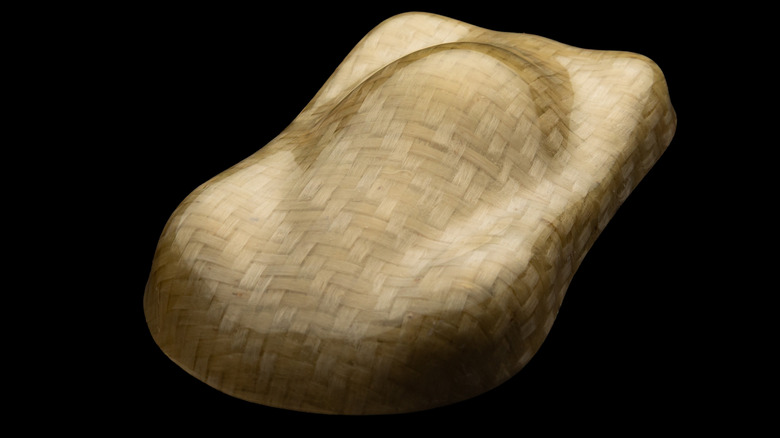
Importantly, Nissan and Food Reborn are far from the first folks to try using something odd for body panels. Most car fans are familiar with the term "woody," which refers to cars that either had bodies largely made of wood or had genuine wood panels on the exterior. Those are long gone these days, but even if they weren't, they'd be far from the weirdest thing ever used as a car body panel.
In the 1920s, Weymann used coated fabric as the exterior skin of its car bodies. Yes, fabric. To make matters more interesting, that coated fabric was essentially artificial leather. If you thought pineapple body panels were weird, just imagine a car with leatherette rolling down the road. In the 1940s, Ford even experimented with using soybean-derived plastic for body panels. Years later, Saturn would use injection-molded thermoplastic panels on its production cars. Toyota has tinkered with plastic bodies too. Ultimately, the idea of using unique materials to build cars has never gone away. Nissan just found a new and potentially sustainable way to do it.