

Toyota Sells A $7,500 Hatchback With A Predator Face
It’s a Suzuki underneath, with an angrier face, more tech, and one fewer cylinder.
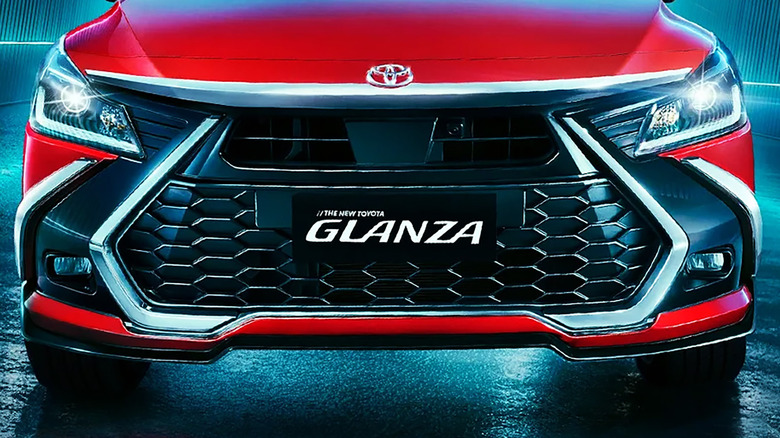
The Toyota Glanza is known as a rebadged version of the Suzuki Baleno in the Indian market. However, the latest version of the budget-friendly subcompact hatchback is trying really hard to differentiate itself from its twin, adopting a new face that only a Predator mother could love.
The current generation of the Suzuki Baleno was originally introduced in 2015, riding on the Heartect architecture. The closely related Toyota Glanza – also sold as the Starlet in South Africa – arrived in 2019 right after the first update, bringing a different grille and badges. Both models received similar facelifts in 2022, but that didn't stop Suzuki and Toyota from freshening them up again this year.
The 2026 Toyota Glanza adopts a more aggressive front-end design and comes with more generous equipment. It is also now powered by a new three-cylinder engine promising better fuel economy compared to its four-cylinder predecessor.
Angrier looks, better equipment
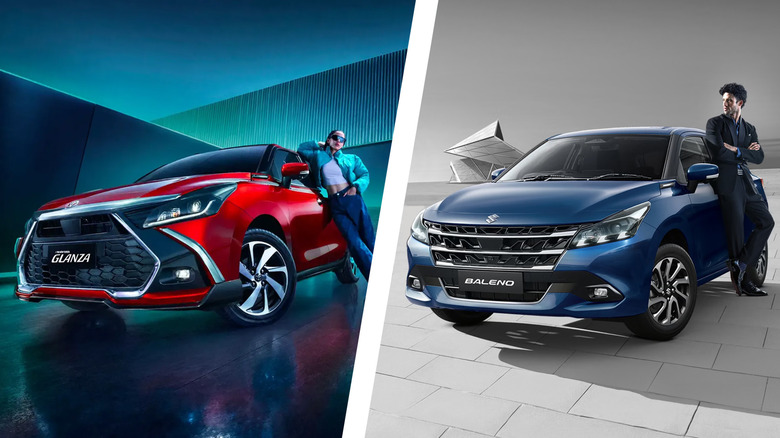
Toyota designers treated the nose of the Glanza as a blank canvas, making it virtually unrecognizable when viewed from the front. A massive grille covers most of the front bumper, flanked by glossy black blades complemented by shiny chrome accents. The new design is inspired by the last facelift of the previous-gen Toyota Yaris, but the Glanza takes the theme closer to the fictional alien species from the "Predator" movie franchise.
The headlights are unchanged, but feature plastic extensions with faux intakes. Meanwhile, the Toyota emblem has been relocated to the hood, leaving room for the ADAS sensors in the middle of the grille.
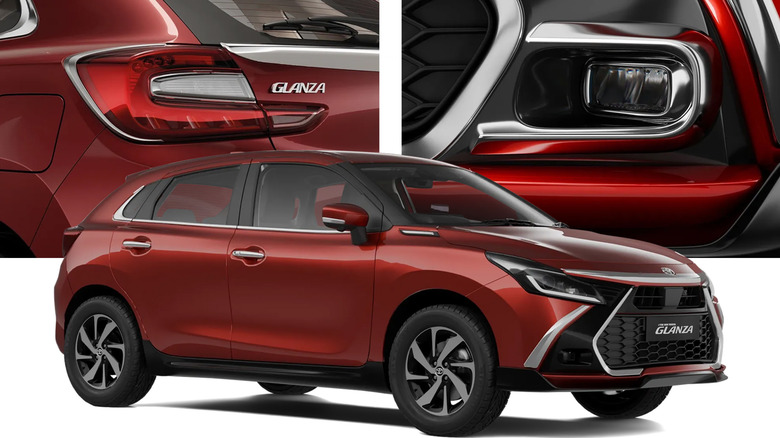
The rest of the bodywork is carried over from the previous facelift, mirroring the Suzuki Baleno. High-end trims ride on new 16-inch alloy wheels with a polished design, while the color palette gains the Bluish Black and Digital Teal Green shades. Buyers also have access to optional accessories such as extra chrome garnish for the taillights, doors, and fog lights.
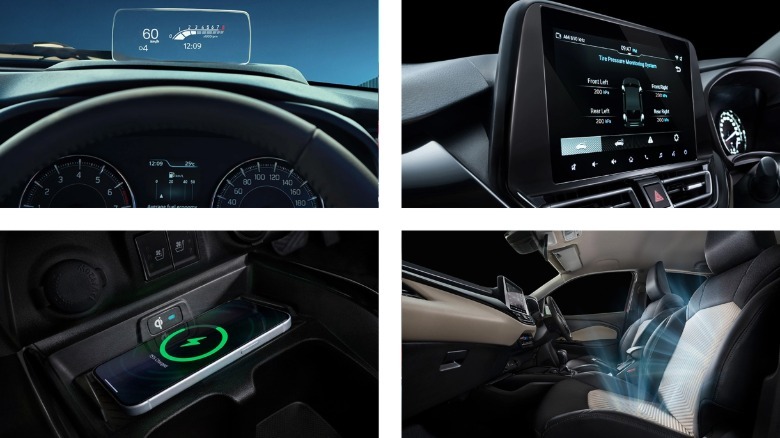
The interior of the 157.1-inch (3,990-mm) long hatchback looks familiar, but Toyota added more features to keep it relevant against rivals. The flagship trim comes standard with ventilated front seats, a cooled wireless charging pad, a six-speaker Clarion audio system, a 9-inch infotainment touchscreen, a head-up display, a 360-degree camera, and a voice assistant. Six airbags have been standard across the lineup since 2025 — a big step up from the older Starlet, which scored zero stars for adult protection in crash tests — while the most expensive variant now adds Level 2 ADAS.
Losing a cylinder and 7 hp
Unsurprisingly, the Glanza mirrors the mechanical changes we recently saw on the 2026 Maruti Suzuki Baleno.
Under the hood, we find a new naturally aspirated 1.2-liter engine with three instead of four cylinders. The mill produces 82 horsepower (61 kW / 83 PS) and 83 pound-feet (112 Nm) of torque, which is 7 hp (5 kW) less than before, but it promises to be less thirsty. Power is transmitted to the front axle via a five-speed manual or a five-speed automated manual transmission (AMT). Buyers can also opt for a CNG variant with 69 hp (51 kW / 70 PS), which is now available with both gearboxes.
The 2026 Toyota Glanza is available to order in India starting at ₹6.99 lakh ($7,500) and topping out at ₹10.98 lakh ($11,700). While this sounds pretty affordable, the Suzuki Baleno is even cheaper, priced between ₹5.99 lakh ($6,400) and ₹9.99 lakh ($10,700). Other rivals in the Indian market include the Tata Altroz, the Hyundai i20, and the Citroën C3. It remains to be seen whether the recent upgrades will be applied to the South African-spec Toyota Starlet.