

2027 Hyundai Elantra And 2028 Hybrid Bring Massive New Tech To America
Hyundai’s compact sedan goes bold with Art of Steel styling and a more powerful hybrid.
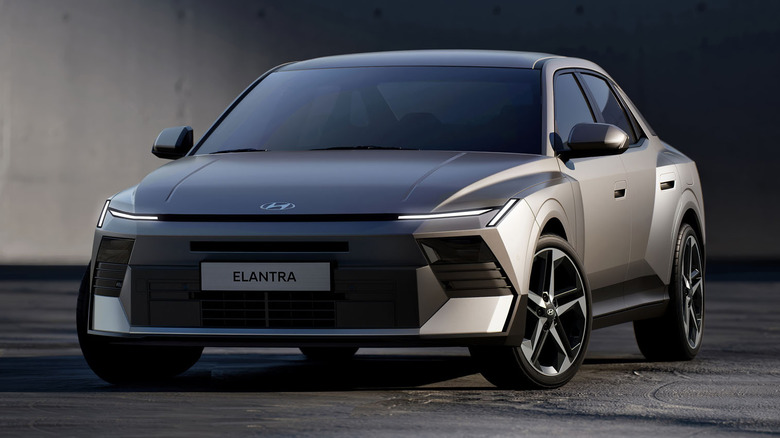
Not long after the all-new Avante was unveiled in South Korea, Hyundai has lifted the veil on America's new Elantra at the LA Auto Show. It's an important car for the brand. In 2025, Hyundai sold 148,200 examples of the outgoing Elantra, making it the company's second-best-selling model behind the Tucson. Hyundai will be hopeful this new model proves as popular as its predecessor.
Two distinct versions are heading to American shores. The first is the standard 2027 Elantra, and following it will be the 2028 Elantra Hybrid. Hyundai's regular model uses a naturally aspirated 2.0-liter inline-4 with 147 horsepower and 132 pound-feet of torque and is coupled to the company's Intelligent Variable Transmission (IVT), which is just a CVT with a fancy name. The car hasn't been rated by the EPA, but Hyundai is targeting a combined fuel efficiency of 35 mpg with the 16-inch wheels.
The new 2028 Elantra Hybrid is also shaping up as a compelling offering. It has a 1.6-liter four-cylinder hybrid with a combined 155 hp, or 16 hp more than the old model. Hyundai has also enlarged the battery pack from 1.32 kWh to 1.49 kWh, and the electric motor delivers 60 hp, compared to the 43 hp before. The Elantra Hybrid will also include adjustable regenerative braking controlled through the paddle shifters and even has a one-pedal driving mode just like an EV. Hyundai is targeting a combined efficiency of 53 mpg.
Art of Steel
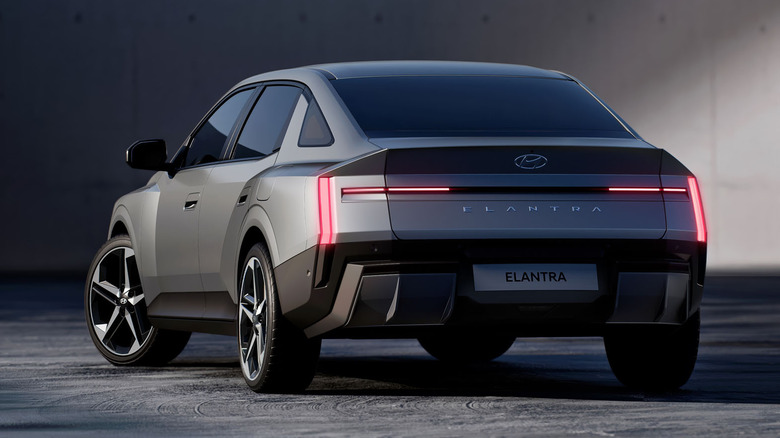
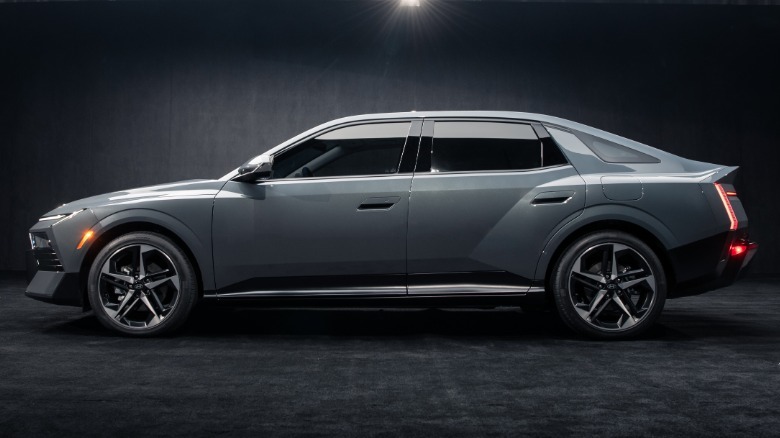
Of course, it's not the powertrains that really distinguish the new Elantra from the old one. Over the past decade, Hyundai has shown a willingness to abandon convention and create some seriously striking vehicles. It's done just that with the Elantra, using its Art of Steel design language, first used on the hydrogen-powered Nexo, to create what could very well be the most eye-catching sedan on the road. Only time will tell if it's a little too bold for customers, or if it's just right. Key elements of the exterior include the dramatic front bumper and LED headlights, swollen wheel arches, and a wild rear end.
New colors include Graphene Green, Kodiak Blue, Quantum Metal, and Volcanic Red, though Hyundai hasn't confirmed the full U.S. palette yet. The combustion-only version will be sold in SE, SEL Sport, and Limited configurations. The base model includes 16-inch wheels, a 12.9-inch infotainment display with wireless Apple CarPlay and Android Auto, and Smart Cruise Control with Stop & Go functionality. Key upgrades in the SEL Sport include 18-inch wheels, paddle shifters, heated front seats, alloy pedals, and a wireless phone charger. The Limited also receives LED taillights, a power moonroof, a shift-by-wire system, ambient lighting, a Driver Monitoring System, and a Bang & Olufsen 12-speaker audio system.
 Hyundai
Three trims of the Elantra Hybrid are also heading to the U.S. The base SE Blue has 17-inch wheels and most of the same functions as the regular Elantra SE, including Smart Cruise Control and an acoustic windshield. Sitting above it is the SEL Sport with 18-inch wheels, alloy pedals, and a 9.9-inch digital cluster. Completing the Hybrid range is the Elantra Limited, adding heated and ventilated front seats, a moonroof, dual wireless phone chargers, and the same 12-speaker audio system as the non-hybrid.
Elantra gets a fresh cabin
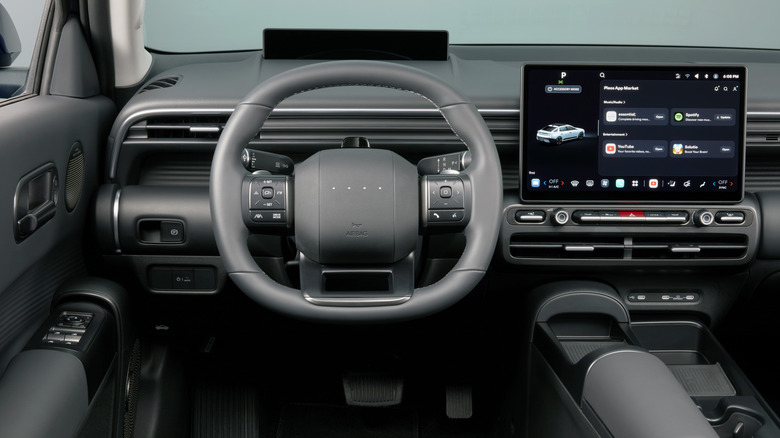
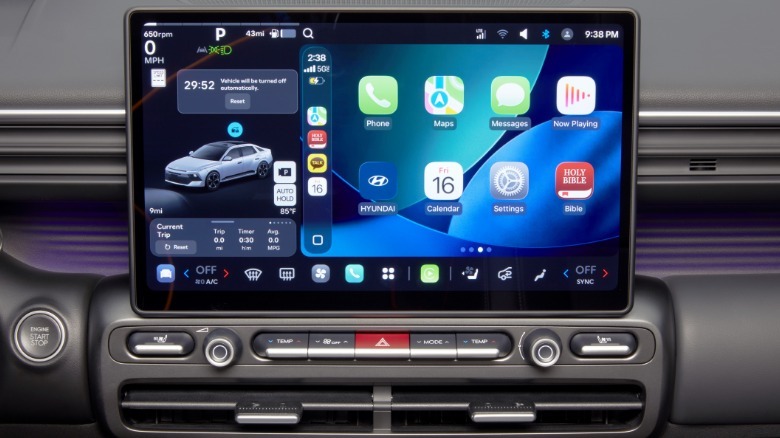
It's not just the new Elantra's exterior that's far removed from the old model. Alongside the all-new Tucson, it will also be among the first Hyundai models in the U.S. to launch with the firm's all-new interior design. Sitting at the heart of the redesigned cabin is the large central Pleos Connect infotainment display running on Android Automotive OS and housing most of the vehicle's settings and controls. This screen supports over-the-air software updates and Hyundai's Gleo AI voice assistant.
The cabin changes don't stop at the screen. It comes standard with Hyundai's latest-generation steering wheel, dashboard, and transmission tunnel design. The Elantra also keeps physical switches for the temperature and fan speed controls, as well as for the heated and cooled seats on higher-end models. While we remain unconvinced by the Tesla-inspired display perched on top of the dash, at least Hyundai hasn't shifted all functions to the screen.
Hyundai hasn't said exactly when the new Elantra and Elantra Hybrid will launch and has also yet to confirm pricing details.
 Hyundai