

Were Pontiac Firebird Hood Scoops Ever Functional?
The answer depends on what model year you're talking about
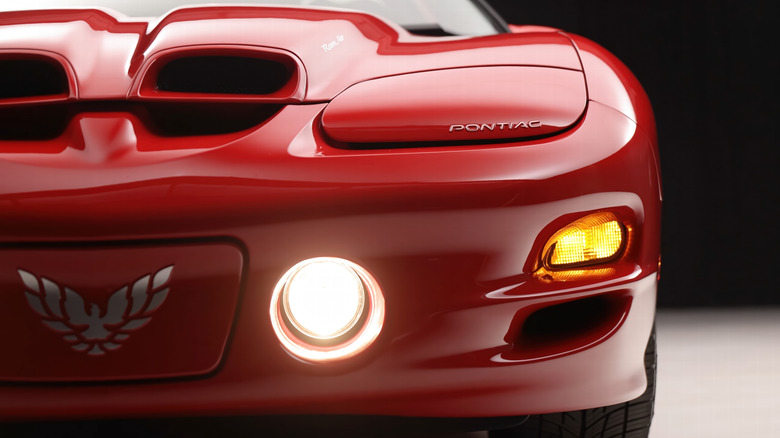
The Pontiac Firebird that Burt Reynolds made famous in the '70s, came to life in 1967 as a more upscale sibling to the Chevrolet Camaro. Though they shared bones underneath, Pontiac wanted to give the Firebird its own personality. Alongside distinct front and rear styling features, Pontiac leaned on aggressive hood designs, culminating in the Trans Am's famous — and originally functional — shaker scoop which bolted straight into the engine's air cleaner and trembled with the V8.
During the 35-year production run of the Pontiac Firebird, a large number of model year updates across four generations wore an evolving mix of power bulges, hood scoops, and twin nostrils, all highlighting the muscle car's performance. However, emissions standards, noise laws, and horsepower wars dictated changes to what actually happened beneath the fiberglass. Pontiac's engineers constantly reworked the setup to better deal with packaging constraints, under-hood heat, carburetor clearance, and shifting regulations. It's no surprise enthusiasts wondered whether the Firebird's signature scoops ever really did anything at all.
The early ones actually worked
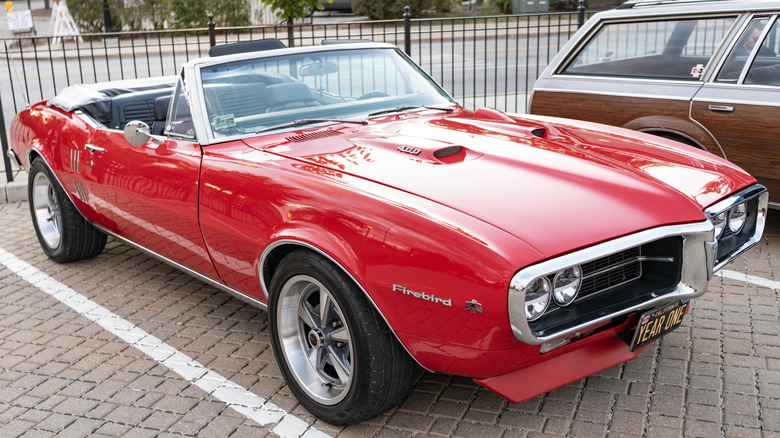
Pontiac's earliest Firebird hood scoops were genuinely functional. On 1967–1969 Firebird 400 Ram Air models, open twin scoops sealed directly to the air cleaner, and fed cooler outside air to the carburetor. When the Trans Am debuted in 1969, its functional hood scoop fed the 6.6-liter (400 cu in) V8 which produced up to 345 horsepower in Ram Air IV spec.
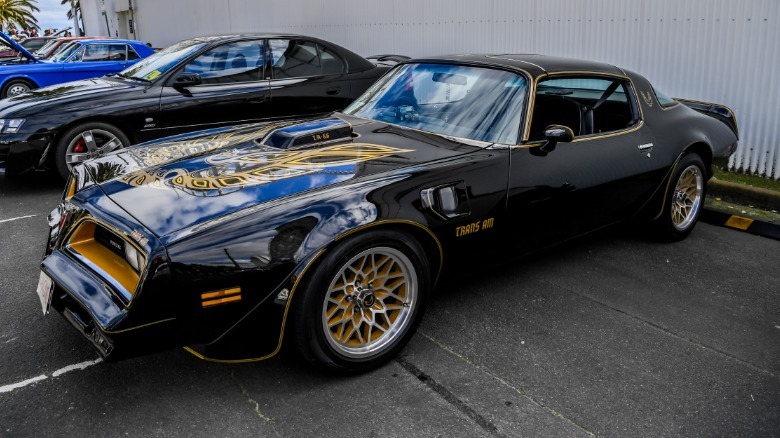
For the second-generation Trans Am, Pontiac switched to a rear-facing shaker. A solenoid-operated flapper door opened under hard acceleration to pull cooler air from the high-pressure zone at the base of the windshield. The Firebird Formula offered its own twin-snorkel hood with optional (yet functional) cold-air ducts.
 Alex Bogatyrev/Shutterstock
However, starting in 1973 — the same year Pontiac introduced the Trans Am's famous "Screaming Chicken" hood decal — tightening noise regulations forced the company to block the Firebird's hoof scoop. From that point through 1981, the shaker still rocked with the engine but drew air from under the hood.
The automaker briefly revived functional shakers on other models such as the GTO in 1974 and the Can Am in 1977, but the Firebird retained its dummy setup. In any case, even when the shaker was open, the real-world gains from pulling cooler air from the outside were pretty mild, making it more of a showroom draw than an engineering tool.
From the '80s to the WS6 finale
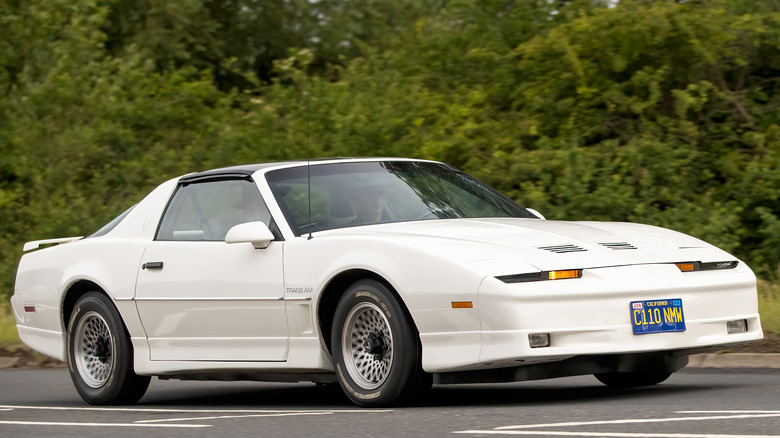
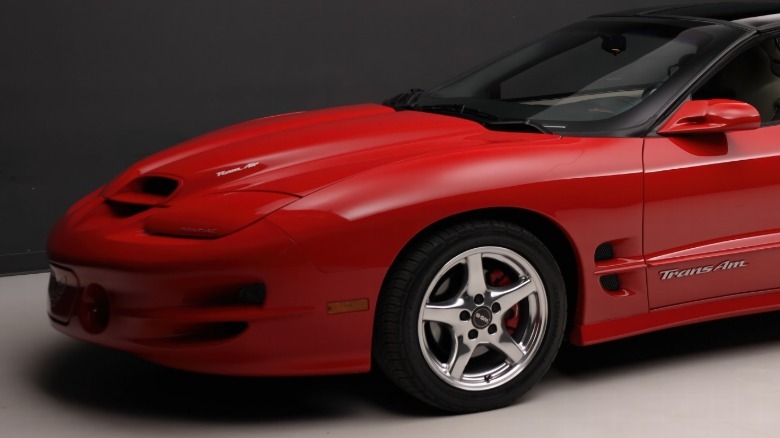
In 1980, Pontiac introduced the turbocharged 4.9-liter V8 in the second-generation Firebird, and the closed-off power bulge was only there to clear the turbo. Functional hood induction made a brief return in the third-generation Firebird Trans Am with the 5.0-liter V8 between 1982 and 1984, before Pontiac went back to sealed hoods. The most famous functional scoops arrived in the fourth-generation Firebird with the WS6 Ram Air package — that Jay Leno appreciates — between 1996 and 2002.
The twin-nostril hood fed cool air straight to the sealed airbox, helping the naturally-aspirated 5.7-liter LT1 V8 engine pump out 305 hp, and the later aluminum LS1 reach 325 hp in final model years. By the time the Pontiac Firebird bowed out after 2002, its hood scoops had come full circle, starting as genuine muscle-car hardware, surviving the '70s and the '80s mostly as showroom material, and signing off as some of the most iconic cold air intakes ever to come out of Detroit.
 VG1/Shutterstock