

How Well Do Fuel Stabilizers Work, And Will They Harm Your Engine?
Not all fuel stabilizers are created equal.
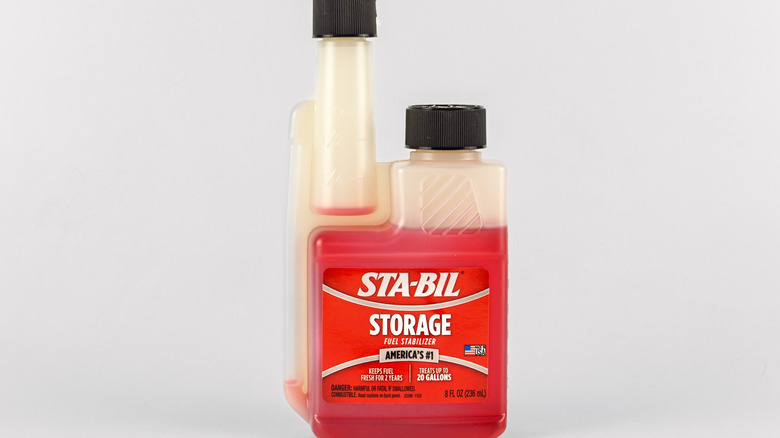
Putting a car or motorcycle into long-term storage involves far more than simply parking it in a safe place. It can be wise to change your car's oil, disconnect the battery, store it on jack stands to avoid flat spots on the tires, and use a cover to protect the exterior. It is also a smart move to fill up the gas tank and pour in a dedicated fuel stabilizer to make sure it starts and runs smoothly the next time you try.
Fuel oxidizes and degrades over time, leaving varnish and gummy deposits that can clog up your fuel system. It can also trigger corrosion within a vehicle's fuel system and cause rubber fuel hoses to deteriorate, which are among the reasons why ethanol is more harmful than straight gas. This is where fuel stabilizers come in. These popular products are formulated to slow fuel oxidation by stabilizing the hydrocarbons inside them. They also often use corrosion inhibitors to prevent important metal parts from rusting. Just how effective are fuel stabilizers, and will they harm your engine?
Popular YouTuber Project Farm has conducted what is perhaps the most detailed and comprehensive test of fuel stabilizers in the industry. Over a period of five years, he tested several different fuel stabilizers to see how well they prevent corrosion and whether they affect the combustibility of old fuel. He found that these products are safe to use, though they're not quite as effective as the companies selling them would like you to believe.
What fuel stabilizers work the best?
The first part of Project Farm's test looked at the corrosion-inhibiting properties of these stabilizers. He placed small pieces of metal in glass jars and then filled the control jar with a small amount of fuel containing 10% ethanol. He then repeated the process for six other jars, adding a different fuel stabilizer to each. Unsurprisingly, the untreated E10 fuel caused the metal part to corrode significantly. By comparison, a jar that contained the popular fuel stabilizer Sta-Bil completely prevented corrosion and stopped the fuel from evaporating. It did not stop the fuel from going partially stale, however, and it was difficult to ignite. Other products showed varying levels of corrosion prevention. Some went completely stale and couldn't be ignited with a small flame.
Tests were also performed to see how untreated 20-month-old E10 fuel and fuel with stabilizers would perform when used in a small fuel-injected generator. Starting the engine with untreated E10 fuel was difficult, but not impossible, and required a lot of starter fluid. He then tested fuel that had been stabilized with products from Sta-Bil, Star Tron, Yamalube, K100, SeaFoam, and Marvel Mystery Oil. The engine fired up within a couple of seconds when using Star Tron, K100, and Sta-Bil products, showing they had done the best job of retaining the fuel's combustibility. He concluded that none of the fuel stabilizers performed "all that well," but would recommend Sta-Bil, especially due to its anti-corrosion properties.
This is how to use a fuel stabilizer
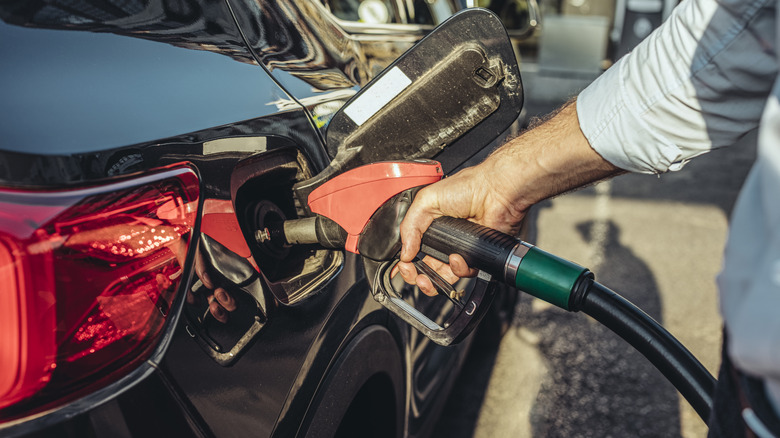
If you want to keep your car in good running condition during storage, many popular fuel stabilizer products are in stock at your local auto parts store. Before adding the stabilizer to the gas tank, be sure to run your car or bike nearly empty to ensure all the old fuel has been used. Follow the directions on the product to add the right amount of stabilizer for your fuel tank size. In the case of Sta-Bil, 1 ounce treats 2.5 gallons of fuel, but this may vary depending on the product you choose. Then fill the fuel tank with fresh gas, preferably one that doesn't contain any ethanol.
Next, run the engine for around five minutes to ensure the stabilizer has circulated throughout the fuel system. Follow these steps, and you'll help to keep the fuel somewhat fresh. Just don't expect a fuel stabilizer to work miracles. It only assists in reducing fuel oxidation and doesn't keep fuel completely fresh.