

Honda's New Avancier Is Cool, But Its Forgotten Wagon Ancestor Was Way Cooler
Crossovers are great, but it's hard to beat a classic JDM wagon
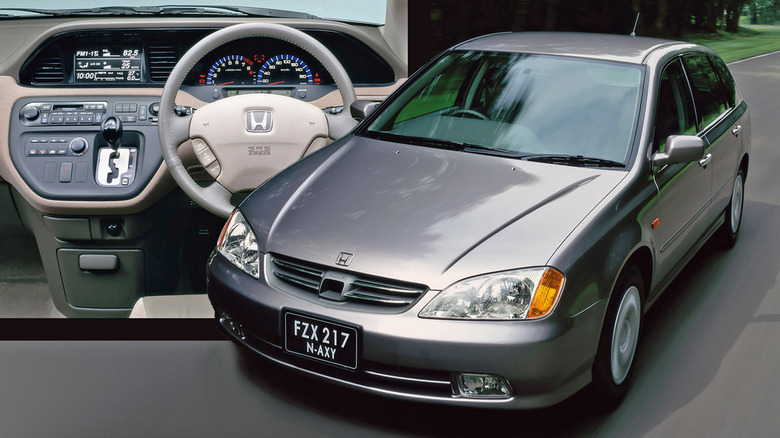
Honda just unveiled the all-new Avancier, a global three-row SUV featuring a newly developed platform, plus the latest evolution of its hybrid powertrain with electric all-wheel drive and simulated gearshifts. While those who missed the China-only SUV, that launched in 2016, might be unfamiliar with the Avancier nameplate, it actually dates back to 1999, and the original form was way cooler than any modern family crossover. The name is derived from the French word avancer, which means "to move forward".
Honda applied it to an Accord-based wagon with a premium and spacious interior, designed for "mature" buyers with socially active lifestyles who were not satisfied with traditional sedans. The first-gen Avancier measured 4,700 mm (185 in) long in standard form, which is 260 mm (10.2 in) shorter than the current model. The wagon was also available in the crossover-style AWD Avancier L-4 variant. This was distinguished by a more pronounced front bumper, darker headlight housings, slightly raised ground clearance, 16-inch wheels, subtle wheel arch extensions, chrome accents, and roof rails.
A glass-roofed tailgate and lounge-like cabin
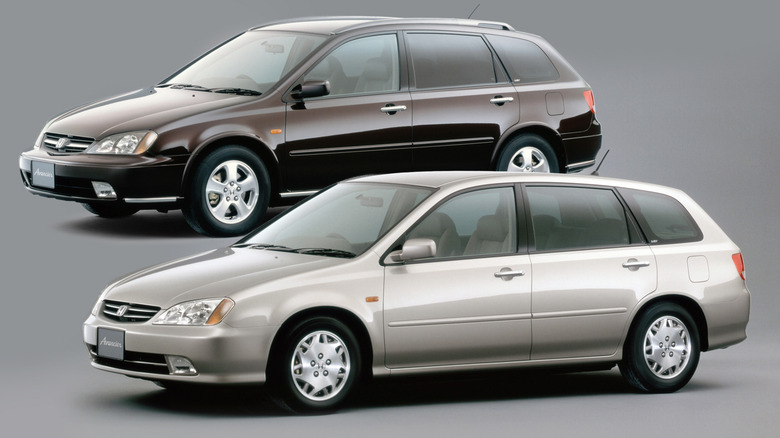
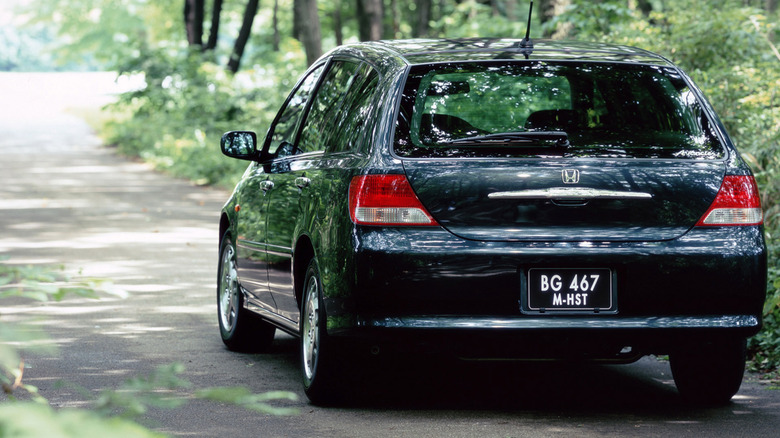
A highlight of the exterior is the "Toplight Wing Hatch", with a glass area on the rear section of the roof bringing more light inside the cabin. This unique tailgate design also allowed for a large opening in narrow spaces. Another stand-out feature is the grille-mounted sensor found in the flagship V-type trim, which we'll come back to.
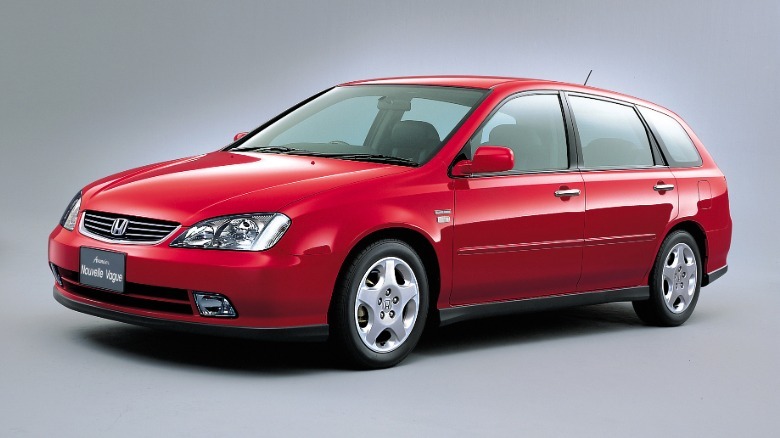
The most stylish iteration of the Avancier was the Nouvelle Vague trim with a sportier suspension setup, introduced after the facelift of 2001. The mid-lifecycle update brought redesigned bumpers, a more modern grille, and clear headlights, alongside new options for the paint colors and alloy wheels.
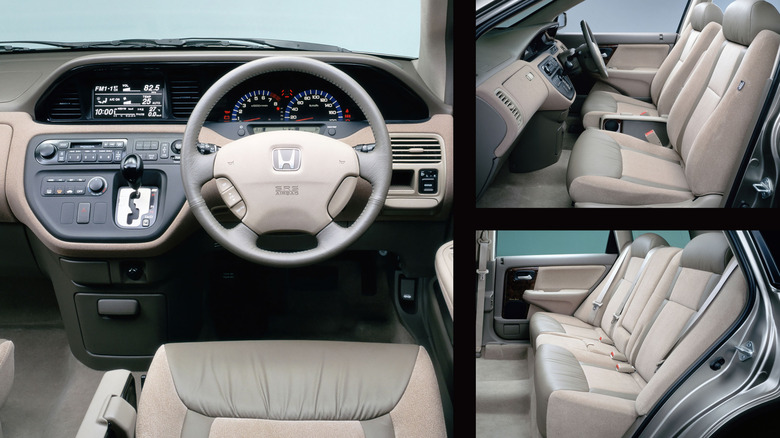
Inside, the Avancier combined premium materials, high-tech features, and lots of practicality. Depending on the trim, occupants were treated with wood-grain garnish, fabric or leather upholstery, folding tables for both rows, sliding and reclining lounge seats at the back, and extensive sound-deadening insulation.
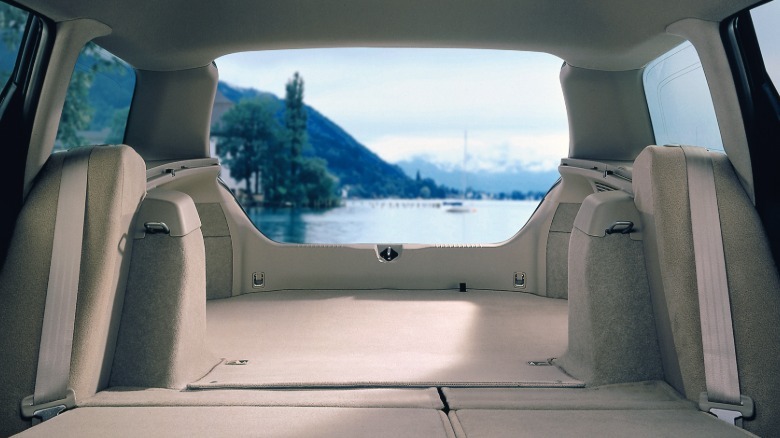
The available space was closer to the Odyssey minivan than the Euro Accord sedan, thanks to the tall roofline described by Honda as an "arch-form cabin" design, and the center walk-through layout with five seats. Period press materials include a photo of the cargo bay with the rear bench folded flat, looking like the perfect spot for relaxation.
Laser radar cruise control and V6 power
The coolest feature of the Honda Avancier was the Intelligent Highway Cruise Control (IHCC), which was available in the flagship V-type. This early Japanese technology, now known as adaptive cruise control, utilized a grille-mounted laser radar with a 100-meter (328-foot) detection range, allowing the car to automatically control acceleration and braking between 40 and 62 mph (65 to 100 kmh) depending on the traffic ahead. Honda also developed a pioneering front-side camera system for intersections, offered an optional 7-inch navigation, and other advanced safety features.
Under the skin, the Avancier shared a unibody platform with the Accord. Base models were powered by a 2.3-liter VTEC four-cylinder producing 148 horsepower, paired with a four-speed automatic in FWD or 4WD configurations. Flagship trims got the more potent naturally-aspirated 3.0-liter V6 delivering 212 hp, mated to a five-speed automatic gearbox.
Despite the unique market positioning and advanced safety features, the original Avancier was discontinued from Japan in 2003. The main reason was slow sales, with most buyers gravitating to the cheaper Accord Wagon or more practical Odyssey minivan.
When the vehicle was introduced in 1999, Honda's target was to sell 36,000 units per year, although this figure dropped to 9,600 units annually with the 2001 facelift. Japanese media report that Honda sold under 24,000 units of the Avancier during its four-year production run.
From quirky JDM wagon to global three-row SUV
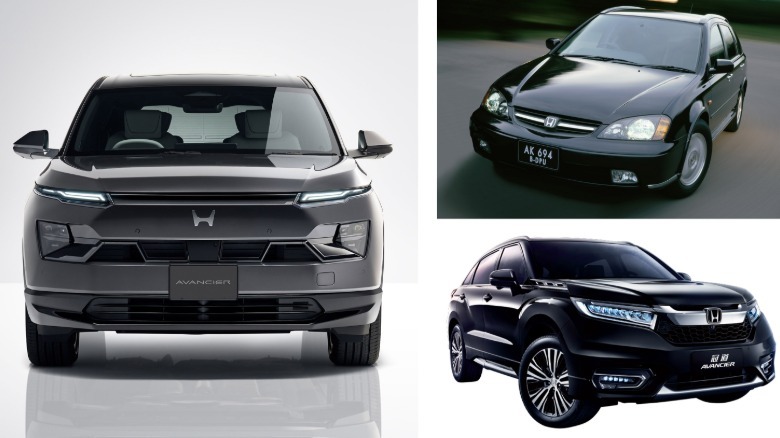
The Honda Avancier was not the only commercial failure proposing a wagon body style as an alternative to executive sedans. Other examples include the Renault Vel Satis (2001-2009), the Opel Signum (2003-2008), and the Giugiaro-styled Fiat Croma (2005-2010), all coming from Europe. The Avancier badge remained dormant for 13 years, until Guangqi Honda revived it in 2016. The second generation was a China-exclusive flagship SUV riding on the same underpinnings as the previous generation Acura MDX, powered by a turbocharged 2.0-liter four-cylinder engine.
The model received facelifts in 2020 and in 2023, and remains on sale in the Chinese market alongside its UR-V coupe crossover twin. Now, the third generation Avancier prepares to roll out across Japan, Thailand, China, and Australia in 2027. The three-row SUV is the first production model to ride on Honda's new modular mid-size architecture and feature the new hybrid system, paving the way for future models. Even so, it is really hard to beat the charm of a V6-powered laser radar-equipped JDM wagon from the early '00s.
 Honda