

How To Clean Engine Oil From Concrete Floors
Here's how to clean up one of those annoying oil spils
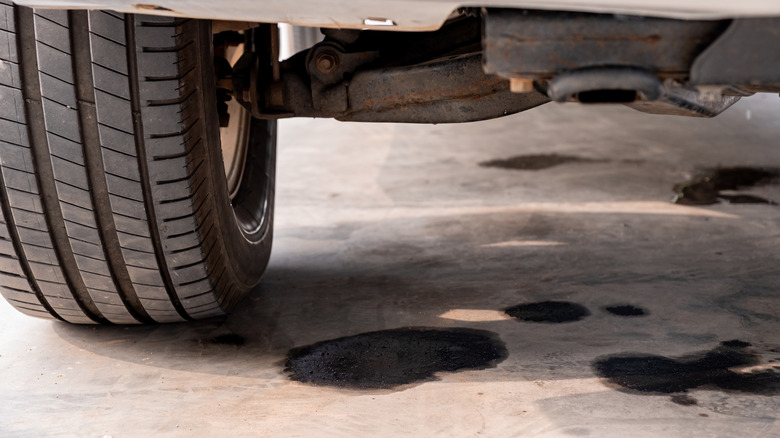
Doing your own car services is an excellent way to save money and learn new skills. If you're a skilled DIYer, it may even take you less time to complete an oil change in your garage or on your driveway than driving to a local mechanic and waiting for them to do it. However, it's easy to make a mess, so it's a good idea to know how to clean oil off concrete if your servicing attempts go awry.
There are several different ways to clean engine oil, transmission oil, and hydraulic oil from concrete. Some methods work better than others, and it's always easier to prevent a spill than to clean one up. Placing a drip tray under your vehicle is the best preventative measure if you're changing fluids. It's also a wise idea to place shop rags, old towels, or garbage bags on top of your precious concrete floor to stop any spills. If you do make a mess, one of the best options is to try to absorb any spilled oil with kitty litter, sawdust, or even cornstarch. This will help to absorb the oil and can be easily brushed away.
If you notice a spill right away, another quick and easy way to clean it is to spray it with brake cleaner or a degreaser, then wipe it away. This method works particularly well on engine oil, though it's not foolproof. If you don't have brake cleaner on hand, mix equal parts water and baking soda to make a thick paste. If you use this method, let the paste sit on the stain for 30 minutes, scrub it with a brush, then rinse with water. Baking soda is one of the cheapest natural chemical compounds for cleaning and works just as well at removing oil stains as it does as a household cleaner. Chances are you also have some sitting in your pantry, so you may not have to make a trip to the local auto parts store.
Nobody likes an oil-stained driveway
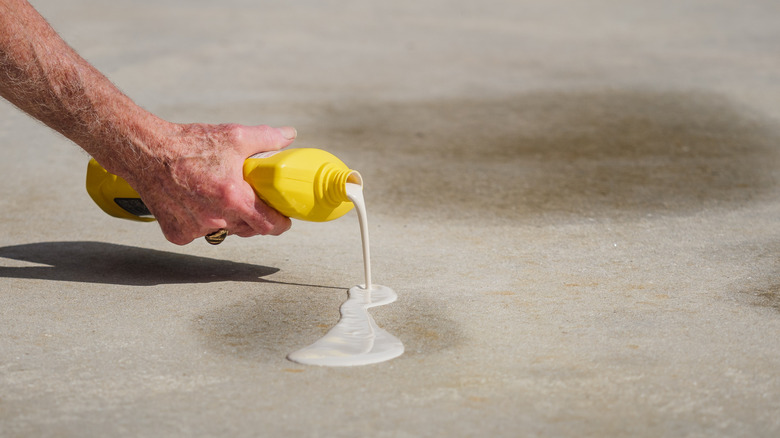
Several other methods can clean oil stains on concrete. A vinegar-and-water mix can do the trick, as can a dish soap-and-hot-water mixture. Another option is to buy a dedicated cleaning product like Oil Eater. It's designed to lift oil and dirt from surfaces and can be applied directly to a stain or diluted with water and sprayed on. You can also leave it overnight, allowing it to work its way deep into porous concrete. It absorbs the oil, then dries into a powder you can simply brush away.
The same pressure washer you use to clean your car can also help remove oil stains. Blasting a fresh stain with a powerful pressure washer is one method, but it's not the most effective. The best approach is to apply a degreaser to the stain first and let it sit for 15 to 30 minutes. You can then apply a detergent solution and wash it away with a pressure washer.
Wilco also suggests mixing up your own cleaning agent. It can be a mix of sawdust or kitty litter with a solvent like acetone or a commercial oil stain remover. Mix the two together, then apply the thick paste to the stain and leave it for up to 24 hours. The paste's oil-lifting properties can be improved by covering it with plastic wrap, ensuring the solvent doesn't quickly evaporate. The paste will dry, lifting the oil with it, and you can then scrape or brush it away. Just like that, your driveway or garage will look as good as new.