

Does Pre-Filling Your Oil Filter Really Make A Difference?
As with the answer to so many questions, it depends
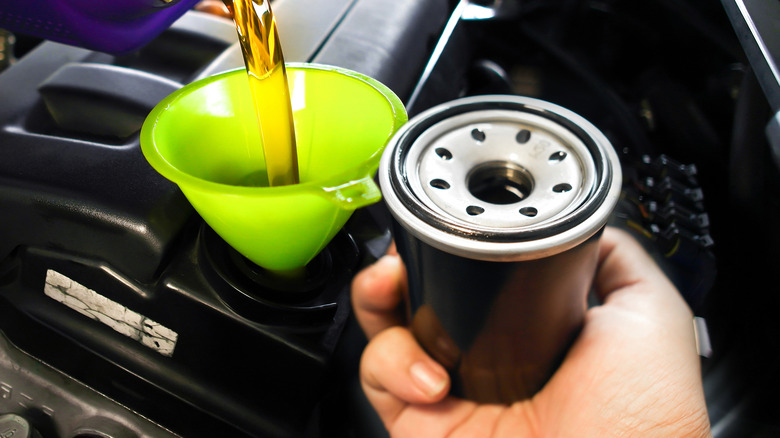
If you're the type of car owner who likes to perform your own oil changes, you've no doubt had a bit of experience removing and replacing engine oil filters, too. These filters are crucial for removing dirt, dust, sludge, and carbon buildup from the engine and should be replaced whenever you replace the oil. However, it's not simply a matter of removing the old one and screwing in the new one, as pre-filling the filter is a step that not everyone follows.
You want your engine's oil to be as clean as possible to provide the maximum amount of lubrication. You might also consider synthetic oil for its longer life. The thought is that if you don't pre-fill the filter with oil before installation, the engine may run for several seconds without adequate lubrication, which could increase engine wear. To see if this is actually the case, a popular YouTube channel tested dry and pre-filled oil filters and found that it does make a difference.
The test revealed that it took the engine more than 4 seconds for proper oil pressure to be achieved with a dry filter. By comparison, oil pressure was achieved in less than 1 second when the engine was cranked after a pre-filled filter was installed. Now, three seconds may not sound like a big difference, but it might mean the difference between a happy engine and an unhappy engine. Any additional time the engine operates with non-optimal oil pressure could increase the chance of additional engine wear.
There's still merit to using dry filters
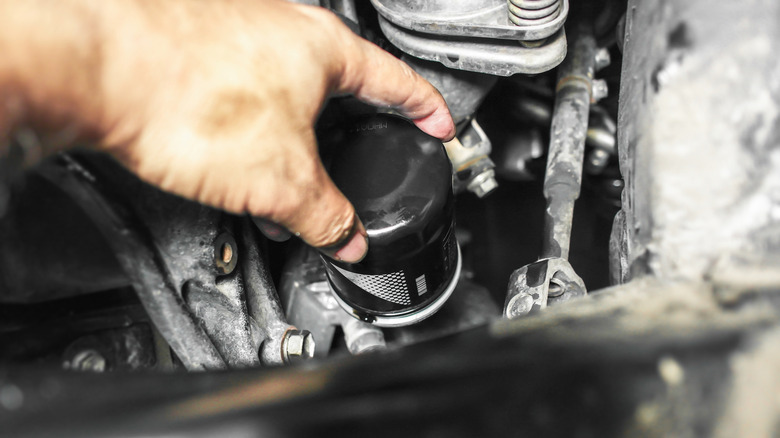
While you may think that result would end all the debate about installing dry or pre-filled filters, it doesn't. A separate YouTuber, Freedom Worx, conducted a similar test with 25 pre-filled filters and 25 dry filters. His test revealed that using dry filters and having the engine operate without proper oil pressure for those few extra seconds did not produce more engine bearing wear material than the pre-filled filters.
It's also worth acknowledging that after draining old engine oil from the sump, a layer of oil will remain throughout the engine. So, while using a dry filter may cause the engine to run at lower pressure for a few seconds, there's still oil flowing through the engine to keep it lubricated. So, what should you do? If your car's engine has an oil filter that mounts towards the bottom of the engine and sits vertically, it's worth pre-filling it just for the added peace of mind.
However, if the filter sits around the top of the engine in a downward position, you won't be able to pre-fill without making a mess, so it's probably not worth trying. The same can be said about oil filters that mount horizontally. Pre-filling the filter certainly doesn't hurt, although the debate continues to rage on whether or not it has any noticeable benefits on engine longevity. As for how long oil lasts when your car isn't driven, that's another story.