

Tesla Model 3 Ranked Last In German TUV Reliability Report
Problems with the suspension and brakes resulting from large gaps between services caused almost 15 percent of used Model 3s to fail the inspection
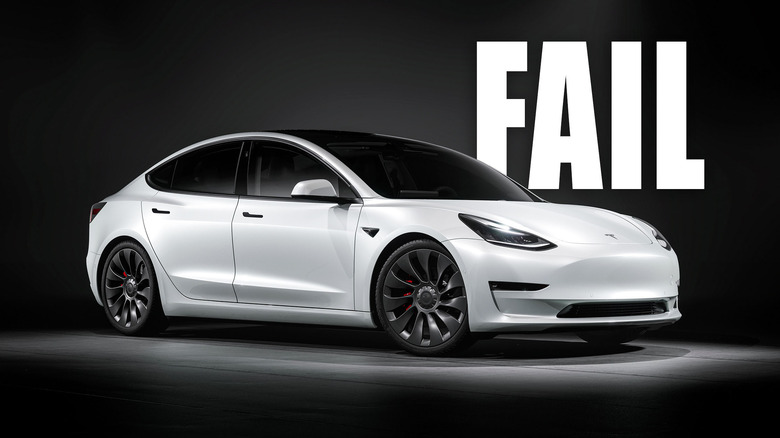
Tesla chooses not to take part in JD Power surveys in the U.S. so it's not easy to compare the reliability of its cars to those of its rivals. But new data from Germany's TÜV organization gives an alarming insight into what might be in store for anyone looking to buy a used Tesla Model 3 or buy one to keep for a long time.
A TÜV test, as it's colloquially known, is a roadworthiness assessment that gets its name from one of the companies that carry them out; the real name for the technical inspection is the Hauptuntersuchung. It must be carried out every 24 months on all cars over three years old and tests safety- and emissions-related components including the chassis, brakes, steering, lights, mirrors, seatbelts, and more. Fail the test and your car can't legally be driven on the road.
In the year to June 2023, more than 10 million cars were subjected to the test, around 20 percent of which failed to get the coveted circular pass sticker. Tesla and Dacia, the two brands regularly seen duking it out for overall victory in Europe's monthly sales league tables, also topped the list of failure-prone cars.
Related: Tesla Model 3 RWD And Long Range Tax Credits Will Be Halved To $3,750 On January 1
| Age group | Car | Defect rate % |
| 2-3 years | Tesla Model 3 | 14.7 |
| Dacia Logan | 11.4 | |
| Seat Alhambra | 10.3 | |
| 4-5 years | BMW X5/X6 | 17.9 |
| VW Sharan | 17.7 | |
| BMW 2-Series Tourer | 17.6 | |
| 6-7 years | Dacia Dokker | 25.9 |
| BMW 5/6-Series | 24.8 | |
| Dacia Duster | 24.6 | |
| 8-9 years | Dacia Dokker | 32.2 |
| Fiat Punto | 29.7 | |
| Dacia Logan | 29.1 | |
| 10-11 years | Renault Twingo | 36.2 |
| Dacia Logan | 35.5 | |
| Renault Clio | 34.6 | |
| 12-13 years | Dacia Logan | 40.9 |
| Renault Twingo | 39.9 | |
| Nissan Qashai | 38.8 |
The report categorizes the cars according to age, and the Model 3 was worst overall in the 2-3-year-old segment. Problems frequently noted include braking deficiencies, which the testers say is partly down to how EVs rely heavily on energy recuperation to slow them down, meaning the conventional brakes aren't getting the use they need to keep them working effectively. Other faults commonly seen were suspension issues resulting from the strain of carrying heavy batteries.
Dacia took second spot behind Tesla in that 2-3-year-old segment, but more than made up for it by being ranked worst overall in the 6-7, 8-9, and 10-11-year-old segments. In some cases it also occupied another spot in the worst three for the same period, placing either runner-up or third-worst in other years. BMW also fared badly, its X5 and X6 SUVs, 5- and 6-Series sedans, wagons, coupes, and convertibles and its 2-Series Active- and Gran Tourers also showing up on the 'worst' list.
At the more positive end of the spectrum, there was good news for the Audi TT, which scored a bunch of top-three places across the full age spectrum, as did VW's Golf Sportsvan (known as the Golf SV in some markets).


