Ford's Tool-Tracking Patent Rules Out A Suspect Before It Cries Theft
Cheap RFID tags struggle in a hot truck bed, and this filing tries to stop them from crying wolf
- A new patent is for a system more advanced than a simple GPS tracking device.
- Ford recently launched its 'Start Inhibit' function in the US to help lower vehicle thefts.
- The company notes that this patent doesn't mean such a system will be launched.
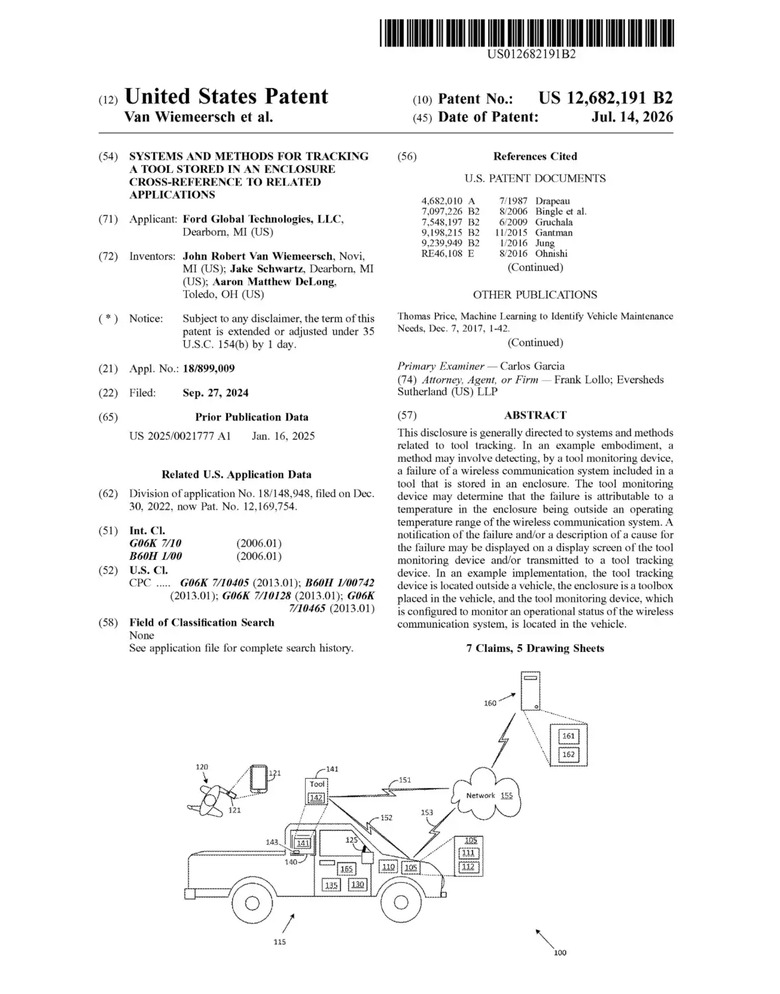
Ford's anti-theft efforts go further than making its vehicles harder to steal and easier to find afterward. A recently filed US patent shows the company turning its attention to what sits in the bed, specifically the tools a large share of its truck owners depend on to earn a living.
The patent, first spotted by Ford Authority, was filed in September 2024 and granted and published only recently. The premise is fairly simple. The market is currently flooded with small, inexpensive RFID tags that can be easily attached to tools to help track them, and Ford's patent aims to eliminate the risk of false notifications that tools were snatched.
Read: Ford's Patent Wants Your Parked Car To Drive Away From Shopping Carts
To do so, a monitoring device fitted inside the vehicle analyses whether the temperature inside the vehicle's cabin or in a toolbox mounted in the bed has moved outside the tracking tag's normal operating range, noting that extreme heat or blistering cold could cause a tracker to fail.
Saving Your Tools
If temperatures are close to reaching predefined limits, the technology can recommend that the owner enable the climate control. If a tracker indicates that the tool it's attached to has been stolen, the monitoring system will analyze whether the vehicle's doors or windows have remained closed. If they were opened, a theft notification would be sent. If not, it's possible temperatures have damaged the tag and the tool actually hasn't been stolen.
The emergence of this patent comes shortly after Ford launched its new 'Start Inhibit' function in the US. It functions like two-factor authentication you may use on your banking app, sending a notification to an owner's phone if their vehicle is accessed and someone attempts to start it. Without a code being plugged into the infotainment system, the vehicle cannot be turned on.
Of course, the emergence of this patent doesn't mean such a system is anywhere near becoming a reality. In a statement issued to Ford Authority, the company noted, "The ideas described within a patent application should not be viewed as an indication of our business or product plans."