- Toyota needs dry pavement to test its vehicles, but Mother Nature would get in the way.
- This would often result in people working weekends or waiting hours for pavement to dry.
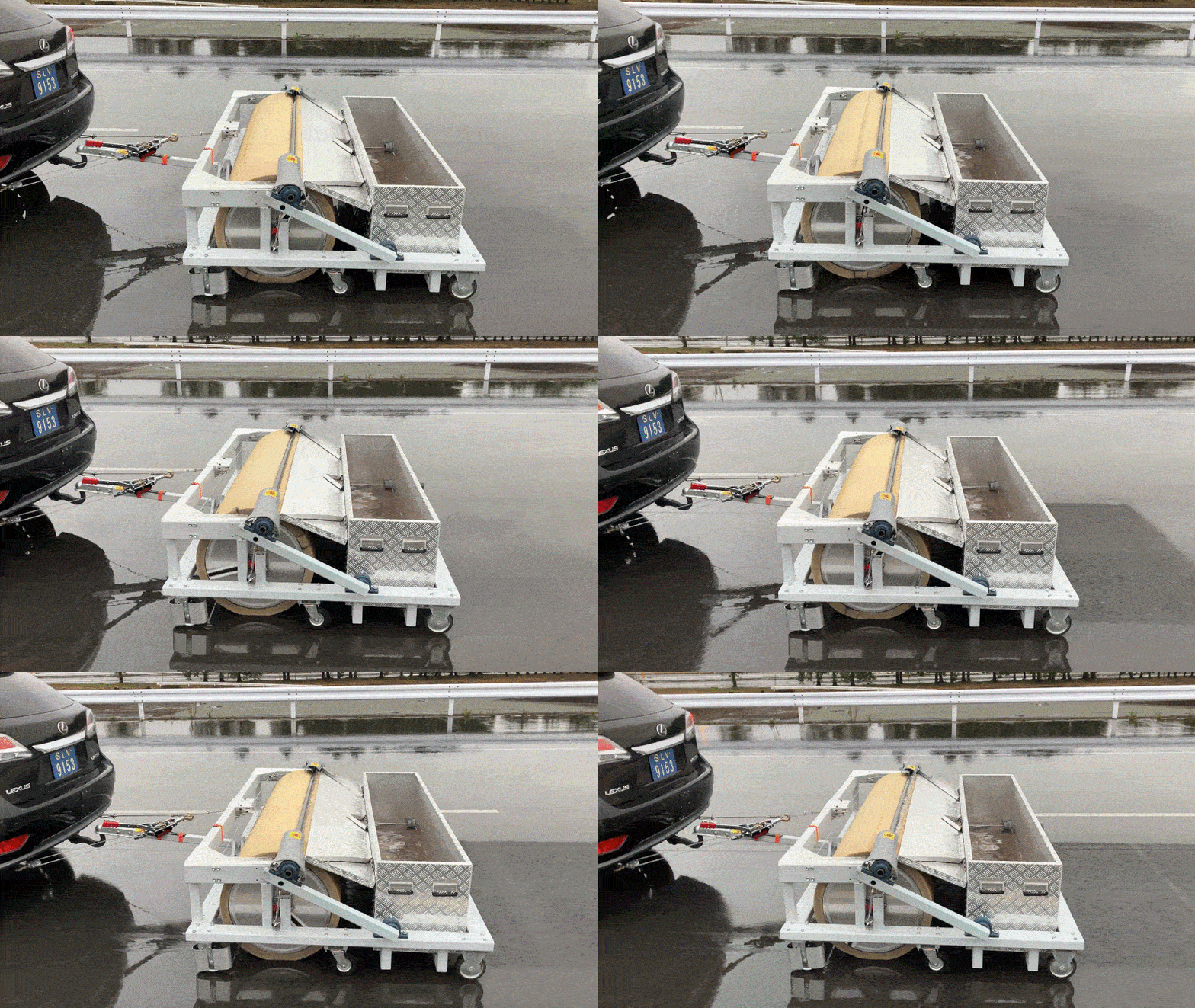
- A team developed a rolling sponge that soaks up water as it’s towed down the track.
Waiting sucks. It doesn’t matter if you’re waiting for your friends to pick you up or if you’re waiting for a pizza to be delivered.
While this is typically a minor inconvenience, it’s a bigger problem at work. However, it’s something Toyota knew all too well as engineers would have to wait around for hours to let pavement dry.
More: Toyota Plays Follow The Leader With Autonomous, Hitchless Towing Tech
As the company explained, Straight No.3 at their Higashi-Fuji Technical Center is used by three different teams working on automatic braking systems including their pre-collision system. Tests require the road surface to be dry and Mother Nature doesn’t always cooperate.
To get around the weather, workers would often need to come in on weekends to run tests while the pavement was dry. In 2023, “these team members worked on days off more than three times as often as employees in other departments.”
No one likes working on the weekend, so a few employees decided to develop a device to dry the pavement. It’s deceptively simple as Toyota described it as a “giant sponge roller that is towed behind a car.”
The roller is nearly 6.6 feet (2 meters) wide and is mounted on a rolling cart. The sponge soaks up water, which is then squeezed out by a steel rod at the top. It then trickles down into a rear collection tank, which resembles a diamond plated tool box often found on pickups. The tank holds approximately 84.5 gallons (320 liters) of water and can be quickly emptied when full.
While the idea is simple, the team tried multiple different approaches. These ranged from heaters and vacuums to blowers and “wiper-like contraptions.” The vacuum actually worked best, but the prototype was too small and scaling it up would have been “prohibitively expensive.”
They eventually settled on a sponge and refined the idea over seven different iterations. The company started using it in March of 2024 and it’s rolled out once or twice a month – depending on the weather.