










- Spyker’s latest comeback starts with the new C8 Preliator XXV coupe.
- A twin-turbo V8 sends power to the rear wheels via a stick shift.
- New backing could also revive the D8 crossover and GT3 racing ambitions.
There are countless brands out there that promise supercar production and then fade into nothingness. Then, there are automakers who once made gorgeous cars but have since gone out of business. Spyker is trying its best to leave both categories behind with the new Preliator XXV, a genuinely unique supercar. It packs 800 horsepower (597 kW), a twin-turbo V8, a proper manual gearbox, an all-aluminum body, and enough gold to make a yacht blush.
Read: CHP Is Catching Supercars At Monterey Car Week Like They’re Pokémon
The latest revival traces back to October 2025, when co-founder Victor Muller won back the rights to the Spyker name following the company’s bankruptcy and a drawn-out legal fight. Fresh money arrived in June, when Ukrainian-born cryptocurrency magnate Volodymyr Nosov bought a large stake in the company.
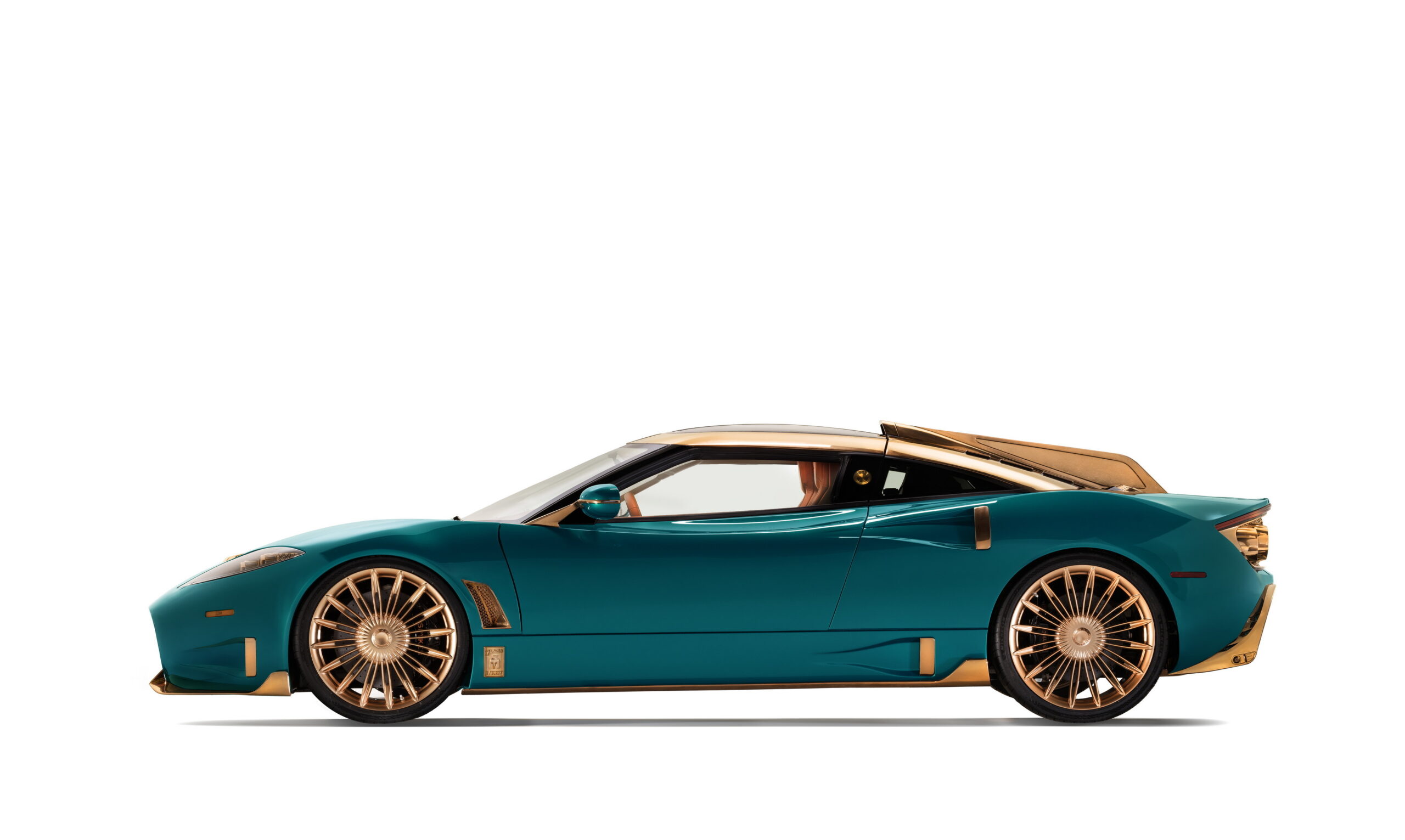
Unveiled at The Quail during Monterey Car Week, the C8 Preliator XXV Coupé is said to be an entirely new car rather than a lightly revised version of the old C8. Spyker says it will build just 25 examples, each individually commissioned, although it hasn’t announced a price. The company’s familiar aviation obsession has been turned up to 11.
NACA ducts feed the engine and the rear lamps resemble fighter-jet afterburners. A massive fin stretches from the roof toward the rear deck in tribute to the 1919 C1 Aerocoque, a piece of Spyker’s history. There’s also an isogrid pattern, an aerospace-inspired lattice of interlocking triangles, across the grille, vents, pedals, exhaust mesh, and even the seat upholstery. The aviation theme extends to the propeller-style wheels.
Three Pedals, No Asterisk
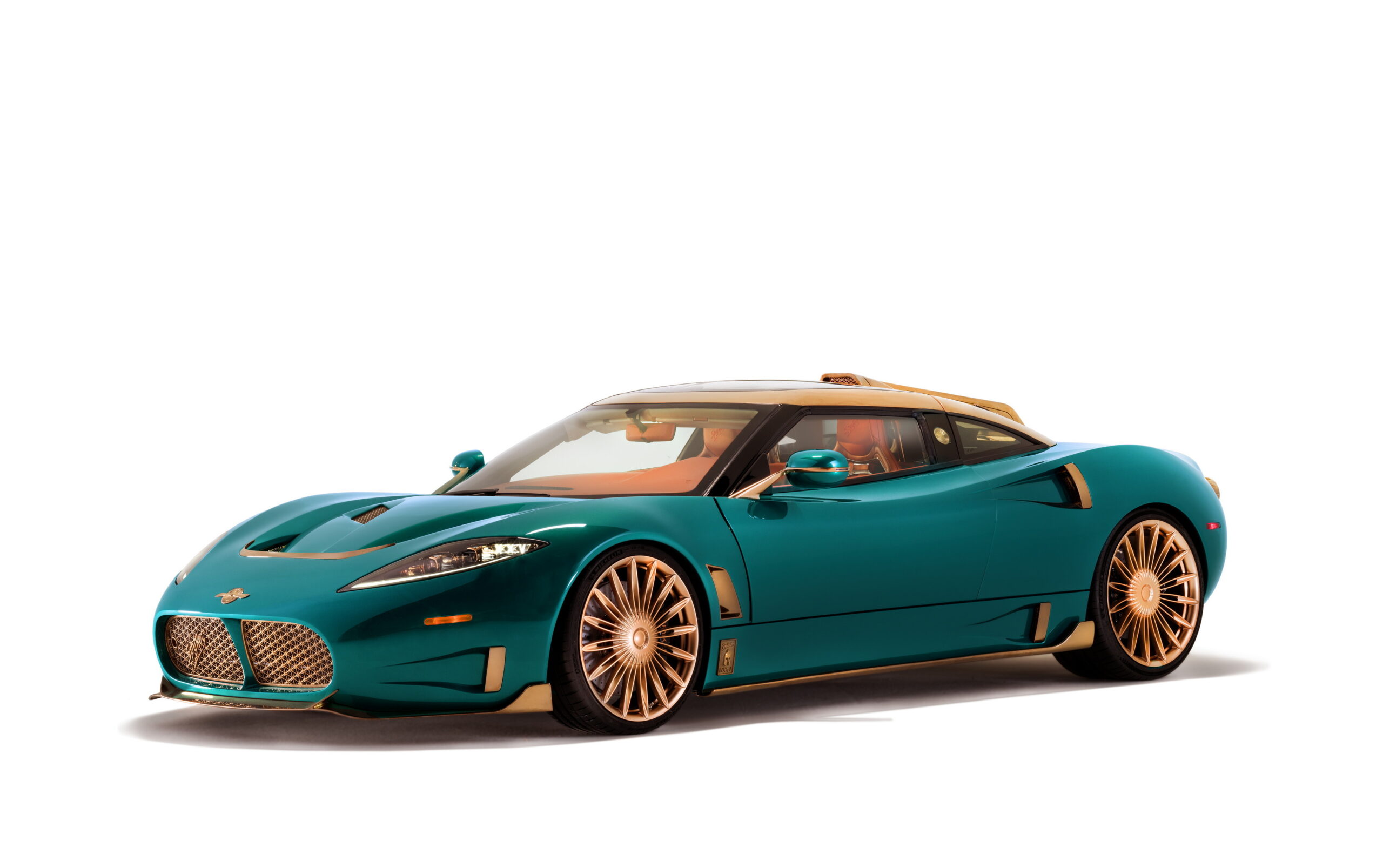
Power comes from a 4.0-liter twin-turbocharged V8 making 800 hp and 737 lb-ft (1,000 Nm) of torque. It sends that power to the rear wheels through a six-speed manual gearbox. Spyker claims a top speed above 217 mph (350 km/h), but the gearbox may be the bigger story. Koenigsegg and Ferrari have recently dropped “manual” transmissions by wire.
McLaren just announced a proper manual with mechanical linkage. Spyker is doing the same as the Brits. Moreover, the Preliator keeps the brand’s famous exposed linkage in the cockpit. No paddles. No automated substitute. Make a bad shift, as founder and CEO Victor Muller rather bluntly puts it, and that’s on you.



The interior is equally committed to the bit. A head-up display is the only screen, which should keep the cabin looking fresh decades from now. Spyker calls the switchgear and gauges “deliberately analogue.” There’s also a “butterfly mode” that pops open every body panel on the car, engine bay included, from a single button. Turned aluminum, hand-aligned screw heads, and a steering wheel reportedly stitched with two needles by one craftsman make this thing feel like it was designed by a very wealthy aviator in 1937.
Its debut car wears Quail Green paint with rose-gold flakes, rose-gold brightwork, and Tuscan Saddle leather. Spyker says it takes roughly 2,100 hours to build each car, and the company is still relying on hand-formed aluminum panels from Coventry Prototype Panels in England.
The D8 Crossover Is Still Waiting
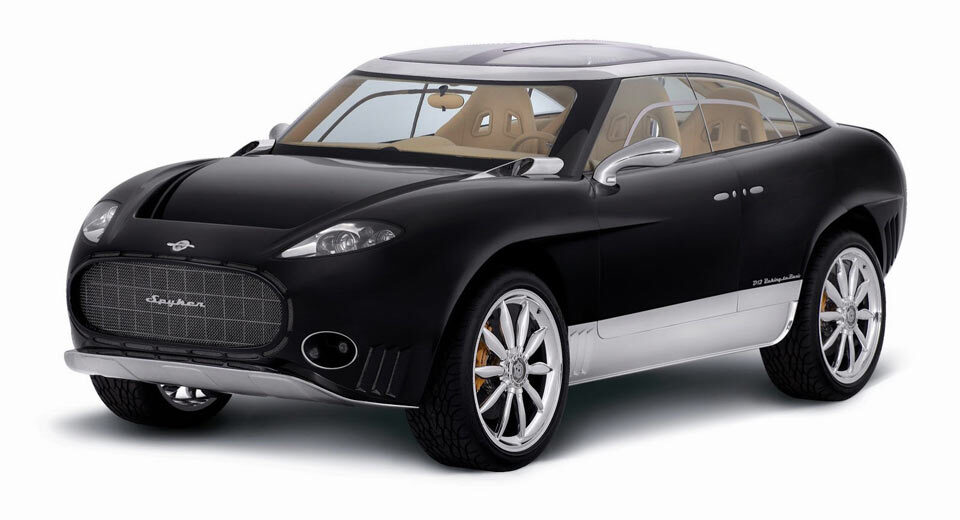
Spyker says a successful launch could open the door to building the D8 crossover concept and a return to GT3 racing. That model dates back to the D12 Peking-to-Paris concept from the 2006 Geneva Motor Show, but two decades on, a production version still hasn’t happened.
What’s most important now is that it’s actually building supercars again, and they come with three pedals and gobs of horsepower.