


CONS ›› Tough competition, Pricey options, Guzzles gas
The Dodge Durango has been around long enough that calling it old barely counts as an observation. This generation arrived in 2010 for the 2011 model year, back when Barack Obama was in his first term. Fifteen years later, Dodge is still selling the same basic idea, albeit with a lot more punch. The surprise is that the price might be one of its best arguments, provided you know when to stop checking boxes.
Our 2026 Durango R/T 392 starts at $51,990 including destination. This particular example costs $65,425. That difference buys quite a few extras, but there’s no upcharge for the engine. The 392 is already there. We’ve been down this road before. The 2025 R/T we previously reviewed carried a $72,460 sticker despite having the smaller 5.7-liter Hemi. We liked its handling, comfort, and personality, then suggested buyers skip the expensive packages.
Apparently, some things really don’t change. Others do. This time, there’s substantially more power, a familiar cabin, and an even better reason to look past the fully dressed press car. What improved in 15 years? What still feels 15 years old? And which version actually deserves your money?
Quick Facts
Styling: Old Enough To Know What Works



Credit: Stephen Rivers
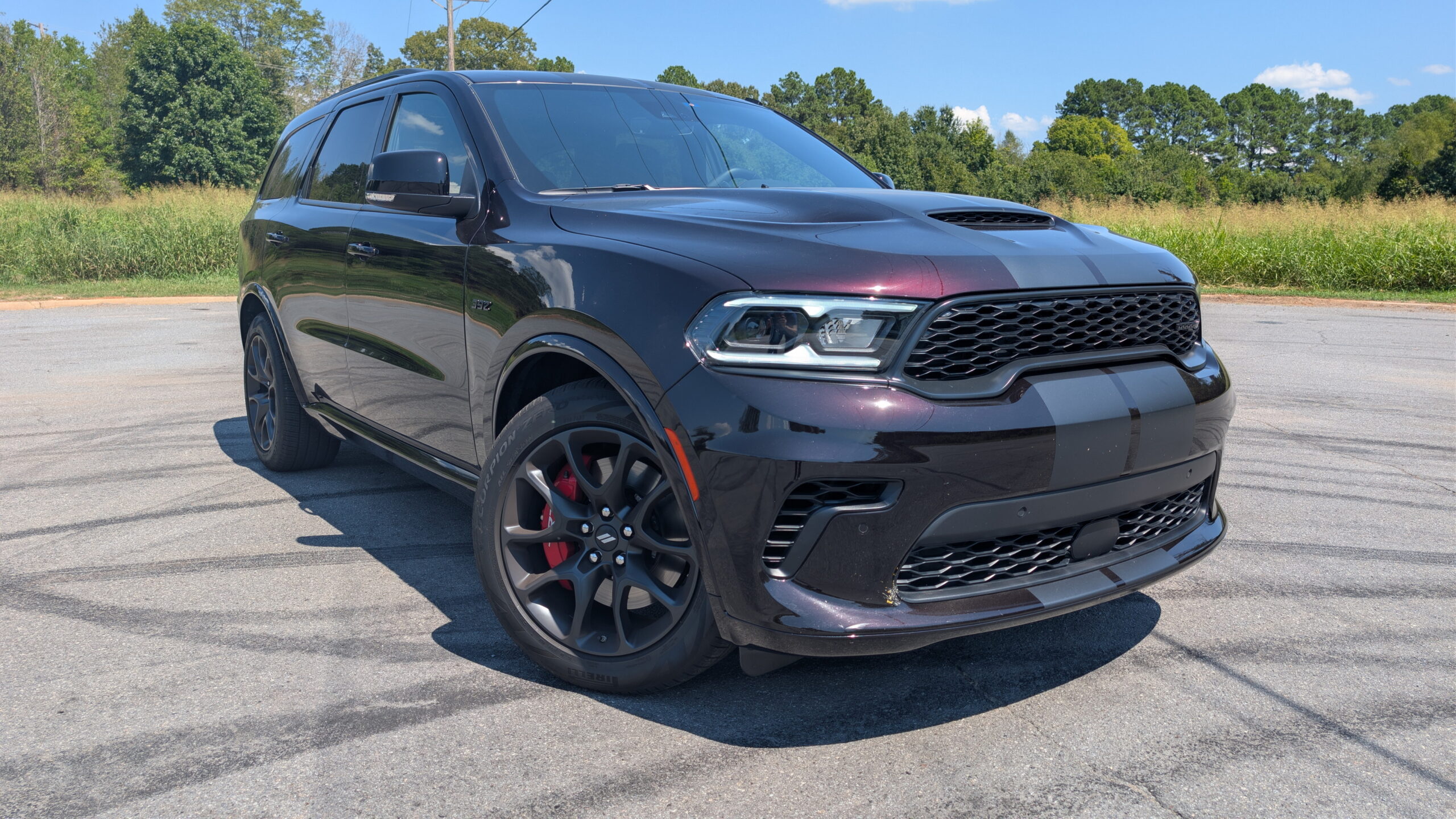
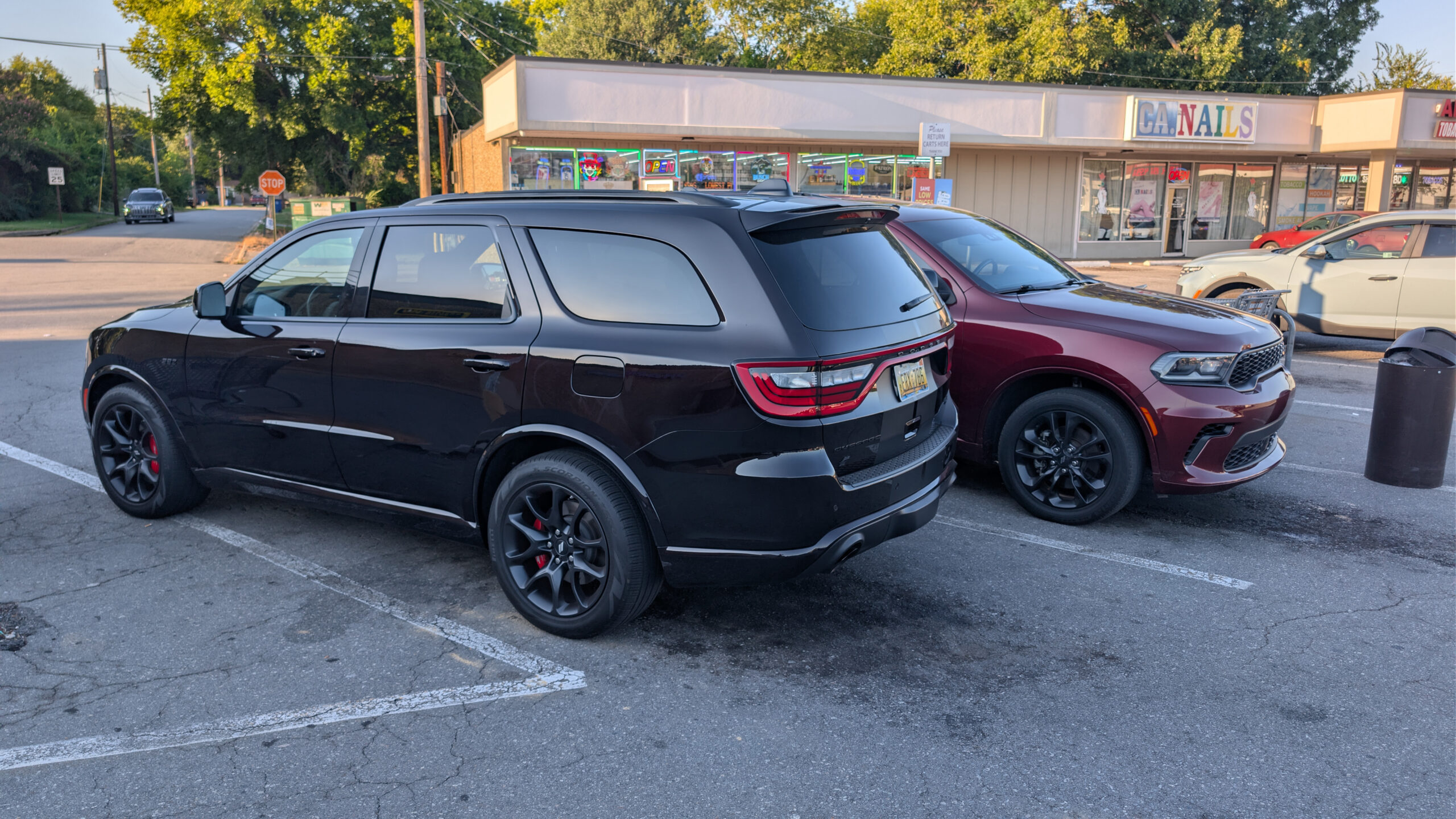
I still love the way the Durango looks. It’s upright, broad, and appropriately muscular without looking like someone glued a sports car’s face onto a refrigerator. The shape suits what it does. It looks like it can carry people, haul equipment, and make a little noise along the way. There have been design changes since 2011, of course. Calling this an untouched original would be unfair. Even so, its proportions remain familiar enough that nobody is going to mistake it for a clean-sheet replacement.
Our Red Oxide tester adds black trim, optional wheels, and stripes. It looks great. That said, whether it looks nearly $6,000 better is another question. The paint, Blacktop package, optional Lights Out wheels, and stripes total $5,835. That’s real money for dressing up something I already liked looking at.
Cabin: The Past Is Still Present
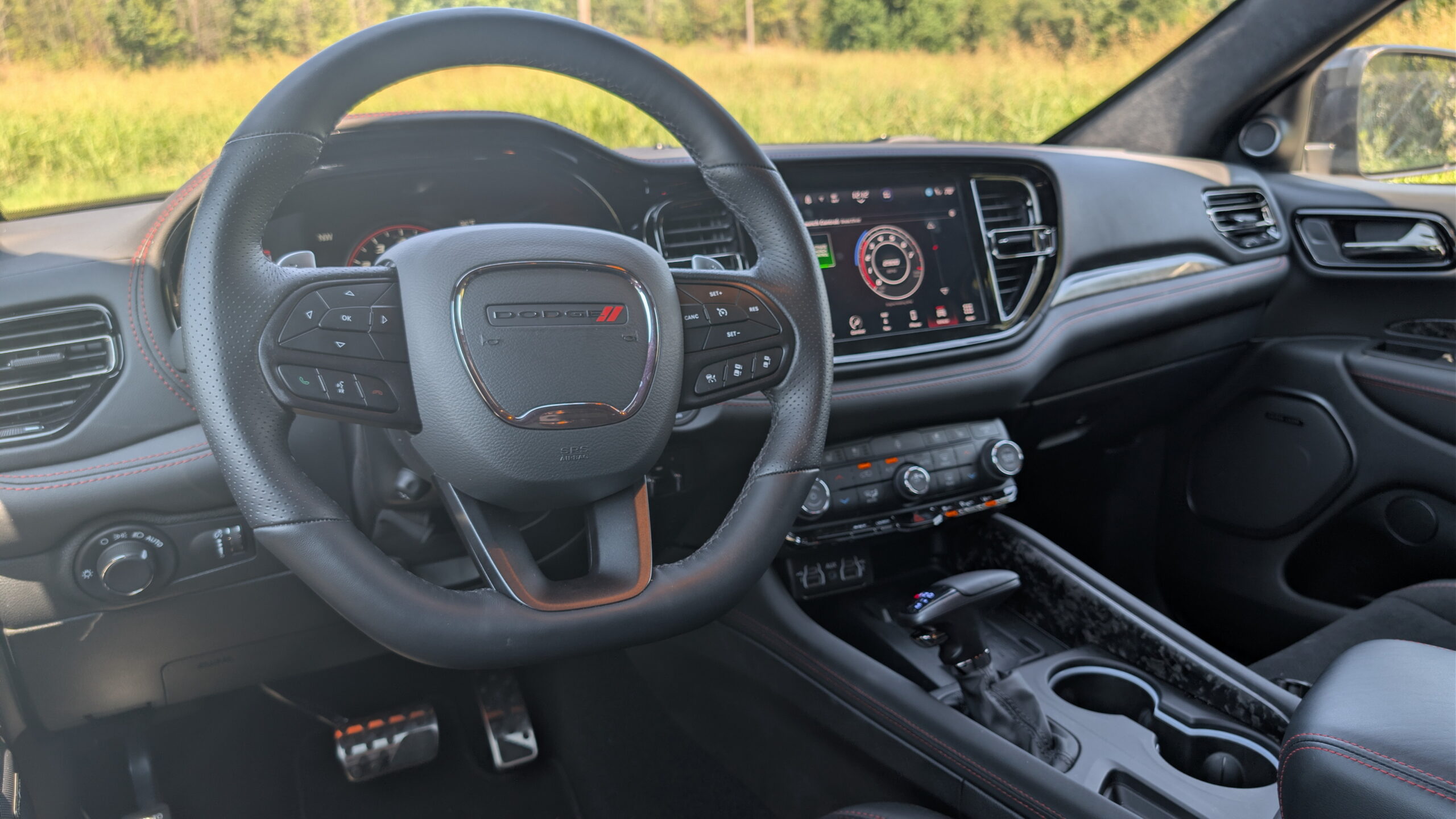
Open the door, and the age becomes much harder to overlook. The dashboard and door cards have a chunky, familiar design, and the dark materials give the interior a very one-color appearance. The textures and shapes look like they’ve been hanging around for a decade because, in spirit at least, they have. That doesn’t make the whole experience unpleasant. The seats are big, wide, and comfortable. I’d appreciate more lateral support when driving enthusiastically, but they’re easy to settle into. There’s a straightforwardness here that people who dislike today’s interior design trends might actually prefer.
Dodge has updated the cabin, and the 10.1-inch infotainment screen helps considerably. The system works well, and I particularly like the performance pages. Acceleration timers and G-force displays give owners something interesting to explore beyond another menu of ambient-lighting colors. More vehicles should help people understand what they’re doing behind the wheel.


Credit: Stephen Rivers
The physical controls beneath the screen deserve praise, too. They’re easy to reach and make everyday adjustments simple. An older approach here is still the better approach. Plenty of automakers are realizing that now. The second and third rows follow much the same formula. They’re simple, reasonably spacious, and comfortable within realistic expectations. Access to the back is easy. I could get in and out without an elaborate sequence of seat movements and personal contortions.


Credit: Stephen Rivers
Could I comfortably spend hours back there? No. I’m six-foot-six, and fitting inside a seat isn’t the same thing as wanting to take a road trip in it. Six adults would need to negotiate expectations. For regular six-adult travel, I’d be shopping for a minivan without shame. With four aboard, or four plus two or three kids, the cargo situation is much more convincing. My sports equipment and goalie stick fit without drama, with room for additional cargo. This remains a useful family vehicle, even if its interior doesn’t make you feel like you’ve purchased the latest thing.
Driving: The Good Part Never Gets Old
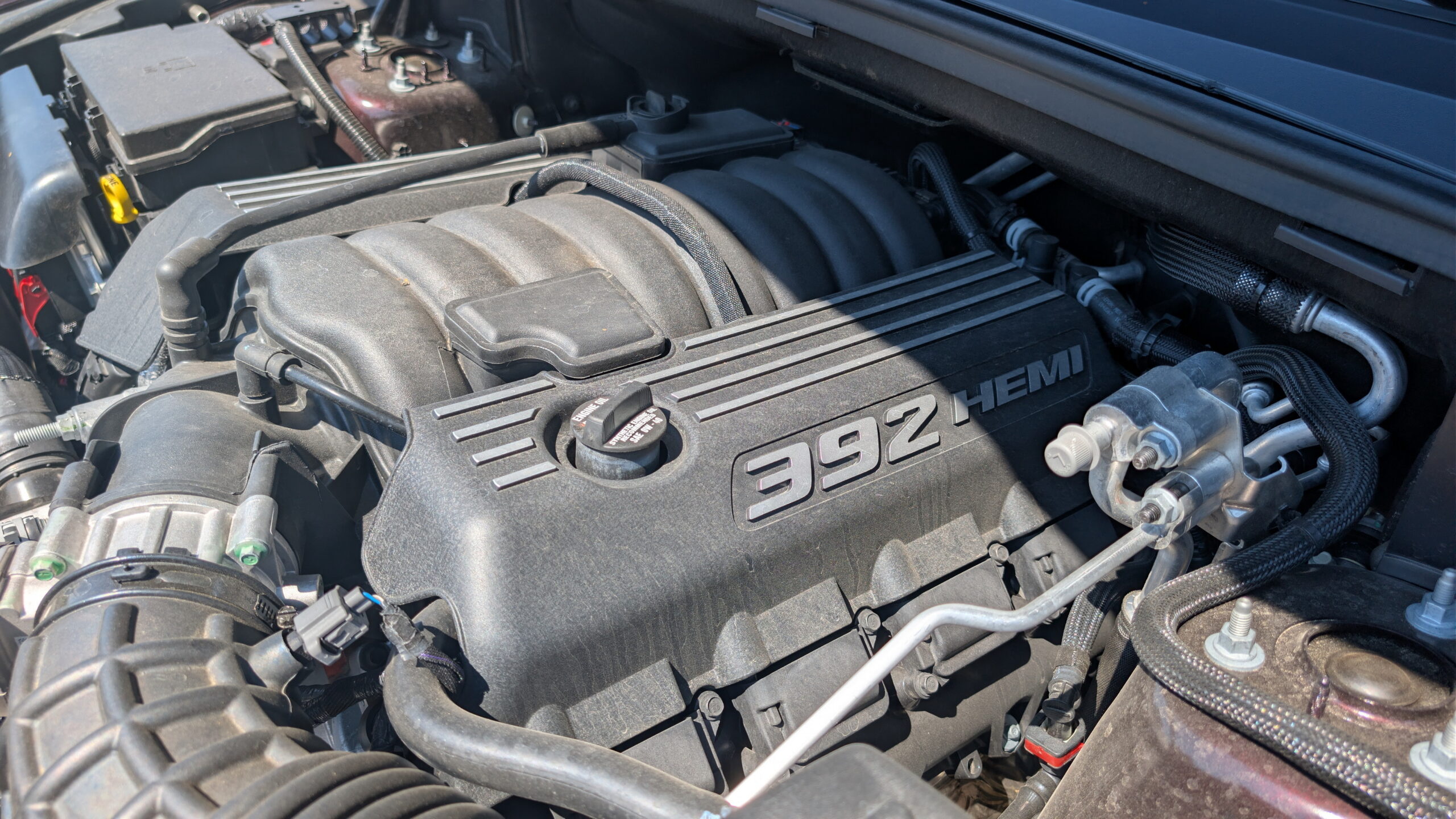
Start the Durango and the appeal becomes obvious. The rumble is real, physical, and entertaining. This thing makes an ordinary departure feel like an event, and it manages that without needing an outrageous amount of speed. The 6.4-liter V8 produces 475 hp (354 kW) and 470 lb-ft (637 Nm). That’s a substantial improvement over the 360 hp (268 kW) and 390 lb-ft (529 Nm) delivered by the original R/T’s 5.7-liter engine. The current eight-speed automatic also gives it three more ratios than the 2011 model.
The transmission in this test vehicle was responsive, easygoing, and predictable. Unlike the occasional gear hunting I noted in my previous 5.7-liter test, this one gave me little reason to complain. Ask for acceleration, and the powertrain gets on with it. Dodge quotes 4.4 seconds to 60 mph (97 km/h). We couldn’t reproduce that on an unprepared road. After several attempts, our best was 4.8 seconds with rollout subtracted and 5.06 seconds from a standstill. Those are our results under our test conditions, rather than a controlled replication of Dodge’s run.
Regardless, it feels quick enough to be entertaining, and the stopwatch doesn’t explain the whole experience. Steering response is very predictable. So is the body’s movement through a corner. The brakes feel excellent, with progressive response and none of the grabby behavior that can make powerful brakes annoying around town.
Read: 2027 Durango Dodges Change, But Embraces Personalization
Everything feels easy. That’s one of my favorite things about this platform. It almost encourages you to hustle it along, giving you confidence through consistent responses rather than demanding that you manage its bulk at every turn. Let’s keep expectations reasonable, though. This isn’t a canyon-carving Porsche Cayenne rival. It’s a large, heavy SUV with three rows that sounds like a muscle car and handles better than its age might lead you to expect. There are limits, and pretending otherwise would miss what makes it enjoyable.
The ride is relatively comfortable, too. Nothing about it stood out as a punishment, despite the performance intentions. On the highway, in its normal driving setting, the Durango settles into an easy cruise. The exhaust doesn’t make life harder with constant drone. You can enjoy the noise when accelerating and still relax once you’re up to speed. My main wish is a selectable rear-wheel-drive-only mode. I’d love the option of sending everything rearward, as the new gas Charger allows. The Durango’s AWD works well, but that extra choice would add another dimension to an already entertaining SUV.
Fuel economy is less entertaining. The sticker reads 13 mpg city, 19 highway, and 15 combined. I didn’t record an observed average during this test, so there’s no personal number to substitute. If you’re buying one, you’d better be comfortable feeding it. Loving the sound doesn’t make the fuel bill disappear.
Fifteen Years Of Progress, With Receipts
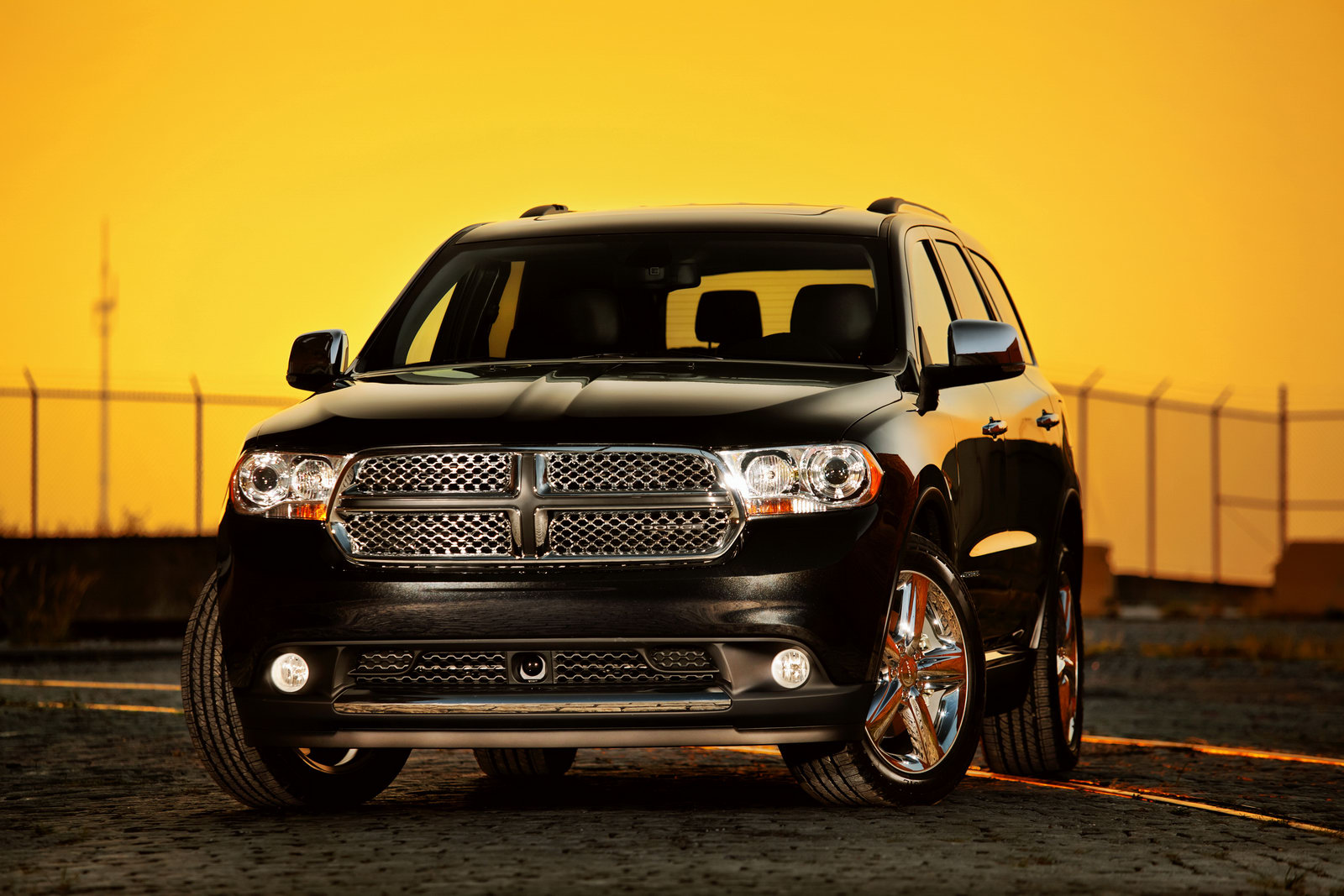
The historical comparison is more flattering than the familiar dashboard suggests. Using the published 2011 R/T AWD base MSRP of $38,090, against this model’s $49,995 before destination, the sticker has risen about 31 percent. Inflation over the same broad period has risen considerably more. The inflation figure uses the 2011 annual-average CPI-U and August 2026 CPI-U. On that basis, the current base R/T is approximately 12 percent cheaper in real terms. This compares starting prices, with destination excluded on both sides; it isn’t a claim that the two vehicles have identical equipment.
You’re also getting hardware beyond a bigger engine. Our sticker lists adaptive damping, Brembo brakes, an electronic limited-slip differential, heated and ventilated front seats, heated second-row seats, and smartphone integration as standard equipment. These aren’t all dependent on ordering the $7,600 Premium package.
The fuel-economy comparison is revealing. Combined mileage hasn’t improved, but today’s R/T makes substantially more power. That’s a meaningful performance gain. It still doesn’t make 15 mpg economical. Even my previous tester offers useful perspective. This 392 costs $7,035 less as tested than the 2025 5.7-liter I reviewed. Importantly, they’re differently equipped vehicles, so this isn’t a direct measure of a model-year price cut. That said, it does show how much the options sheet can distort the value conversation.
Competition: The Ford Complication
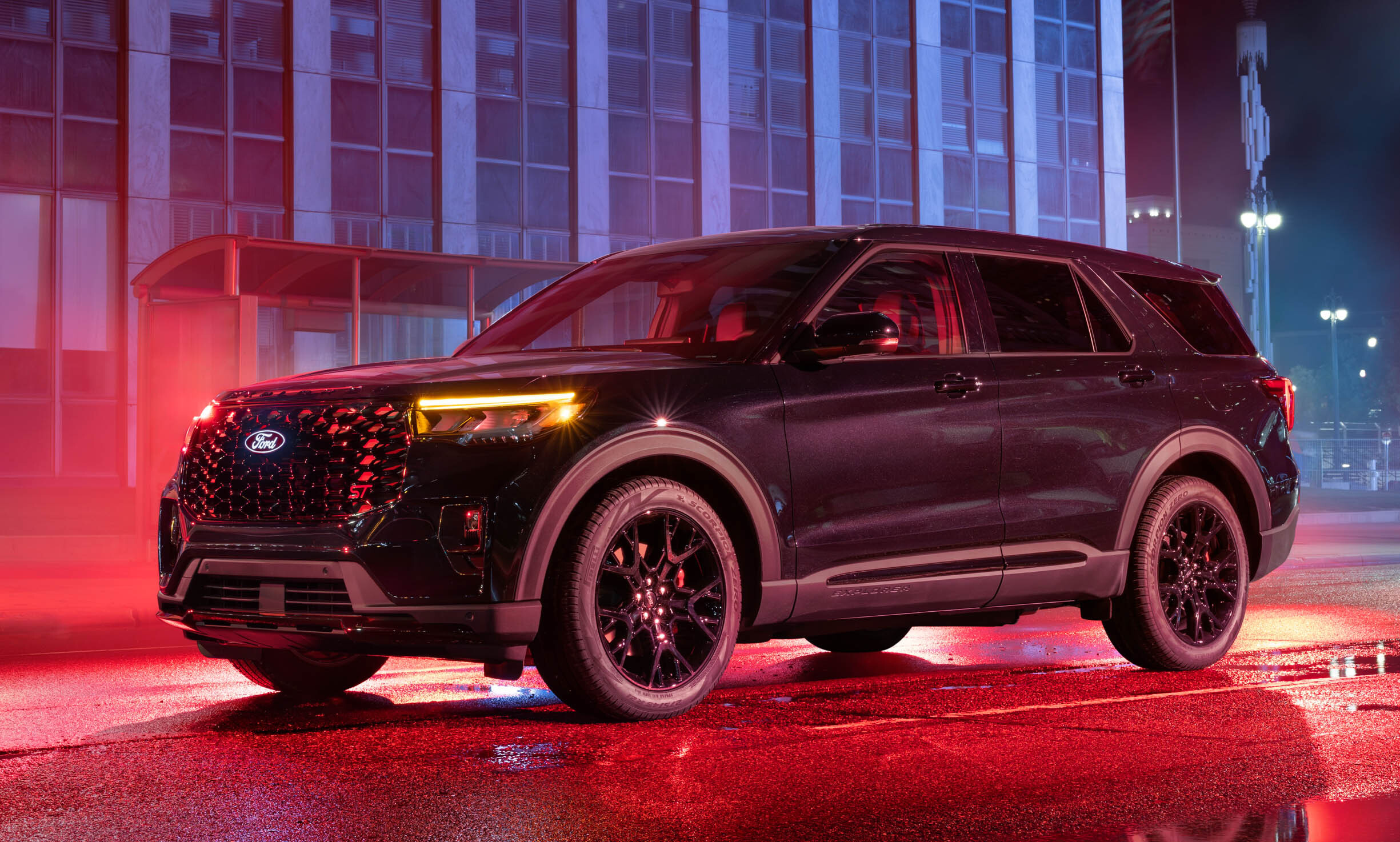
At $65,425, this wouldn’t be the SUV I’d buy. My alternative would be a rear-wheel-drive Explorer ST. Ford confirms that configuration is available with six seats, and its newer cabin and rear-drive layout fit what I’d want from my own performance family hauler. I’d also be interested in modifying it, starting with investigating a limited-slip differential. Ford lists a non-limited-slip rear axle as standard. That’s an ownership project I’d explore, though, rather than a reason to pretend an unspecified modified Explorer is what rolls out of the showroom.
The Dodge has its own practical advantage. Properly equipped, the R/T 392 is rated to tow 8,700 lbs (3,946 kg), compared with the Explorer ST’s 5,000 lbs (2,268 kg). We didn’t tow during this test, but buyers who need that capacity have a reason to favor the Durango beyond its exhaust note. Price changes my answer, too. The Explorer ST’s $54,905 base MSRP puts it in roughly the $57,000 neighborhood once delivery is included. Against a $51,990 Durango, I’d struggle to justify the extra cash. Unwanted dealer accessories would make that argument even weaker.
More: Ford’s New Explorer ST Sinister Package Is Like A Vampire With Rubber Fangs
If a dealer discounted the Ford enough to narrow the gap to a couple of thousand dollars, I’d take the Explorer. That’s a hypothetical deal, not an advertised offer, and any Dodge discount belongs in the same calculation. The actual difference between the two quotes matters more than the badge on either hood.
Notably, this segment includes plenty of SUVs that are an objectively better value. Things like the Kia Telluride, Hyundai Palisade, Toyota Grand Highlander, Honda Pilot, Jeep Grand Cherokee L, and more. The reason we’re not diving into them is because the Durango R/T isn’t a true competitor. It’s not as up-to-date. And none of those other options are as playful, rowdy, and fun.
Verdict: Buy The Engine, Watch The Extras

Fifteen years haven’t robbed the Durango of its best qualities. It’s comfortable, useful, and consistently fun to drive. The bigger engine and effective transmission give it performance to go with the personality, while the physical controls and straightforward layout retain their appeal. The cabin is still dated. More leather and expensive trim don’t entirely fix that, and the fuel consumption remains a substantial ownership expense. Those weaknesses become harder to overlook as the price climbs.
At $51,990, though, the R/T 392 makes a convincing argument. I wouldn’t casually spend thousands more to replace it with something newer. At our tester’s $65,425, I’d be visiting Ford. The Durango has earned the right to stick around. That doesn’t mean every option on this one has earned a place on the bill.