

Haltech Vs Link ECUs: Here's How They Compare
Here's what you need to know to get more from your car
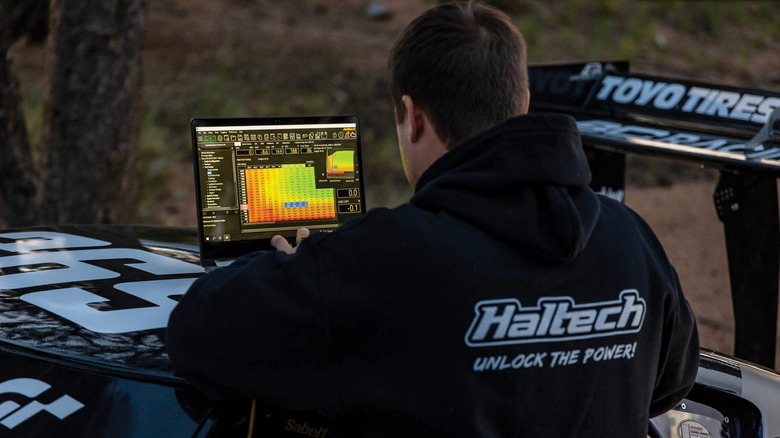
Some folks think of modifying their car on a smallish scale. They swap exhaust parts, maybe throw in a freer-flowing intake, or upgrade other hardware components. The reality is that all of those parts only work at their optimal rate when the car is tuned for them. In older cars, that can mean as little as dialing in some carburetor jets. In pretty much everything modern, it can often mean adding a standalone ECU. Two of the most popular are Haltech and Link. Today, we're going to break down exactly what sets them apart.
Typically, the most important question for consumers is what car they're trying to tune. Both Link and Haltech sell vehicle-specific solutions and installation hardware. Link's plug-in catalog covers brands including Honda, Mazda, Nissan, Subaru, and Toyota.
Haltech also offers vehicle-specific kits and plug-in ECUs that plug directly in. Finding a compatible plug-in ECU can dramatically cut down on the work that it takes to install a standalone. NZPerformance puts it beautifully when it says, "If only one brand makes a plug-in for your exact car, that usually settles it." That said, there's plenty else that differentiates these two brands.
The biggest differences
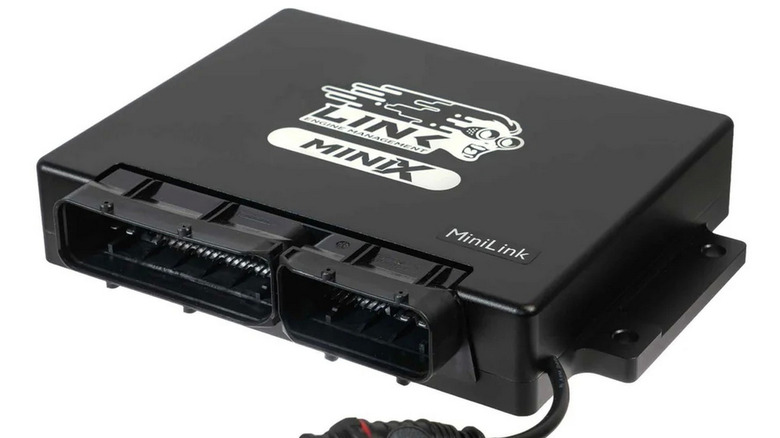
It's worth noting right away that neither ECU brand is going to provide better performance or power just based on the name on the box. The real key here is to understand how the ECU in question works. Haltech is unique because it offers a complete suite designed to handle more than just engine management. Its Nexus R3 and R5 units combine ECU, data logging, wideband O2 sensor control, and power distribution.
A setup like that can essentially become a car's entire electrical system, and owners can configure settings through Haltech's Nexus Software Programmer, or NSP. In other words, for those starting with a stripped shell or close to it, Haltech offers complete systems that can replace the original wiring harness and its components. Link takes a different approach.
It focuses primarily on engine management. Its G4X family spans simpler units through models with more inputs, outputs, and features. The G5 platform adds support for more demanding applications, including direct injection with the required external driver hardware.
Some products, like its G4X FuryX, have a wideband controller built in. It also offers the Razor PDM for fuel pumps, fans, lights, and more. Notably, those are separate components. Link says you can even use the Razor PDM without a Link ECU. Of course, the biggest caveat is yet to come.
Ask your tuner
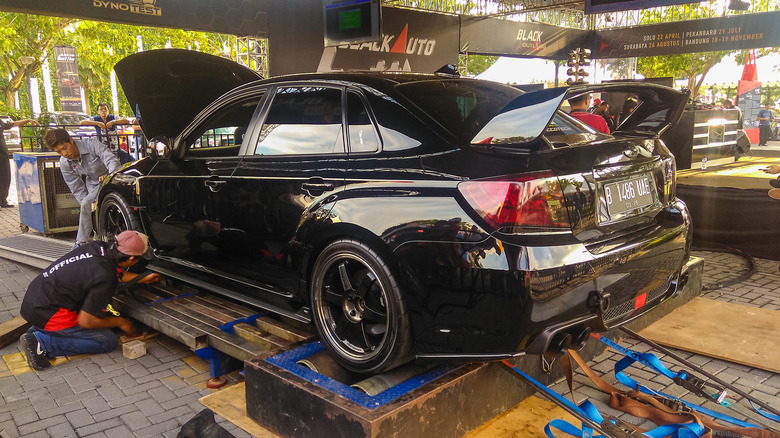
The reality is that tuning an ECU isn't a skill that translates across all engine management systems. To that end, the person who will tune your car should be involved before you make the purchase, if at all possible. Ask which specific Haltech or Link unit they recommend for your combination, which features they'll use, and what the installation will cost.
A recommendation backed by actual experience with your engine is more useful than a simple brand preference. Also, if your tuner is more comfortable (and therefore faster) with one, it means more time on the dyno actually getting work done. That matters, given how expensive dyno time can be these days.
If you plan to tune your own car, asking another tuner for an opinion still isn't a bad idea. Link uses its free PCLink software for configuration, tuning, and log analysis. Haltech's Nexus units use NSP. Downloading software and looking through it can also help. Ultimately, it all comes down to the same thing as other upgrades. Trying to slap a supercharger into a car plumbed for a turbo makes for a tougher job. In that same vein, matching the correct ECU to the build sheet is just as important.