


- Modern throttle-by-wire systems increasingly filter driver inputs through layers of software.
- A week with Infiniti’s QX60 prompted questions about low-speed throttle response.
- OBD logs mirrored our impressions, though they stop well short of proving a problem.
Luxury vehicles of the past had a straightforward recipe. They focused on isolating occupants from noise, vibration, and harshness outside of the vehicle. Today, software plays a role, and not a small one either. Increasingly, automakers filter, shape, and reinterpret driver inputs in the name of refinement, fuel economy, smoothness, and effortless performance. That’s especially true with throttle-by-wire systems and a week in an Infiniti QX60 made that physical disconnect so apparent that we had to dig into the data.
In most modern vehicles, pressing the accelerator no longer directly opens anything. Instead, your right foot sends a request, the computers interpret it, and then the vehicle decides how much throttle, transmission response, torque delivery, and urgency to provide. In theory, it’s smarter. In practice, it can sometimes create a strange sense of disconnect.
What The Pedal Felt Like
In the Inifiti, the first 15-20 percent of accelerator pedal engagement seemed to produce almost no thrust. It felt like I’d request some power and then a committee had to debate about whether or not I should get it. Then, just above those percentages, it felt like suddenly I was getting far more throttle than I asked for. It didn’t necessarily feel broken or defective, just far from the more linear throttle response I’m used to. So instead of relying entirely on my own subjective impression, I started digging.
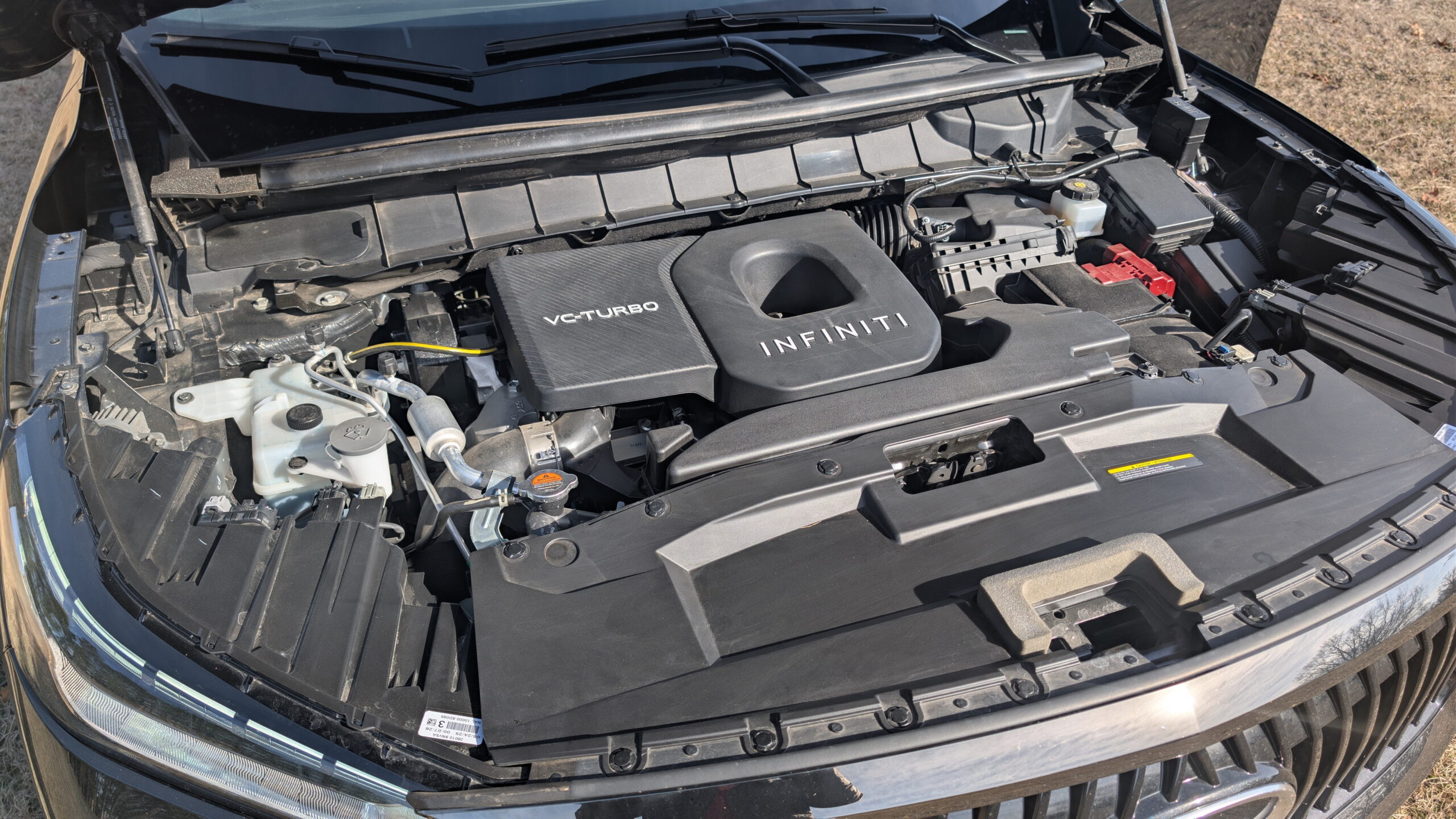
I plugged in a data logger to the Infiniti’s OBDII port and started recording throttle position, pedal position, RPM, and more. To be clear, this wasn’t an engineering exercise or an attempt to uncover a defect. It was a curiosity test on a single press vehicle.
What The OBD Data Showed
Looking through the logs, one pattern repeatedly stood out. Relatively modest accelerator inputs often appeared to correspond with much larger jumps in reported throttle activity. Low pedal applications could feel muted, while slightly more input seemed to trigger a noticeably stronger response.
Read: New QX65 Revives The FX Formula Infiniti Abandoned Seven Years Ago
Importantly, the graphs didn’t reveal signs of an obvious failure. We didn’t observe erratic signals, random drops, dead spots, or behavior typically associated with a failing accelerator pedal sensor or throttle issue. RPM traces also behaved predictably. Still, the overall shape of the data appeared to broadly mirror what I felt from behind the wheel. Specifically, a response curve that sometimes felt less progressive and linear than expected.
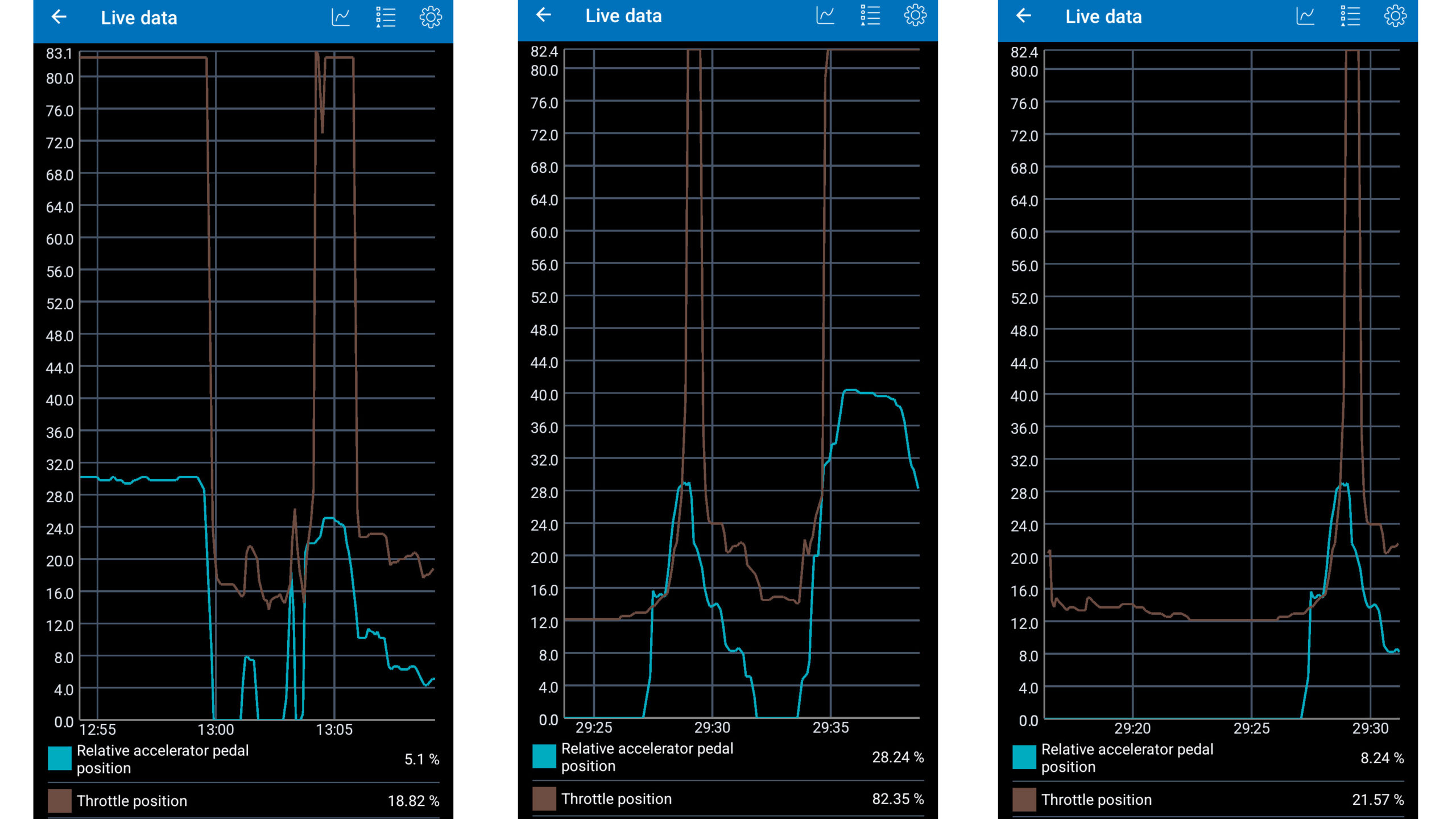
There are a lot of caveats here. OBD logging isn’t the same as factory engineering data, and parameter scaling can vary based on the scan tool, available vehicle signals, and how individual manufacturers report information. Modern vehicles also filter driver inputs through layers of torque management, transmission programming, and software logic. In other words, these traces should be viewed as supplementary context, not proof of how Infiniti calibrated the QX60.
When Refinement Becomes Delay
That said, our experience didn’t seem entirely isolated. Reviewers from across the automotive media-landscape and forum commenters all seem to agree that, at the low end, there is some sort of lag or delayed response in the QX60. This is where the broader question becomes more interesting. Is ‘refinement’ starting to feel more like a delay?
Modern luxury SUVs increasingly route driver inputs through software designed to improve smoothness, fuel economy, refinement, and perceived effortlessness. In theory, that sounds ideal. In practice, those same layers can sometimes create a sense of separation between what your right foot requests and what the vehicle actually delivers. The QX60 may simply be another example of that balancing act.