

Why Is Pontiac's Muscle Car Called The GTO? Here's What It Means
If you're a Ferrari fan, you may already know the answer to this one
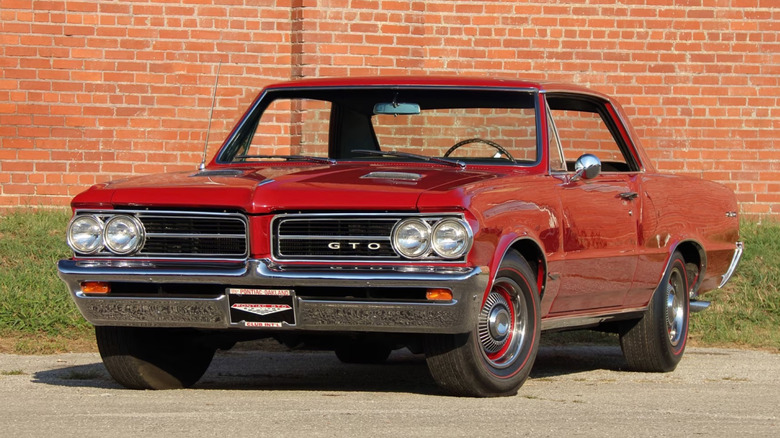
No car sums up the muscle car's golden age better than the Pontiac GTO. Detroit had built fast, powerful cars before the GTO debuted in 1964, cars like the Chevy Impala 409 and Pontiac 421 Super Duty. But getting one might involve selecting some sort of secret engine upgrade code tucked away on an option list, or maybe even built for racing and produced in relatively small numbers.
The GTO was different. Yes, you got a powerful V8 engine, but that was only part of the deal. It captured America's imagination because it was the full package, a hot road car that went hard, looked the part and didn't need a pit crew to keep it in tune. Clever marketing ensured everybody knew about the GTO, and everybody with an ounce of gasoline in their veins wanted to own one. But what did those GTO letters even mean?
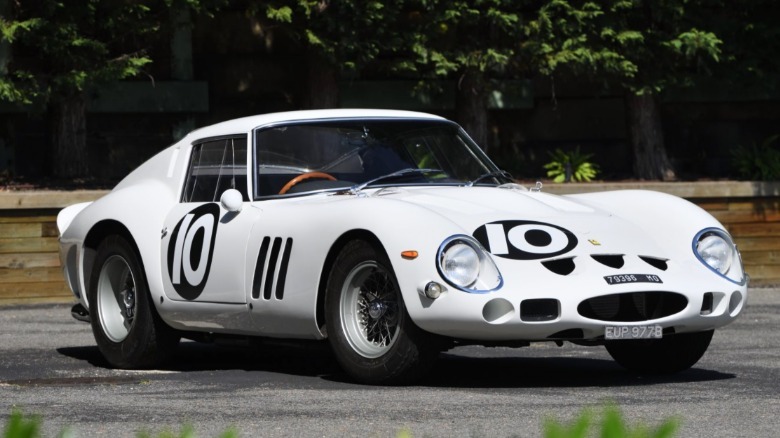
Ask a Ferrari fan that question, and they'll tell you GTO stands for Gran Turismo Omolagato (or Grand Touring Homologation), and they'll also tell you it was first applied in 1962 to a very special evolution of Ferrari's 250 GT line. The 250 GTO was built specifically to win races like the Le Mans 24 Hours, and the FIA, motorsport's governing body, demanded that 100 road cars be built to homologate ('omologare' in Italian), or legalize, the V12 coupe for competition use. Ferrari hoodwinked the FIA into believing it had built all 100 of those required cars, when in fact it had made only 36. So what happened next — 4,500 miles (7,200 km) away in Michigan — when Pontiac decided to borrow that GTO badge for itself, was kind of poetic justice.
Pontiac found GM's loophole
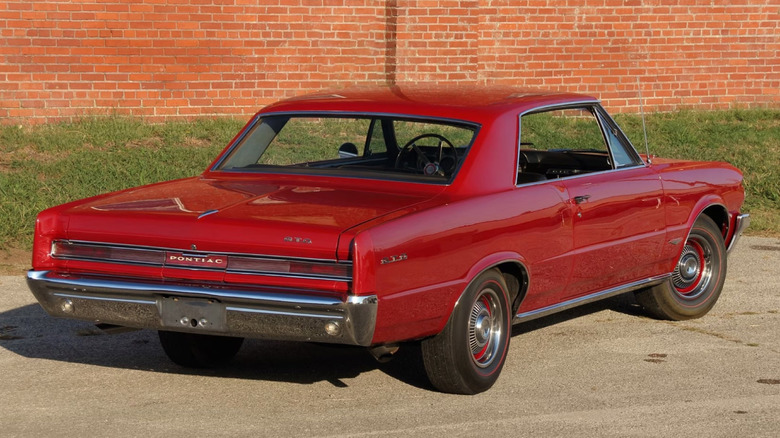
Pontiac had already scored plenty of silverware of its own by the time Ferrari's GTO hit the track. Between 1960 and 1962, Pontiac won the Daytona 500 twice, plus the NASCAR Grand National Drivers' and Manufacturers' Championships. Multiple NHRA drag racing wins added to the trophy haul.
But Pontiac's GTO wasn't a homologation special built to go racing. It couldn't race anyway, at least not with official Pontiac backing. GM had banned all factory motorsport activities in January 1963, a decision that left Pontiac needing another trick to capture both the wider public's attention and the emerging baby boomer market.
The now legendary solution is widely credited to John DeLorean, then chief engineer, though fellow engineers Bill Collins and Russ Gee helped plant the seed. What would happen if Pontiac dropped the big 389 cu. in. (6.4-liter) V8 from its full-size cars, into its midsize Tempest, the trio wondered?
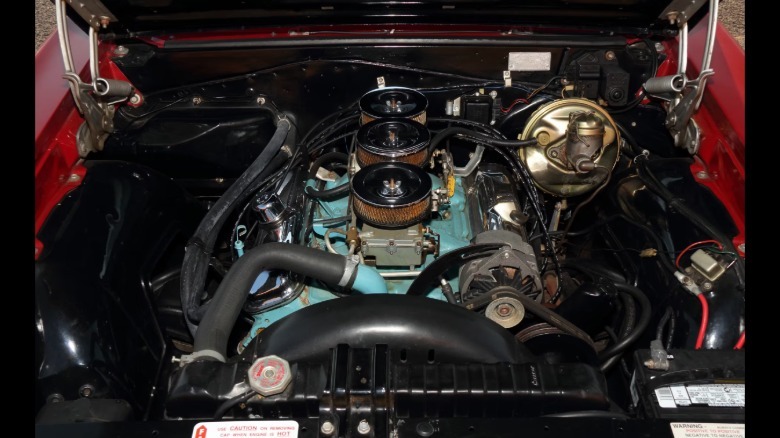
DeLorean's problem was that GM had another ban in place, this one prohibiting big V8s in intermediate cars. But that ban only applied to base engines. By making the GTO package and its 389 an option, Pontiac's muscle pioneer flew right under GM's corporate radar and into showrooms for 1964.
The 389 made 325 hp (330 PS) in its entry-level form with a four-barrel carburetor, and 348 hp (353 PS) with the Tri-Carb, triple two-barrel setup. A Tri-Carb could hit 60 mph (97 kmh) in less than seven seconds according to most tests, but when Car and Driver recorded a 4.6-second run and blasted through the quarter mile in 13.1 seconds, the GTO's reputation was assured. It wasn't until years later that Pontiac's advertising genius Jim Wangers admitted the C/D car had secretly been fitted with an even bigger 421 cu in (6.9-liter) V8.
Almost 100,000 sold in a single year
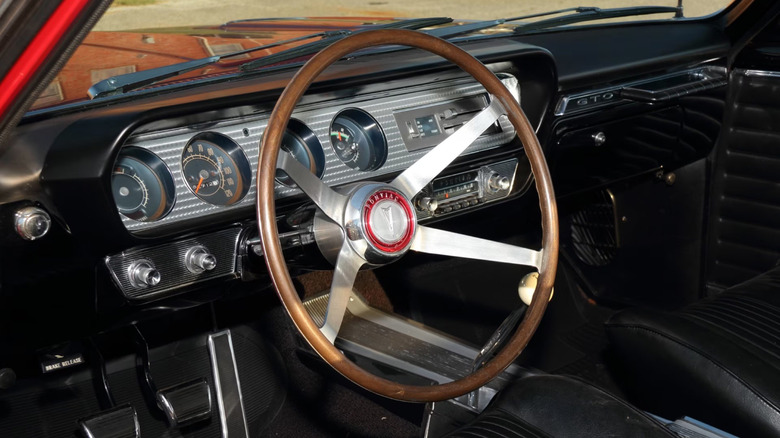
There was more to the GTO package than just a big engine, though. Ticking the GTO option on a Tempest Les Mans also netted you a floor-mounted, three-speed manual transmission with a Hurst shifter, a dual exhaust system, stiffer springs and shocks, and a heavy duty engine fan. A four-speed manual, Safe-T-Track limited-slip differential, and a rev counter were optional, and from 1967 that gauge could be mounted on the hood, like an early form of head-up display.
The components that made the GTO look fast were as important to building its reputation as the ones that made it go fast. Those included a simulated engine-turned dash panel, dual fake hood scoops, special GTO nameplates, and a badge with "6.5 LITRE" spelled out in British English to further cement the connection to the exotic world of European sports cars.
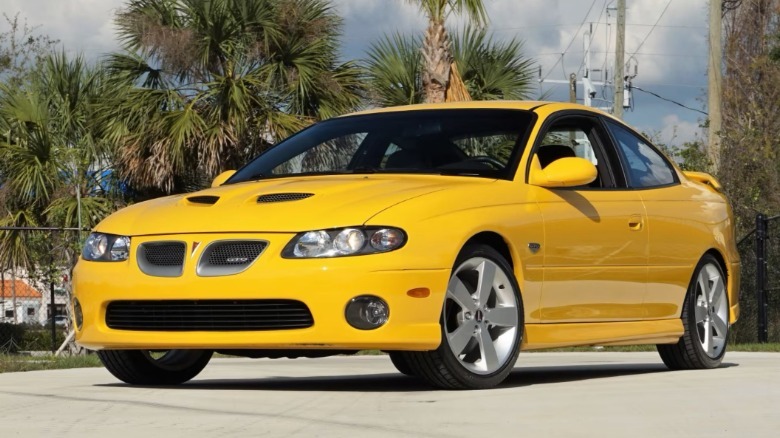
More than 32,000 GTOs were sold that first year, and over 75,000 in 1965. For 1966, the GTO switched from an option package on the Tempest to a model line in its own right, and sales hit 96,946. It wouldn't come close to those heights again. By the early 1970s, the popularity of the GTO, as well as the muscle car craze it inspired, had waned. The GTO was dropped after 1974, and a brief but bland 2004 comeback as a rebadged Australian Holden Monaro didn't do the badge justice. Sales never topped 16,000, despite the 6.0-liter LS2 V8 offering a solid 400 hp (406 PS), and it was dropped after 2006.
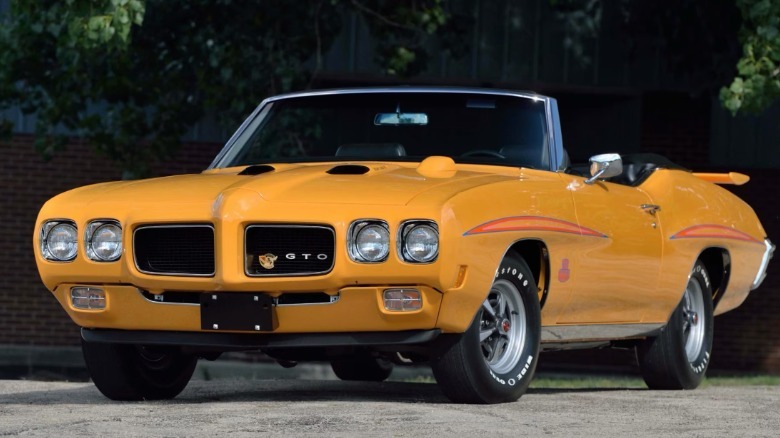
Ferrari's 250 GTO remains one of the world's most valuable collector cars, with examples selling for as much as $70 million. Pontiac's version is rather more accessible, just as it always was, with prices generally in the $30-85,000 range, although a 1970 GTO Judge convertible with the rare Ram Air IV engine did change hands for $1.1 million in 2023.