

Your Next Car Could Be Software-Defined. Here's What That Means
What is a software-defined vehicle and why does that matter?
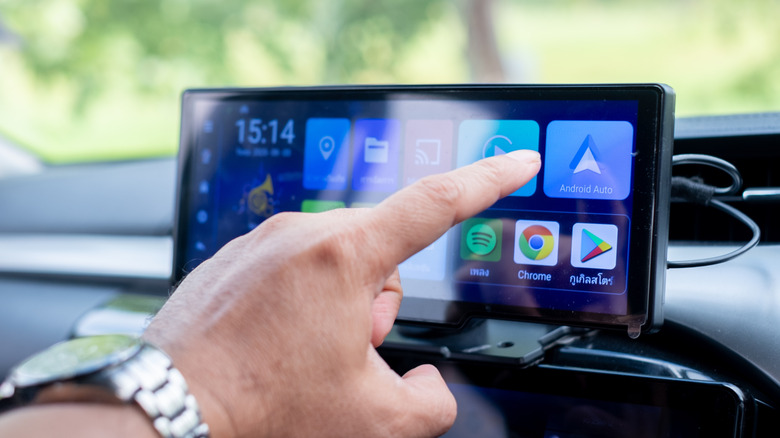
Let's be honest, talking about cars being software-defined still feels rather alien — after all, it wasn't all that long ago when all you needed was gas and a license to get going on the open road. But today's cars are becoming more like a smartphone. One day, you don't have a feature; then a software update happens overnight, and bingo, you have it!
Or, in some cases, you can't drive your car until it finishes its software update, much like you can't scroll through cat videos on Instagram until the app finishes updating. We've seen stories where modern cars are potentially losing features thanks to a lack of software support. If you've been feeling that way, you're not alone. Our cars are becoming increasingly reliant on lines of code rather than physical components to control what, how, and when they can do things. Simply put, they're becoming software-defined vehicles.
But what is a "software-defined vehicle?" Let's break it down. According to IBM (who know a thing or two about computers and software), a software-defined vehicle is one that has its core functions and features controlled, updated, and enhanced via software rather than fixed hardware systems. What that means is, rather than needing to install new hardware for enhanced features, these can now be remotely enabled by the manufacturer at a later date.
Why are cars getting more software?
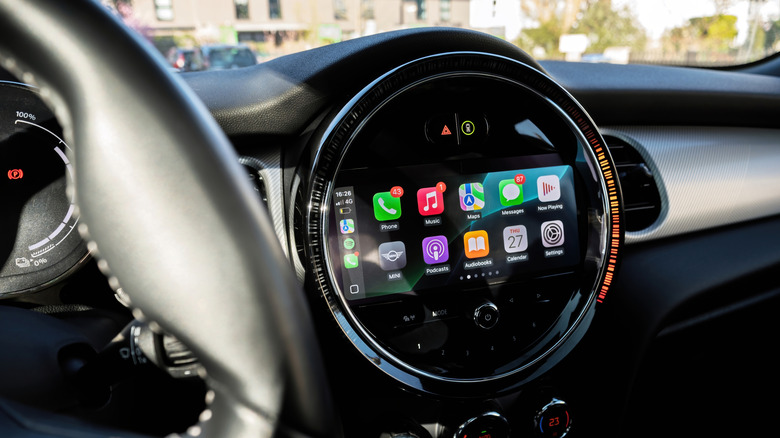
Traditionally, vehicles had one computer — the Engine Control Unit, or ECU. It controlled the engine's functions and parameters, using microprocessors to replace hand-tuned carburetors and mechanical injection. This setup ensured that your engine worked smoothly and efficiently, with a particular focus on emissions control too. Then, more control units started popping up across vehicles.
Automatic transmissions that traditionally entirely relied on hydraulic valve bodies started adopting their own computer (called a TCU or Transmission Control Unit) to make things smoother, as well as sportier when desired. Soon, Body Control Units entered the scene, controlling things like courtesy light illumination duration, central locking behavior, ambient interior lighting, and more. Safety systems started to get more complex, necessitating their own control units. And let's not forget infotainment! What this means is that when automakers want to update things, they need you to bring your vehicle into their workshop and plug it into their computers.
Enter the software-defined vehicle! Software-defined vehicles use fewer, but more powerful control units to handle multiple systems at once. These units, like your smartphone, are built to receive over-the-air software updates as manufacturers or third parties develop new features. So, an automaker can install a powerful, future-proofed control unit in your vehicle at the factory, plus the requisite hardware for future updates to utilize. They may not enable all features, but do so at a later date, like Lucid did when improving Android Auto and Apple CarPlay functionality.
Sometimes features are kept away from launch as they're not quite ready for mass-market use. This is particularly true for active driving and safety-related features such as automatic parking or semi-autonomous driving, with Tesla being one of the most notable companies updating its software over time.
The downside to software-defined vehicles
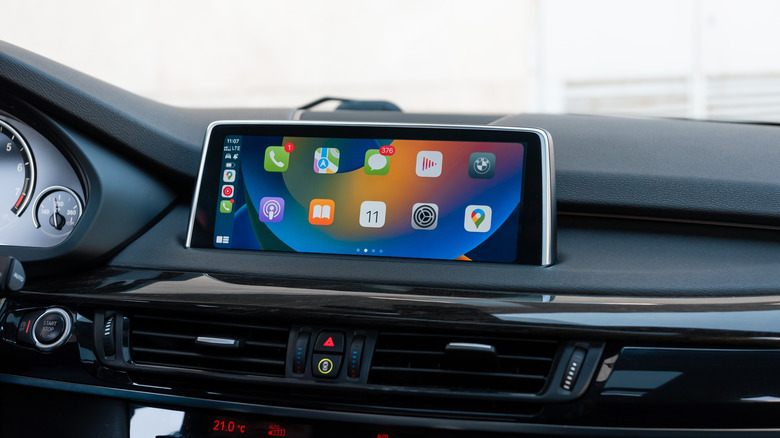
Subscription models are another reason to worry about software-defined vehicles. BMW infamously tried to charge users for things like heated seats. While that concept didn't take off, companies like GM and Ford do still charge recurring fees for their semi-autonomous driving capabilities.
The downside is that your vehicle will be even more reliant on software rather than hardware. This means automakers will need to ensure the vehicle's code is bug-free, because unlike a desktop computer or a smartphone, a vehicle experiencing a software failure can be life-threatening. Some software snafus can leave you stranded on the side of the road, or your vehicle may suddenly shut down in the middle of the freeway.
And another thing to consider about subscription models is that just as automakers giveth features, they can also taketh away. You might wake up one day and find that your vehicle has lost a few features, or worse, they've now been placed behind a subscription-style paywall. This wouldn't be possible with a traditional vehicle, but it's very easy to do for a software-defined vehicle.
Finally, a software-defined vehicle is strictly tied to how long its manufacturer decides to keep supporting it. Given that some smartphones have lifespans as low as a few years in terms of software support, it's a sobering to think that your car might be faced with a similar characteristic. To put that into perspective, a vehicle from 2006 will still have all the features it was intended to in 2026 for its entire lifespan, but will a software-defined vehicle be the same in 20 years? For better or worse, only time will tell.