

What Do The Red And Yellow Dots On Tires Mean?
They play an important role in balancing
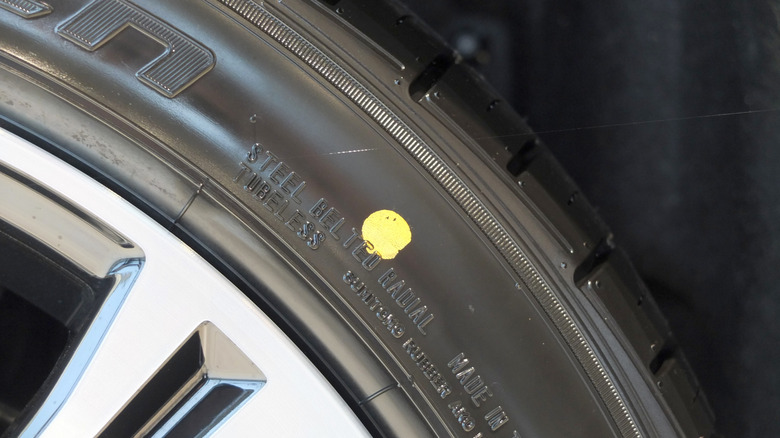
New tires can come with some genuine surprises outside of a potentially wild bill. Sometimes that comes in the form of grip. Other times it comes in the form of smoothness on the road. In addition, most come with a couple of small painted dots that almost nobody ever explains. While things like the colored stripes on the tire don't really matter after their initial sale, these dots are key for anyone installing the tire down the road. Here's a quick breakdown of what each dot is and what it signifies.
To be short and sweet, there are typically two dots on a modern tire. First, you'll find a yellow dot. It signifies the lightest part of the tire in question when tested by the manufacturer. Second, a red dot alerts a tire balancer to the point of maximum force variation. Both of those deserve a little unpacking and explanation.
A tire's lightest point

Of the two dots, the yellow one is easier for most of us to understand. Despite looking like a perfectly symmetrical product, tires almost always have some variation in density from one point of their circumference to another, even the latest and greatest tires from Michelin with AI tech. Marking the lightest point around the tire gives the installer a reference for where to seat the tire on the wheel.
Why does that matter if a wheel is perfectly balanced all the way around? Well, it wouldn't in that case, but the valve stem is generally the wheel's heaviest point. Aligning the tire's yellow dot with that location brings the lighter part of one component together with the heavier part of the other. For a tire balancer, that means fewer tests, hopefully fewer weights, and a quicker turnaround time. That benefits everybody from the tire shop to the technician to the vehicle owner.
Red tire dots
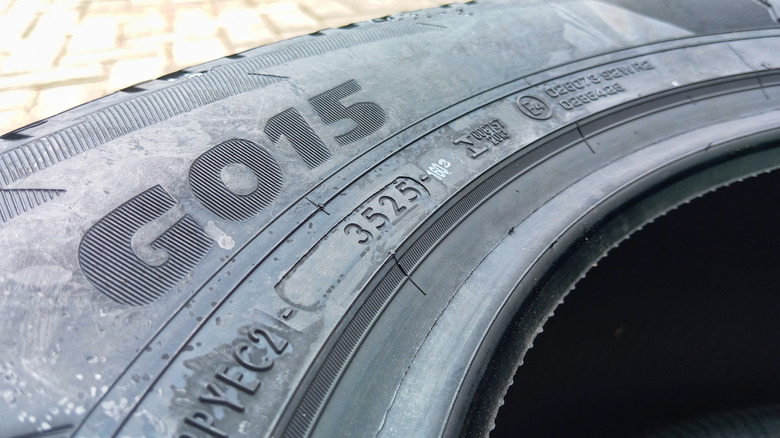
Now, let's dig into the more difficult dot to understand. The red dot addresses how the tire behaves when it's under load. As a loaded tire rotates, it generates what's called radial force variation. The red mark identifies the peak of that variation. Calling it the tire's "high point" is common shorthand, but there's more involved than its unloaded shape. Ultimately, that point can create vibrations if it's not accounted for.
Installers can check a wheel for its point of minimum radial runout, which is typically marked with a notch or colored mark. Interestingly, at least in my experience as the manager of a wheel and tire shop, the red mark matters more than the yellow one. A misaligned red dot can cause more vibration and discomfort in the cabin than a misaligned yellow dot. Of course, even an AI-driven robotic tire changer is going to add appropriate wheel weights as needed, regardless of where the red and yellow dots fall.