Mitsubishi Pajero Prepares For The Outback With Factory-Backed Accessories
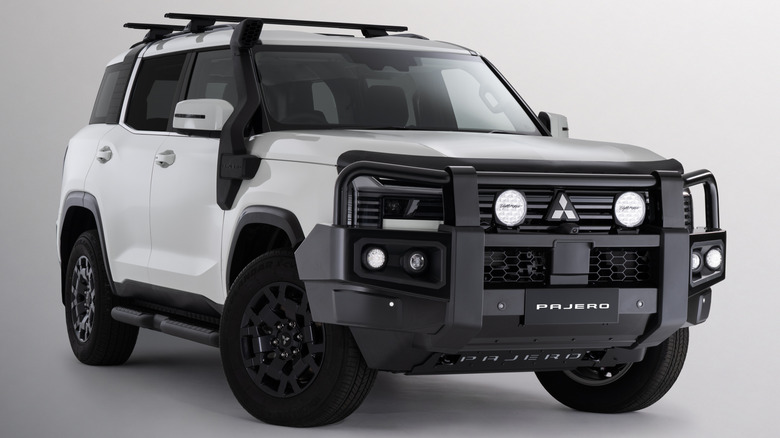
The reborn Mitsubishi Pajero is heading to Australian dealerships next month and the company has already announced a lineup of factory-backed accessories. These were developed for the harsh conditions of the outback, with input from Aussie engineers. According to the local arm of Mitsubishi, work on the genuine accessory program started in early 2022, far before the new Pajero was unveiled in September 2026.
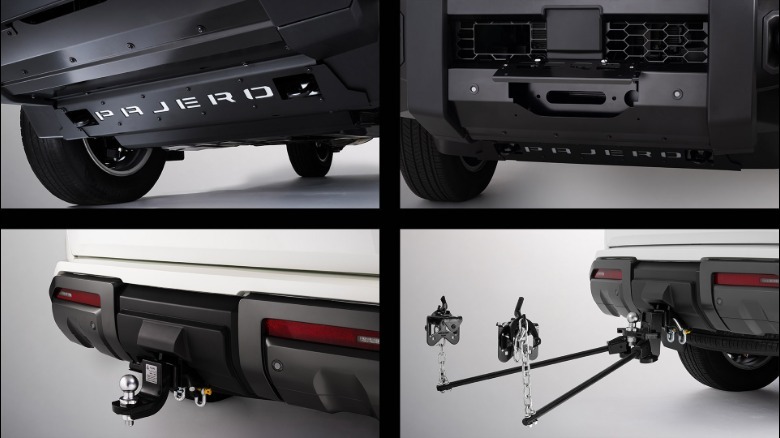
This was made possible by granting the Australian team early access to CAD data, before the first Pajero prototypes were built for testing. The digital collaboration included local companies and was followed by visits at the Okazaki R&D facility in Japan. Thanks to this early integration, the new Pajero already had mounting points and pre-wiring structures compatible with protection bars and towing equipment. It allowed Mitsubishi to offer 20 accessories for the Pajero available at launch.
Steve Pearson, Engineering Manager for Accessory Development in Mitsubishi Motors Australia who led the program said in a press release that their goal was to cater to the specific needs of local buyers. "Australians ask a lot of their four-wheel drives. They tow caravans, travel off-road and cover enormous distances, so our accessories must be more than cosmetic additions. They need to be engineered as part of the vehicle experience."
So, what's in store?
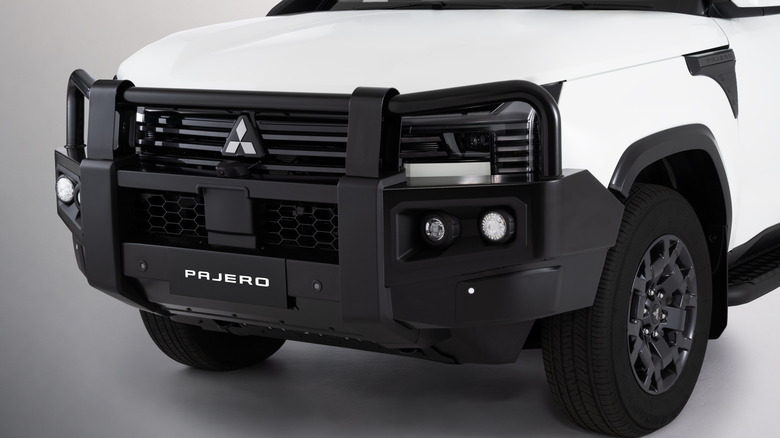
The highlight of the catalog is the Front Protection Bar (FPB) which is available in steel hooped and hoopless versions. This covers the entire front end of the Pajero, protecting the grille and headlights from road debris and minor collisions, though it is not as imposing as the massive bull bar on Toyota's RAV4. The FPB was specifically designed not to interfere with the ADAS sensors of the ladder-frame SUV.
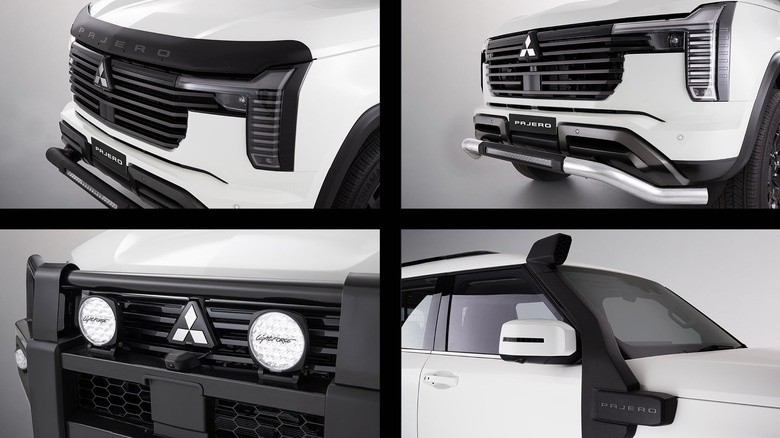
More discreet options for protecting the bodywork include clear headlight protectors, hood protectors with a clear, tinted or matte black finish, a nudge bar with a black or polished finish, a skid plate, and rock sliders. Owners can also upgrade the Pajero with a snorkel, auxiliary LED lights, and a roof rack. Another important accessory for Australians is the tow bar, which is mounted to the ladder frame chassis with special reinforcements. This can be combined with a towbar harness, an electric brake harness, and a weight distribution hitch. Finally, a heavy-duty winch cradle will help get the Pajero unstuck when there's no one around.
Truck-derived underpinnings
The new Pajero rides on a ladder-frame chassis derived from the Triton pickup, albeit with a model-specific suspension setup and greater refinement. Under the hood lies a turbodiesel 2.4-liter four-cylinder engine generating 201 horsepower (150 kW/204 PS) and 480 Nm (354 lb-ft) of torque. An eight-speed automatic gearbox sends power to all four wheels via Mitsubishi's Super Select 4WD-II system paired with Super All-Wheel Control.
In Australia, the Pajero is priced from AU$68,490 ($47,000) for the entry-level five-seat GLS trim, and tops out at AU$84,990 ($58,400) for the flagship GSR. The cost of the factory-backed accessories will be announced at a later date. Those who make an early reservation will receive three years of complimentary servicing and $1,000 worth of accessories. The optional bits fitted prior to delivery carry the standard 5-year/100,000 km warranty, which expands to 10 years and 200,000 km when the SUV is maintained through the official dealer service network. Mitsubishi has not shared plans of bringing the Pajero to North America, although it will be exported to certain global markets with the Montero nameplate.