

Is It True That Turbo Engines Need Oil Changes More Often?
Forget what your oil life monitor is telling you. Here's when you should change the oil on your turbocharged engine
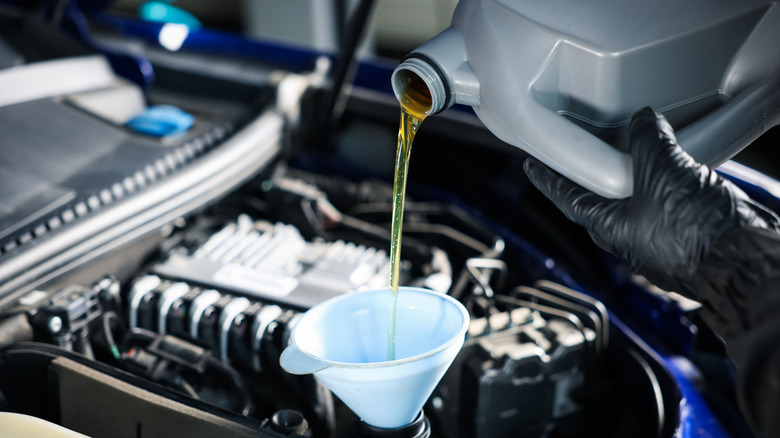
Like it or not, turbocharged engines are becoming more common. In fact, of the 16.3 million new passenger vehicles sold in the U.S. in 2025, 45% of them were equipped with a turbocharged engine. Automakers are squeezing every drop out power out of smaller engines while trying to reduce fuel consumption, and adding a turbocharger is how many choose to do it. There are trade-offs for these performance perks, though. The most notorious is that there will be some turbo lag, unless you run a supercharger and a turbocharger at once. One trade-off that is mentioned less frequently, though, is that compared to naturally aspirated engines, turbocharged engines require specially formulated oil that needs to be changed more often.
While many enthusiasts might argue that small, four-cylinder engines are not powerful enough, or can't compete with larger V8s, who says we can't have it all? The Jeep Grand Cherokee, Lexus TX350, and the Ford Explorer are great examples of large four-cylinder turbocharged SUVs on the market. Even automakers like Porsche have been using turbocharged engines for years, and even the new Lamborghini Temerario uses a twin-turbocharged 4.0-liter V8.
What are turbochargers and how do they work?
Despite only becoming mainstream in cars recently, turbocharged engines have been around for years. The concept was patented by Swiss engineer Alfred Buchi in 1905. It took another 20 years for Buchi to get working turbocharged engines into ships and aircrafts.
The transplant of this system from planes, trains and into automobiles first came in 1954, when Volvo and MAN implemented it into trucks, closely followed by the Oldsmobile Cutlass Jetfire 215 CID V8 in 1962. But it was the oil crisis in the mid-'70s that forced automakers to re-think how to make cars more powerful without guzzling more gas. Now, turbocharged engines are a mainstream option. So, how do they work?
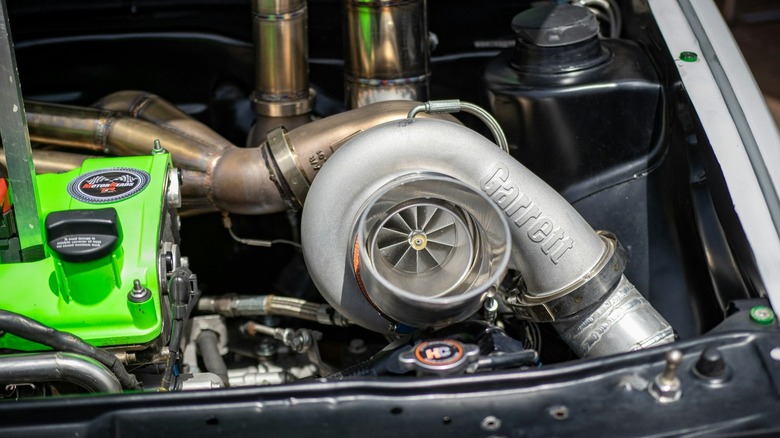
Put simply, a turbocharger draws extra air into an engine's cylinders to improve combustion. Exhaust gas from the engine spins a small fan (turbine wheel), which is attached to another spinning part (compression wheel), that feeds the air through. Turbos often have an intercooling system to make the incoming air colder and denser for optimum performance. Oil is a major player in this whole process.
Why turbocharged engines need oil changes more often

Turbocharged engines rely on engine oil to lubricate moving parts and regulate temperature. Exhaust gases expelled from the engine can be upward of 2,000 degrees Fahrenheit, with fans spinning up to 350,000 RPM. That is a recipe for disaster if the engine is not properly maintained.
While the oil carries heat away from the turbo, frequent exposure to extreme heat is detrimental to oil. When oil is hot, it's thinner and less effective as a lubricant. Increased heat also causes the oil to burn and break down, leading to coking deposits – the build-up of sticky residue inside the narrow passages in the turbocharger.
Unlike the oil recommended for naturally aspirated engines, oil for turbocharged engines is usually synthetic to increase heat resistance, but it's still not immune. Turbos demand a lot from oil, and the only way to ensure the system works at its best is to feed it fresh oil more often, at least at recommended service intervals. Each manufacturer will have different intervals for oil changes, so it is imperative to check the owner's manual for guidance.