

In A Sea Of EVs, Driving This 1989 Mercedes W124 Was The Perfect Palate Cleanser
Modern cars may pack more power and more gadgets, but driving a restored '80s-era Mercedes shows how today's cars are lacking one thing: character
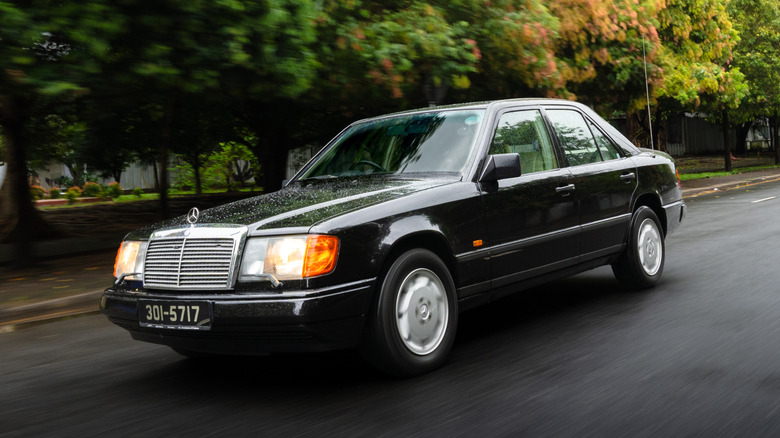
With over 120 years of history, many arguments can be made for what constitutes peak automobile. I suppose it greatly depends on what criteria you're judging on. In terms of mass production, you have the Ford Model T, and cars like the VW Beetle, Fiat 500, and Citroën 2CV all come under consideration for their efforts to mobilize the masses. Then, from a purely technological and engineering standpoint, it'll be hard to top cars like the McLaren F1 and Bugatti Chiron.
But narrow it down to build quality and sheer over-engineering, and, for many, the car to jump into the forefront of one's mind is the Mercedes-Benz W124. If not peak automobile, this generation of E-Class certainly deserves the mantle of peak Mercedes-Benz. Driving new machinery these days, which is unavoidably dominated by EVs, can make you yearn for days of old. A time when the three-box sedan was considered the ultimate status symbol, and not a mildly raised SUV that would balk at the sight of wet grass.
The W124 hails from a time before aspiration got the better of us. Yes, the three-pointed star meant a lot, but there was substance behind it. An overarching feeling of quality that, even four decades later, remains patently obvious to anyone who gets behind the wheel of one. And thanks to a friend who owned a 1989 pre-facelift 300E with the 12-valve 3.0-liter straight-six engine, I had the opportunity to experience the W124 firsthand. Forget badge snobbery — this car is the perfect palate cleanser for anyone who's lost sight of what truly matters in automobiles.
The W124 legacy
The W124 had an unenviable task ahead of itself: replace the already world-beating W123. The design team was headed by a young Italian by the name of Bruno Sacco, who had already made an impact with the "baby Benz" 190E. Creating the W124 took eight years of development, and it spawned multiple body styles, including sedan, estate, coupe, convertible, long-wheel-base limos, and even special-purpose shells that were used for applications such as ambulances and hearses.
Being introduced in the late 1984 as a 1985 model, the W124 survived two facelifts, with the last convertibles being produced as late as 1997. German production of the sedan ended in 1995 as the W210 was introduced, but complete knock-down production (CKD) continued in India until 1997. That's a staggering 13-year lifecycle, which is unheard of today unless you're talking about the 16-year-old Dodge Durango. By comparison the W210 that replaced the W124 only lasted seven years of production. Beyond its initial run as a Mercedes, the W124 body style later found life in Korea, made under license as the SsangYong Chairman — albeit borrowing some bits from the W140 S-Class, an extended wheelbase, and a redesigned exterior — which ran until 2014.
The W124 today
Now, I'll be the first to admit, I initially never got the hype around the W124. To me, it felt too old-school, with a whiff of old hat. And up until this point, I had only ever driven the wheezy 2.0-liter four-cylinder petrol and diesel models that had left me rather underwhelmed. By comparison, the Bavarian-based competition came guns blazing with their E34-generation five series. While the 518is felt similarly underpowered, the 520i and 525i versions harnessed the power of a straight six engine, with later models introducing variable valve timing. These advances gave BMW's take on the mid-sized exec noticeably more grunt.
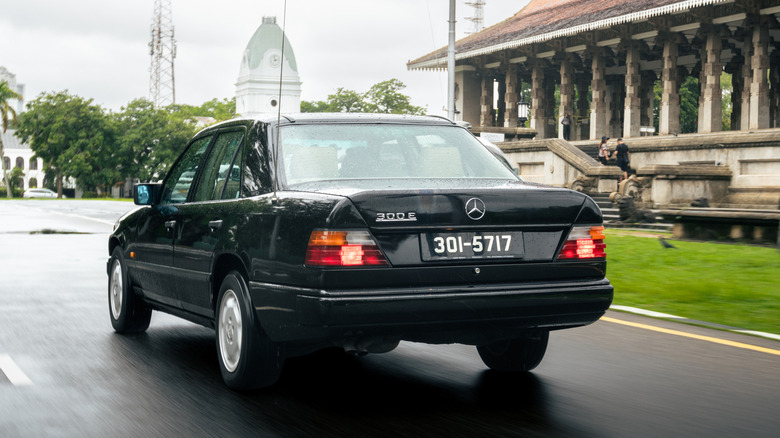
BMW was also ahead in the tech race, too. The E34 was available with some remarkable options for the time from the factory, including parking sensors, an auto-dimming rear-view mirror, electric sunshade, 16-button on-board computer (which displayed things like fuel consumption and range), and various other things that were just unheard of even in the most fully loaded W124 models. Combine these things with just how dialed in the chassis on those E34s were (steering box notwithstanding), and a younger me would have struggled to look twice at a Mercedes. However, in the cold light of the electric car revolution, combined with every brand losing its individuality, sitting behind the wheel of this article's featured car has me rethinking my dismissal of the W124. To put this car into context, it received a minor restoration over the last 12 months with the mechanicals having undergone a comprehensive refresh, but, overall, it retains the patina that 37 years does to a car.
A palate cleanser from modern motoring
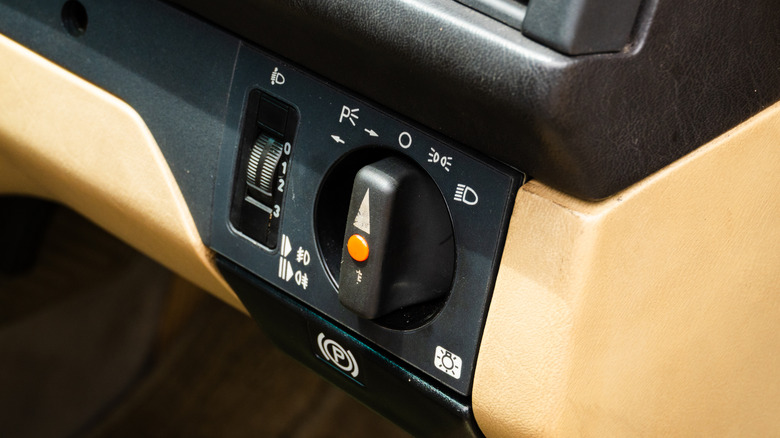
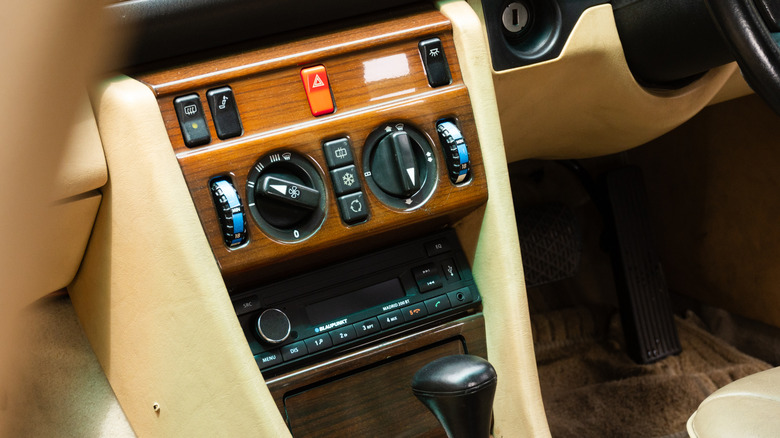
Driving this classic Mercedes around the streets makes you feel special in a way that no modern car can manage. There's a solidness and heft to every single aspect of this classic. Whether it be opening those '50s-fridge-style door handles, turning the large HVAC controls, or plopping the car into drive via the zigzag gated shifter, there's an overarching feel of quality to each interaction.
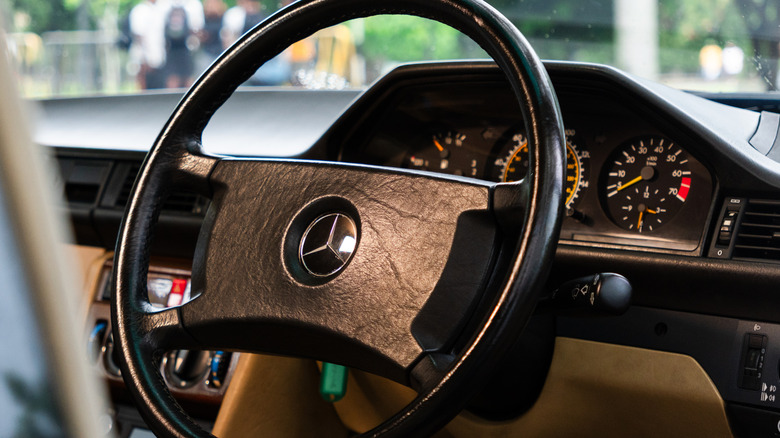
The W124 was unquestionably over-engineered, a mark of a company that was once run by the engineers, and not the accountants. The windshield wipers are an excellent example — switch on them and the mono-blade mechanism covers 86% of the windscreen area, which was far greater than the traditional set ups of the time. The functionality of the wiper arm is windshield choreography, and it's the sort of thing you might never notice until you sit and watch it.
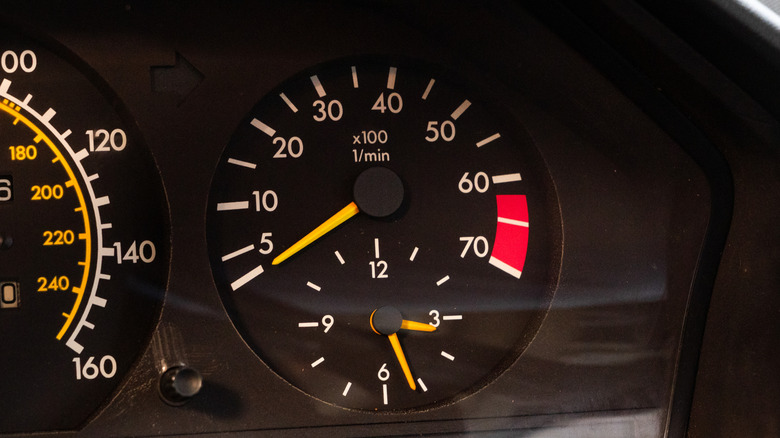
It's a fantastically complex solution to a problem that few would think about, and it's just one example of a car that was built with seemingly everything in mind. The synergy between the various elements of driving isn't an accident. It indicates that the long gestation period of the model was filled with various departments constantly communicating with each other, rather than just working in silos. Whether it be the impressive angle of lock on the steering, making tight parking maneuvers a sinch, to the meter panel isn't backlit, but rather has light projected on to it, bathing it a soft warm glow that would match the temperature of streetlights of the time. It's just all well-thought out.
More than luxury
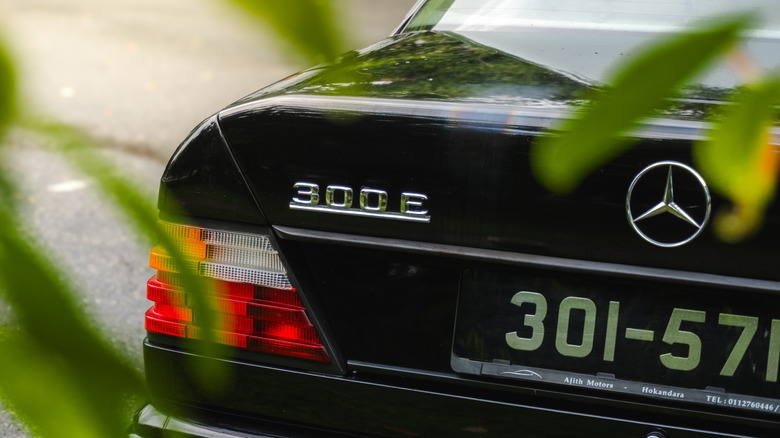
We often think of Mercedes-Benz's cars as luxurious things, and cars like the S-Class precursor 280S we drove have shown that there's a lot of truth to that. But piloting the 300E, brings another term to the table for me: sophistication. Just as the W124 wasn't a tech showcase in the way a BMW of the era was, it's not true luxury either.
That was reserved for the W140 S-Class, as it should be. No, instead, this is a composed car that exudes a sense of sophistication and durability in everything it does. It's no wonder that, as popular as they were for executives looking to make an impression, they were just as at home as taxicabs and police cars. That's not to say there aren't luxury elements to the W124 of course. On the contrary, thanks to its chunky-profile tires and sublimely valved shocks, it rides gracefully over all surfaces, with even the harshest of speed bumps being well cushioned from the interior.
The seats help with that, too. You're not hugged by them as you would be in a modern Mercedes-AMG or AMG-line product. Instead, you're perched atop them — but never without support, thanks to a combination of "horsehair" (in actuality, it was coconut fiber/coir) and variable-gauge seat springs that act as a secondary cushion to impacts being transmitted via your posterior.
But there's no sporting intent
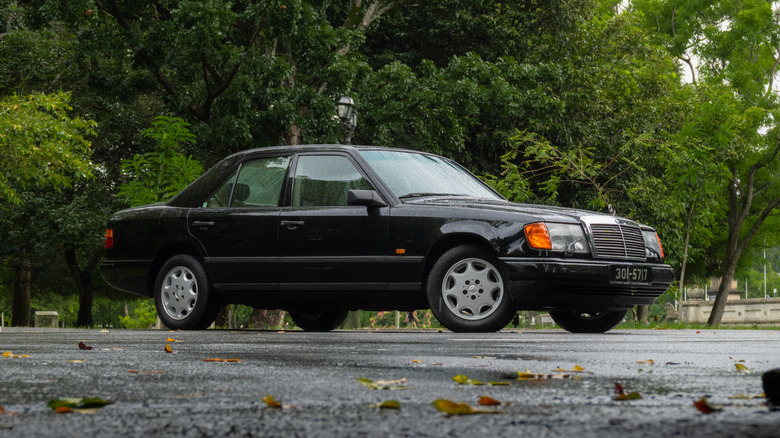
Think 3.0-liter straight-six engine by today's standards, and you'd assume that the 300E has a decent amount of grunt, but it doesn't deliver it to you in a way that you may expect. The 12-valve M103 engine puts out a respectable 177 hp and 255Nm of torque, available from an accessible 4,400 rpm. But think unstressed, rather than highly strung. Let's not forget, the engine, combined with the chassis, is from an era when Mercedes really wasn't concerned about attracting a younger demographic.
AMG was yet to be absorbed by Mercedes, and while there were the V8-powered 400E and 500E performance versions, even those cars had their distinct identities. Modern Mercs are a product of marketing teams desperately trying to make their machines sporty — with 27 new models planned over before the end of the decade. Mercedes-AMG is an aspirational badge now, and with vast injections of cash into their F1 team, they've managed to shake that old-person fuddy-duddy image.
A more relaxed approach to driving
But with this new aspiration, comes a new customer base. Modern customers want more cabin tech and gadgets, and by doing this, and ultimately trying to make its cars jacks of all trades, the compromise is that you're unlikely to get a modern car from the brand to feel anything like the W124 does. And let's be honest: the way a classic Mercedes approaches spirited driving is by no means for everyone.
For instance, when you enter a corner at speed, rather than fall flat on its face, the car gives you plenty of feedback about its capabilities. But like a wisecracking TV butler that thinks he knows better than his master, there's a whimper of protest as you attack corners at triple-digit speeds. "Surely there's a better way we could be going about this?"
There's plenty of body roll, which combined with those springy seats, means there's way more lateral movement than you'd expect in anything built this side of the '90s. And as a consequence, you can't exactly drive this car "by the seat of your pants." But the steering is communicative, as is the chassis. You feel the steering go light far beyond the tires start to murmur, and finding the slip angle is still something that feels natural, without you overdriving the car.
An individuality that has been lost
There's a lot of composure behind the wheel, and a great deal of that is thanks to the designers switching the W123's — like this low-mileage 1985 example — live axle rear for a multilink setup for the W124. And, despite a good amount of dive under braking, the anchors themselves are superb, allowing for an almost infinite level of modulation that behooves you to come to a measured, gentle stop — something that with regen braking in modern cars becomes a lot harder to do.
The four-cylinder engines are still woefully underpowered in my opinion, but the straight-six in this 300E serves up a lot of grunt, even if it's patently averse to approaching the 6,000 rpm redline — in stark contrast to the rev-happy BMWs of the era. But that's fine. This isn't a BMW; It was its own beast. An incredibly built tank of a car that has arguably defined the way the Mercedes-Benz brand is looked upon far beyond what its modern versions deserve. We may never get a Mercedes like the W124 again. And we certainly won't get a car as fastidiously engineered, regardless of marque. While modern machinery is impressive, it lacks the character that defined this era of automobile.
Coming into this review, I may not have thought that the W124 was for me. But in reality, it's the perfect reminder of how incredible cars can be, when done right. And realistically, how far the brand has strayed from creating truly sophisticated machines with their own idiosyncratic charm. I suppose we could be sad about that. But instead, I chose to be happy that we live in era that has so many examples of peak automobile still available to be cherished. Long live the W124.