

Do You Really Need To Change Your Oil Every 5,000 Miles?
The definitive answer is 'it depends.'
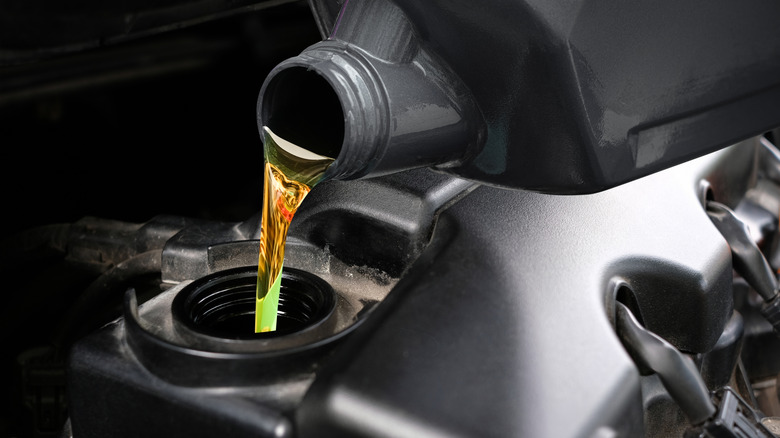
Want a sure-fire way to start an argument at a car meet that's even better than trash-talking a Ford Mustang to the owner's face while wearing a bowtie T-shirt? Bring up the topic of oil change intervals.
There'll be one guy who claims he hasn't dropped his lube for 20,000 miles because that's what the automaker recommends, and says his motor hasn't exploded yet. Another will swear that you'll send pistons flying if you haven't changed the oil every 5,000 miles. But 5,000 miles might only be a few months of driving for some folks. Do you really need to swap it out that often?
The reality is one of those annoying "it depends" answers, so it's no wonder there's confusion around the issue. Years back, changing oil every three months or 3,000 miles was totally normal, just a regular part of a car upkeep schedule. But oil and engine technology were less sophisticated in the middle of the last century. The additives in multigrade oils degrade over time, meaning they provide less protection to engines as the oil gets older, and it needs to be changed more often. If you're driving an older car today on conventional multigrade oil, you're probably still going to want to change it every 5,000 miles, not every 10,000 miles.
But modern, thin, expensive synthetic oils used on newer cars since the 1980s and 1990s last far longer without breaking down. That's the stuff automakers fill their cars' sumps with when they say you can drive 20,000 miles before laying a ratchet on the drain plug. Semi-synthetic oils are hardier than old multigrade oils and cost less than fully synthetic fluid, but still break down faster and need to be changed every 6,000 miles, AAA says.
Two identical cars, two different intervals

Just because you've splashed out the cash to splash synthetic oil around your bearings doesn't mean you can safely do 20,000 miles between oil changes. Imagine two identical cars, one sent out for a lifetime of long, gentle, cross-country freeway drives, and the other tasked with spending its days running three-mile errands and barely getting warm. They might have the same engines and the same recommended service intervals, but one car's oil works much harder.
According to Pennzoil lubricant specialist Sean Nguyen on the Bob is the Oil Guy website, those short, urban journeys can be particularly rough on modern direct-injection engines because fuel and moisture can accumulate in the oil. An engine that's allowed to warm up properly can evaporate those contaminants, Nguyen says, but repeated short journeys can prevent that from happening. The result is acid formation, corrosion, and component wear.
But what if you only live a few miles from work? Nguyen recommends taking your car for a 30-minute run every week to help evaporate accumulated fuel and moisture. He also advises sticking with the automaker's official interval, as listed in the handbook. Such driving may fall under the manufacturer's definition of "severe service," which leads to a more frequent oil change interval recommendation.
In the case of a Stellantis SRT vehicle like a Dodge Challenger Hellcat, that means dropping the oil every six months or 6,000 miles. Don't go thinking you only need a lube job once a year if you're only doing 3,000 miles, either. Oil also degrades in cars parked for extended periods.
The best advice seems to be to treat the automaker's official intervals as the maximum time and distance you can go between oil changes. If your car has a hard life, or it makes you feel less stressed to change it sooner, do it. An engine rebuild will cost far more.