

1 Million Hondas Under Investigation Over Start/Stop Glitch
People expect the car to automatically restart after it shuts off
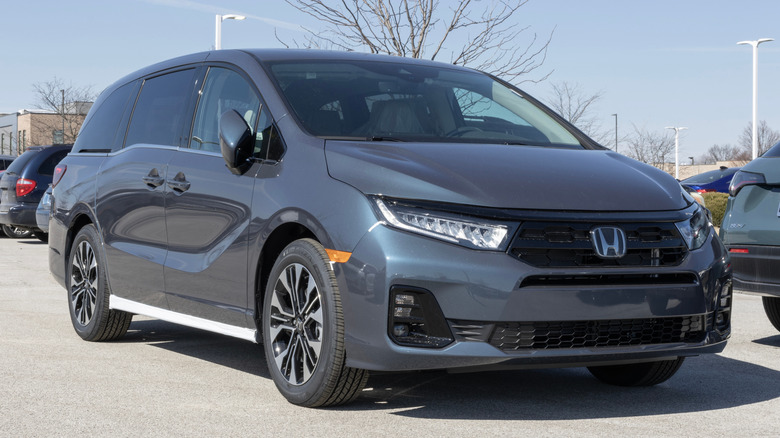
If there's a single super controversial feature in modern cars, it might be the automatic start/stop system. Now, over a million Hondas are facing a federal investigation over several models with engines that might not restart after they stop. The NHTSA says some 701 complaints about the system have already trickled in. Now, it's wondering if Honda needs to recall 1,033,632 vehicles as a result.
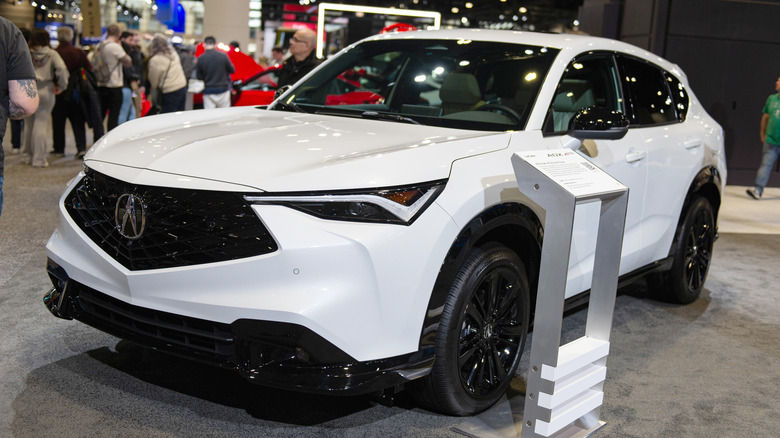
Among those potentially affected are the Odyssey, Passport, Ridgeline, and Pilot from 2024 through 2026. The Acura MDX from those same model years is also under investigation. The NHTSA has yet to comment on exactly what might be causing the issue. That said, it did list all of the complaints that it's heard from customers. Some of the experiences sound downright unsettling. It's no wonder that for these drivers, auto stop/start feels like a big letdown. Let's look at just a few.
Some examples
Check the complaint list at NHTSA.gov, and it's clear that Honda owners are unhappy. For example, three of the four most recent complaints about the 2024 Odyssey all relate to this condition. One recent complaint reads as follows. "The engine shutting off and failing to restart. Happens constantly at intersections etc making it unsafe for me and my children. Someone could potentially crash into me etc as it takes longer for me to turn the car on, put it back in drive, and restart the engine. I have an appt at the dealer. Theres no warning, message or problems on the dash. It just shuts off. I also occasionally have a problem with my remote start, the engine wont turn over." That certainly puts things into perspective.
Another details how additional parts came into the mix: "On numerous occasions, the engine shut off normally but would not restart when I attempted to resume driving. I had to shift into Park and manually restart the engine before continuing. This happened regularly and created a safety concern because I could become stranded in traffic with my children in the vehicle. I eventually began manually disabling the automatic idle stop feature every time I drove because I was afraid the vehicle would fail to restart.
I reported the issue verbally to a Honda dealership employee during a previous service visit and was advised to disable the automatic idle stop feature rather than continue using it. In October 2026, at approximately 21,000 miles, the vehicle displayed a low battery warning. Several days later, it completely failed to start after stopping at a gas station. Three separate jump-start attempts were unsuccessful. The dashboard lights and audio system worked, but the power windows stopped functioning.
An authorized Honda dealership diagnosed a completely failed starter. The service advisor stated that the starter failure had also drained the battery. Both components were replaced under the factory warranty. The dealership stated that these repairs should resolve the previous idle stop failures, but the underlying cause of the premature starter failure has not been explained. Clearly, there's a significant issue for several Honda owners.
What happens next?
At this point, the NHTSA will complete an investigation to see if Honda needs to issue a recall. Once it finishes the investigation, one of two things will happen. Either it'll clear Honda of responsibility for a defect leading to a recall, or it'll tell the automaker that it should conduct a recall based on whatever evidence it finds. In that second case, it shouldn't be presumed that every single car included in the investigation will end up as part of the recall. It's plausible that some won't need the same type of fix as the rest. Frankly, some might not even end up eligible at all, but that's entirely up to the NHTSA at this stage.
According to Reuters, the agency is already looking into similar Honda start/stop issues under an entirely different investigation. This is, of course, on top of a recent recall from Honda of over 630,000 vehicles suffering from a potential power-steering failure.