

Cleaning This Sensor Could Make A Noticeable Difference In How Your Car Runs
A dirty mass airflow sensor can cause big problems.
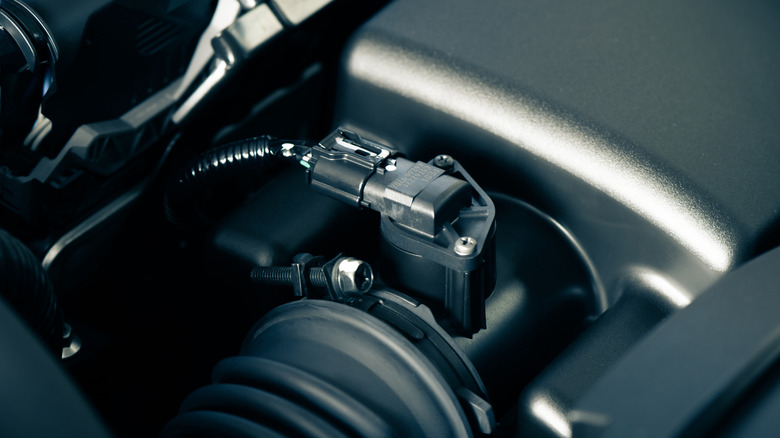
Diagnosing engine issues can be long, boring, and expensive, so it's often wise to rule out simple fixes before moving on to more complex causes. If you notice your vehicle running rough, a fuel economy drop, or hesitation when accelerating, it could be due to a dirty mass airflow (MAF) sensor. Thankfully, this isn't something you need to call a mechanic to fix, and you don't need to be a DIY legend to resolve it. All you need is a little knowledge, some basic tools, and a special cleaner.
Most modern vehicles use a MAF sensor to measure the amount of air entering the engine. This data is sent to the ECU, allowing the car's computer to adjust the amount of fuel needed to keep the engine running smoothly. The MAF sits inside the air intake, between the filter and the throttle body, and is quite easy to identify in most vehicles.
Like almost any engine part, MAF sensors can get dirty. A common cause is a subpar or degraded air filter that allows microscopic particles of dirt and debris to enter the intake and settle on the MAF sensor.
The secret to cleaning a MAF sensor
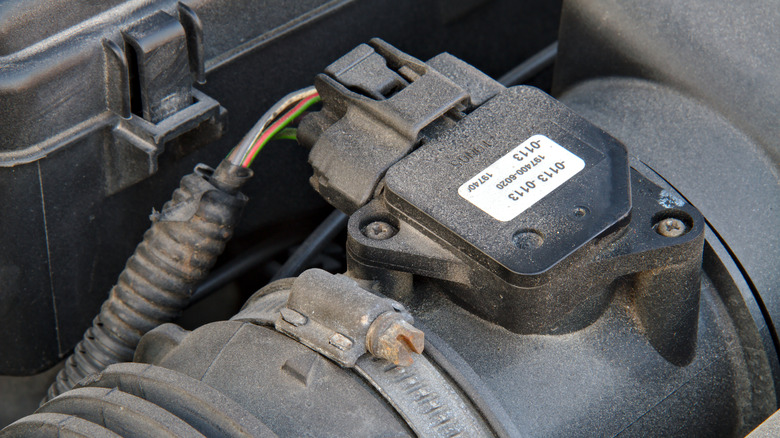
A quick trip to your local auto parts store and a single spray-on product are all you need to clean a MAF sensor safely and quickly. Companies like Liqui Moly and CRC sell popular MAF sensor cleaners. These cleaners use a residue-free solvent to clean the sensitive sensor elements without causing damage.
To access your MAF sensor, locate it on the air intake and unplug its connector. The sensor is usually secured with screws, Torx bits, or small bolts. Remove these, and then you can free the MAF. Inspect the sensor for dirt and dust before spraying 10 to 15 short bursts of cleaner directly into it. Once you've hit all the wires with cleaner, place the sensor in a safe area and let it dry for about 10 minutes.
When the sensor is dry, simply reinstall it with the original screws or bolts and reconnect the plug. Just like that, your vehicle's ECU will be much happier, since it doesn't have to deal with a sensor covered in grime. If the MAF sensor was particularly dirty, you should notice an immediate improvement in performance and fuel efficiency.
If cleaning doesn't solve your issues, or if the check engine light is on and the trouble code is related to mass airflow, the sensor may need to be replaced. If you're not comfortable sourcing a replacement, your local auto parts store will be able to help you out.
Your car may use a MAP sensor instead
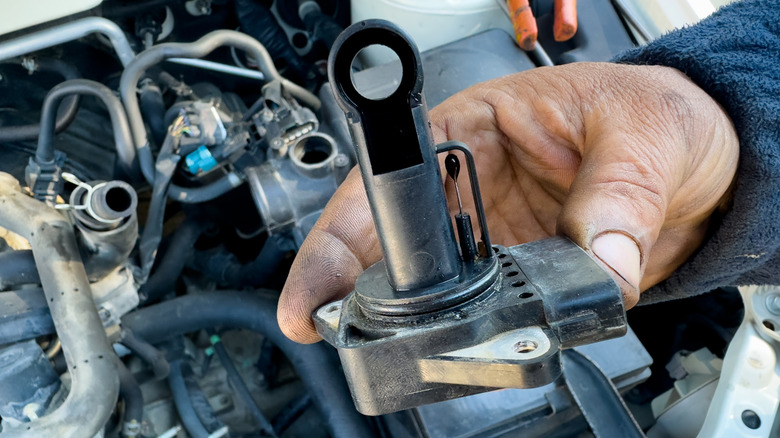
It's important to note that your vehicle may not even have a MAF sensor. Many newer turbocharged and supercharged vehicles instead use a manifold absolute pressure (MAP) sensor positioned on the intake manifold. These sensors measure the air pressure inside the manifold, allowing the ECU to ensure the engine gets the right amount of fuel.
A faulty MAP sensor often triggers the same running faults as a MAF sensor, including rough running, reduced power, slow acceleration, poor fuel economy, and a check engine light. MAP sensors can be cleaned the same way as a MAF sensor, using dedicated airflow sensor cleaners. If you don't have one, a generic electrical contact cleaner will work.
Whether your car has a MAF sensor or a MAP sensor, it's worth cleaning it whenever you do a service. Motorists who live in particularly dirty areas would be wise to clean either sensor more frequently.