

Does Hitting The Redline Hurt Your Engine? Here's What Really Happens
Chasing the redline is addictive, but your engine might have other ideas.
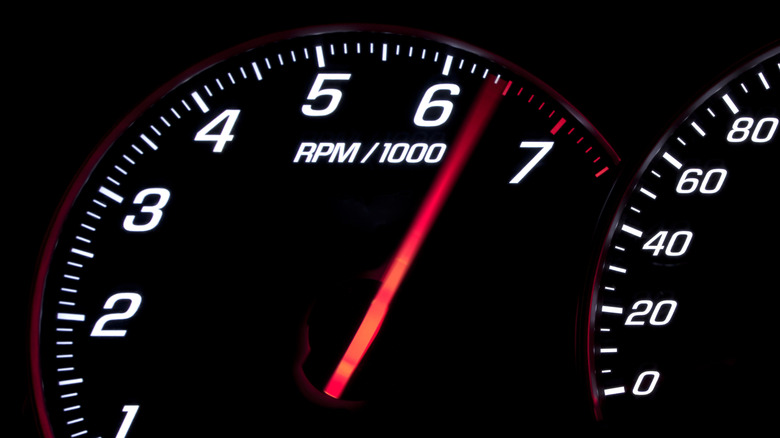
If driving for you is more than just getting from A to B, then you probably like visiting your engine's redline on your journey between those two points. There's something really addictive about pushing an engine close to the rev counter's red zone. It's the noise, the vibration. The perverse thrill of wondering if your motor might be about to grenade itself, and spray hot oil and chunks of metal across the highway. But does redlining your engine hurt it?
Going beyond the redline is certainly not advised. Overspeed your engine and you run the risk of valve float, causing valves to hit pistons, or of connecting rods and crankshaft bearings being irreversibly damaged from the huge internal forces and lack of lubrication. Fortunately, modern engines have rev limiters to prevent that happening when going up the gears — though nothing can save you if you downshift too early. And full engine rebuilds can cost thousands.
Redlining a cold engine is also a bad idea. Engine oil needs to be warm before it provides the kind of protection required for high-rev action, and it can take almost twice as long to warm up as water in your cooling system, one study found. Got your oil up to temp? Then hitting the redline now and again on a fit motor is fine.
Sure, it'll wear components faster than moderate driving, because higher revs introduce more heat and stress, and it's not a good idea to sit near the redline for miles on end, Ford says. But a few trips to the redline on your commute aren't going to cause a catastrophic meltdown in an engine with a sensible mileage and fresh lube. Unless you're commuting in a Top Fuel dragster, that is. Those monsters need a teardown after every quarter-mile or 1,000-foot run.
Does redlining your engine actually improve it?
We've established that occasional bursts of redline activity won't turn your engine into a 300-lb (136-kg) paperweight, but might it even make your car run better? That's the thinking behind the apocryphal "Italian tune-up," which legend says was invented by Italian mechanics in the second half of the last century. If cars came into their shop performing badly, the story goes, a thrash down the road would get underused cars' engines hot enough to burn off unwelcome deposits on the spark plugs, valves, and combustion chambers.
That's the theory, but what about the science as it applies to modern cars? Engineering Explained's Jason Fenske dug into this very subject in a video after digesting a ton of research, and concluded that yes, it is possible to burn off carbon deposits if you get your engine hot enough.
But that probably isn't going to happen in road driving, he says, because you're not going to spend enough time near the redline to generate sufficient heat. Under sustained load, pistons and exhaust valves can reach the furnace-like 617°F (325°C) needed to burn off deposits, but intake valves run cooler, so any gunk caked on them is likely to stay put.
Fenske warns that working a direct-injected engine harder could leave it with more carbon deposits, not fewer. But regardless of whether or not chasing the red zone makes your engine happier, it's guaranteed to make you smile, and that's got to make it a habit worth keeping, as long as the oil's warm.