

If Your Smart Key Dies, Here's How You Can Still Start Your Car
Your push-button start car has a built-in backup system — here’s how to avoid getting stranded when your smart key fob battery suddenly dies
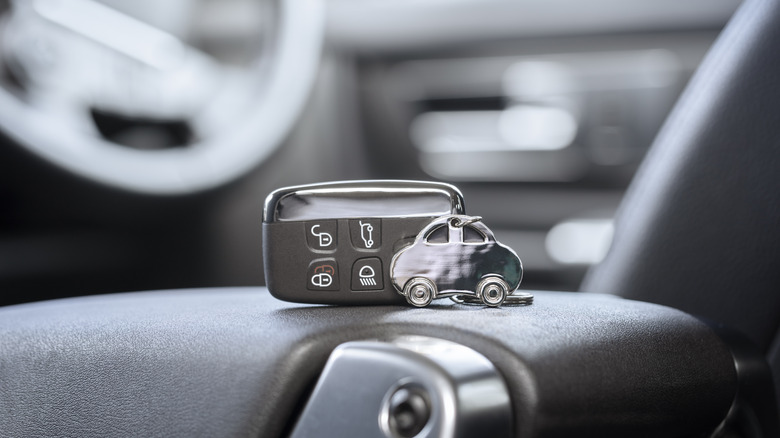
There's no denying that the technology inside modern cars is evolving faster than ever. Modern interiors are now dominated by huge touchscreen displays, and there's even new high-tech aids popping up, such as GM's AI-assisted launch control. And if the flying Tesla Roadster becomes a reality, does that mean we'll need a pilot's license soon to drive? These advancements are all designed to make life easier for drivers, but even though new cars are smarter than ever, some of this tech can create annoying problems. A perfect example is keyless entry and start.
Like a regular key, a smart key locks, unlocks, and starts a car, but it does so all while tucked away in your pocket or purse. Key fobs emit a short-range wireless signal that is picked up by a sensor in the car when nearby. So long as you have the fob on you, you can walk up, unlock, and push a button to start the engine. But what happens when the fob's battery gets low or dies? Don't worry. There are still ways to get into your car and start it. Here's how.
How to start your car if your smart key battery dies
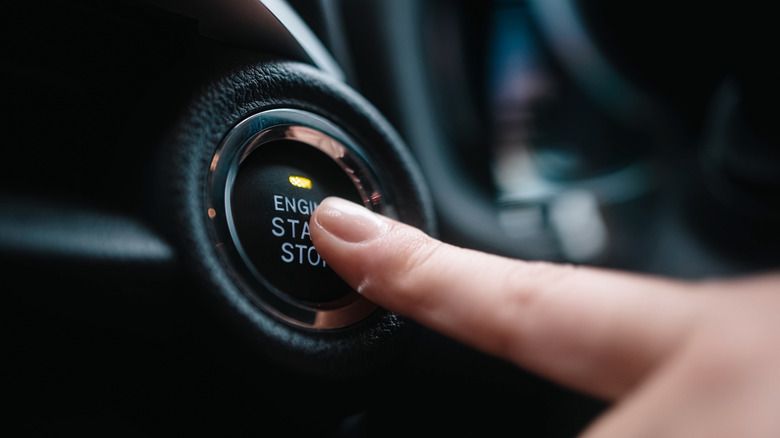
There should be plenty of notice on your driver display letting you know if a fob battery needs to be replaced. There might be a warning message stating the battery is getting low or it could be a dummy light on the gauge cluster. When the battery gets low, the signal weakens, so you should still be able to start the car by holding the fob close to the push button while starting.
Otherwise, you might find a symbol showing a key with bracket-like radar signals coming from each side, often on the steering column, or in the center console. This identifies where the proximity sensor is. Holding your smart key against this symbol should allow you to start your car as normal, even if the smart key is dead.
Alternatively, some cars with keyless start hide a turnkey behind the start button. For example, I could remove the button cover in my Mercedes-Benz C-Class to expose the ignition keyhole, which also deactivates the keyless start function and eliminates a simple trick that lets thieves drive off with your car in seconds. This also works on most Chrysler, Dodge, and Jeep products from the late 2000s and early 2010s.
How to get into your car with a dead key fob?
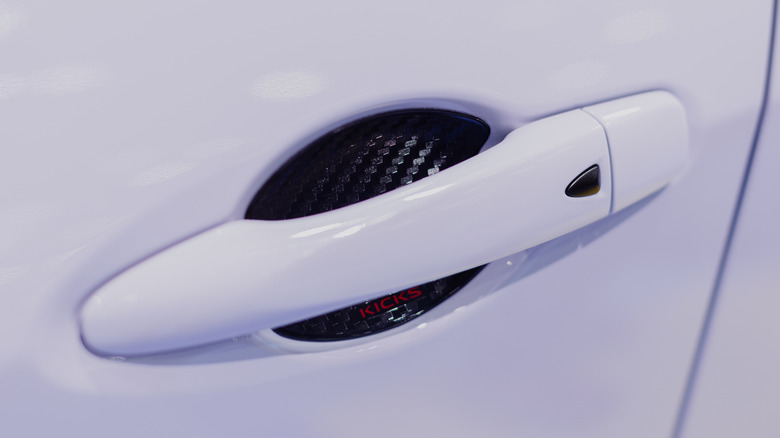
With today's passive-entry door handles, a dead key fob can leave drivers guessing how to even get inside. Most smart keys contain some type of physical key blade inside as a backup, and there's some sort of release mechanism to access it. Similarly, there's usually a cover on the driver's exterior door handle that can be removed, revealing the keyhole to manually lock and unlock the car. It's important, though, to check your owner's manual and be familiar with both, so that you know how to get into your vehicle in the event of a dead battery or lost smart key fob.
While getting in and starting the car with a dead key fob is a relief, what happens if the fob battery dies while you're driving or if the fob is removed from the vehicle while the engine is running. The good news is that in either case mentioned above, the car won't shut off immediately. So, if the car is running and you drop someone off who has the key in their pocket, the car still operates as usual, but there will most likely be a warning light displayed on the dash. Now, if you put the car in park, you may not be able to shift into gear after that, and if you shut the engine off, you won't be able to restart it without the fob in range.